Ongoing topic · Compiled September 25, 2026
Meta Muse: from travel checklists to ongoing help
Travel plans, a shopping trial, glasses and Charm: connect Muse Spark with the personal agent’s actual use to see how Meta brings AI into daily life.
Following next: How far do Muse and readers’ existing tools get on the same travel or shopping task?

01Start with the results
Travel plans and school checklists become things you can open
These three examples come from the Muse product team: an India itinerary, a school information page and a packing checklist. They turn chat material into pages you can revisit and use. They are official examples; we have not rerun these tasks.
Useful questions come next: are the important dates and items there, can you revise the result, and can you find it again? Those questions bring an impressive answer closer to everyday use. This topic follows Muse through concrete outputs, actual use and new access routes.
- Explore the team’s design walkthroughOriginal interfaces, outputs and interaction design.
Sources and notes
- How We Designed Muse ↗Product-team account · September 2026Original artifact and activity screenshots.
02Where the capability comes from
Muse is the personal agent; Muse Spark is the model
Meta launched Muse on September 8 as a personal agent powered by Muse Spark. It has its own cloud computer and browser, can continue after you close the app, and returns when it needs approval.
Muse Spark 1.3, released September 2, is a model update available through Muse Code and Meta Model API. Meta emphasizes sustained multi-step work and instruction following, with examples including an edited audio track. A model release does not establish which features every Muse user has received.
- See Spark 1.3 task inputs and outputsVendor examples, suitable for comparing requests with outputs; not an independent model comparison.
Sources and notes
- Meta: introducing Muse ↗Official release · September 8The agent, its model and background work.
- Meta: Muse Spark 1.3 ↗Model release · September 2Claimed improvements, demonstrations and developer access.
03A firsthand experience
A shopping trial, followed by a website roadblock
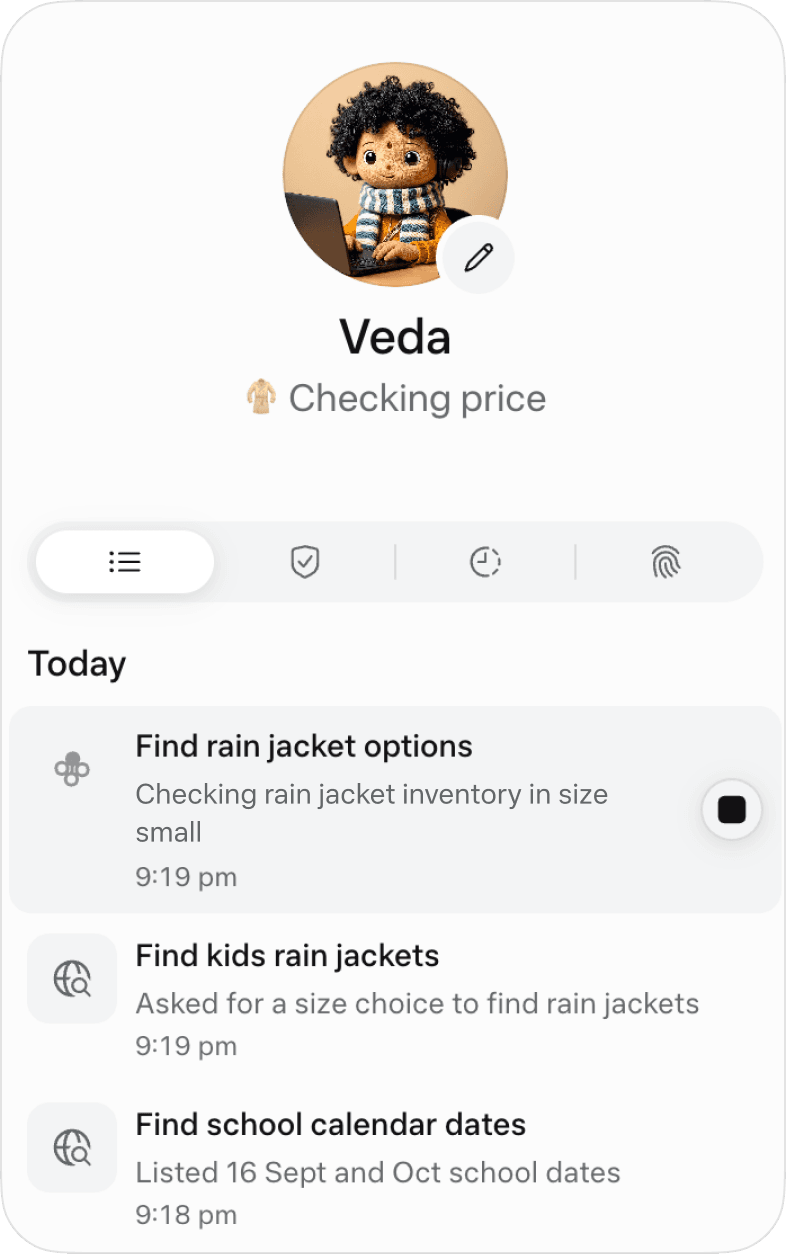
In a September 14 TechRadar account, the writer asked Muse to find shorts. It asked for a size, returned options and a sale after a few minutes, then requested an Amazon login to proceed. The writer found the delegation useful but felt uneasy about granting account access.
The situation then changed. On September 21, The Register asked Muse to find an office chair and reach checkout. The agent reported an Amazon browser block, with no product found or added. That later trial shows why an early shopping experience does not establish lasting access.
This account makes the stages visible: request, clarification, comparison and account handoff. It shows how far the shopping workflow progressed; it does not establish automatic completion of payment, delivery and returns.
- Read the author’s Muse shopping experienceA third-party account describing both convenience and account-access concerns.
Sources and notes
- The Register: an office-chair shopping trial ↗Author’s task report · September 21Reports a browser block before adding an item.
- TechRadar: a firsthand Muse trial ↗Author’s experience · September 14Shorts search, size clarification, a sale and login handoff.
04New access routes
Glasses and Charm bring the request closer to daily life
At Connect on September 23, Meta announced Muse for AI glasses in the coming months, acting on things such as products, posters and lists in view. It also previewed the portable voice device Muse Charm, with more details due later this year. Both remain announcements.
The update also expands shopping, payment and work connections, naming Shop Pay, PayPal, Notion and GitHub among others. A connector announcement points to possible uses; account availability and actual outcomes still determine what gets completed.
- Watch Meta’s Connect Muse demonstrationOfficial demonstration; glasses access is planned for a later rollout.
Sources and notes
- Meta: Connect 2026 recap ↗Official recap · September 24The event took place September 23; distinguish glasses, Charm and service connections.
05Relate it to your current tools
Using GPT, Claude or Grok? Put Muse beside your actual task
Use a task you actually do as the reference. For a trip, do you want advice, a shareable itinerary, or continued price checking, communication and booking? Those are different deliverables. Compare what your current tool completes with the particular step Muse might add.
Astra’s 3D examples turn descriptions into editable scenes; the home-inventory project turns item records into searchable household information. Muse adds the question of continuing from information and outputs into action. This connects use cases, rather than ranking performance on a shared test or prescribing a subscription change.
- Explore Astra’s editable creationsFrom a description to a concrete creation.
- See how a home-inventory assistant organizes belongingsFrom household information to a searchable result.
06Before you start
Check your access, then define the first task
Checked September 25: Meta’s launch information specifies US access through iOS, Android and muse.ai, with free use and paid capacity. Check your own region and account first.
If you have access, start with something concrete and verifiable: turn supplied school dates into a one-page checklist and list missing information. Meta says sensitive steps such as sending email or purchasing require approval, and users choose service access. Review the result before delegating further steps.
- Open the official Muse entry pointAvailability depends on your region and account.
Sources and notes
- Meta: availability and user controls ↗Official information · read September 25Region, platforms, subscriptions and action approval.
What we are following
07What comes next
What we are following
- How far do Muse and readers’ existing tools get on the same travel or shopping task?
- What verified changes clarify Chinese use, regional availability and service connections?
- When glasses and Charm arrive, which firsthand accounts show fewer steps for the user?