A real creation · Home inventory
A forgotten cucumber inspired an AI-connected home inventory
Receipts and voice messages can feed one record of locations, expiry dates and purchases. A creator’s open-source project makes household stock easier to look up.
Start with the things you own but forget
On September 19, developer RIcter shared AL1S-WMS on V2EX. The starting point was a cucumber forgotten in the fridge for three months. They used AI-assisted development to make a household inventory tool for their own use.
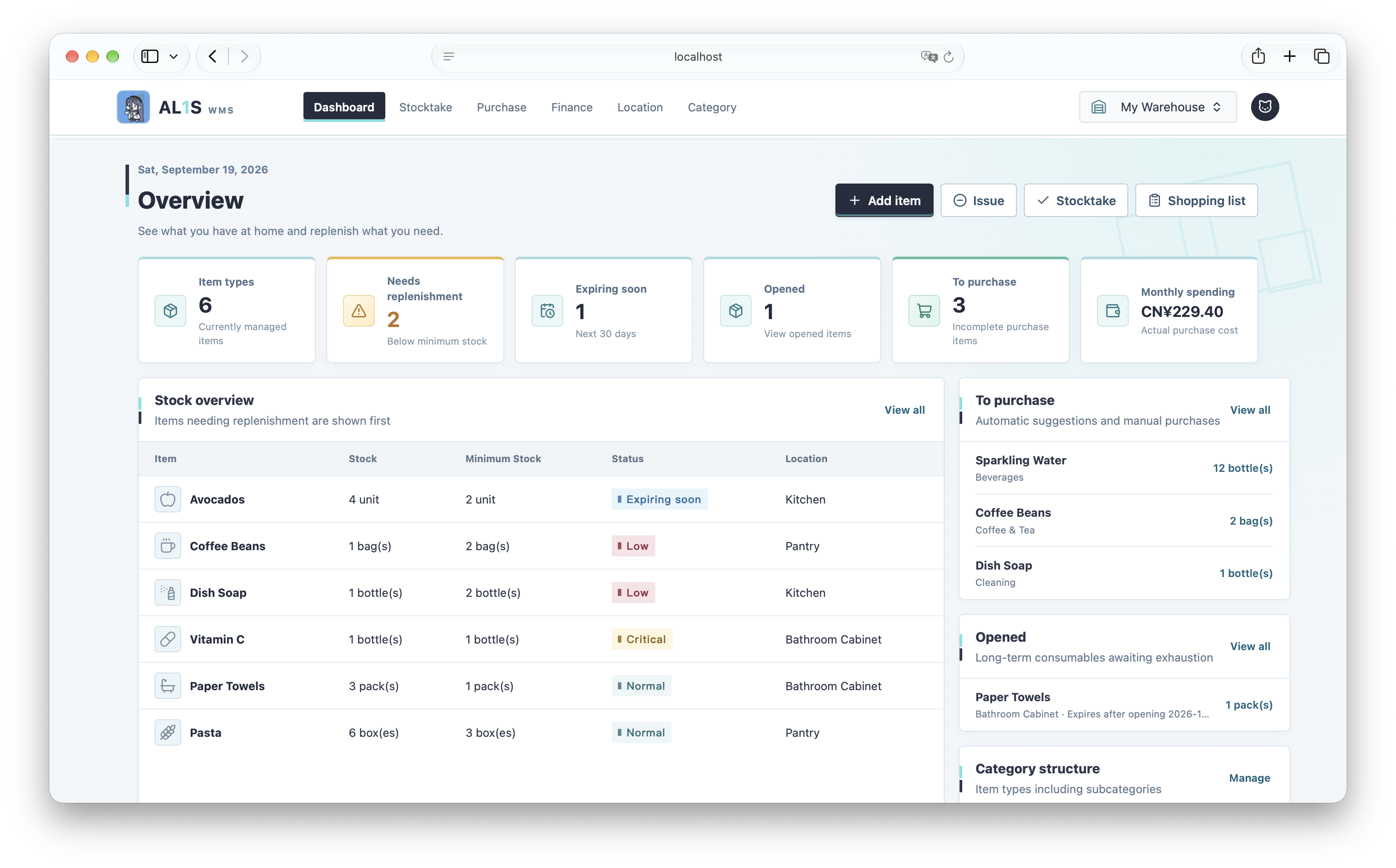
Food and household supplies become batches with quantities, locations and expiry dates. The overview brings expiring items, low stock and planned purchases together, so you can check what remains before shopping and record quantities and actual costs after receiving a purchase.
Sources and further reading
- RIcter’s original project postCreator · September 19The origin, receipt-entry claim and the creator’s QQ voice workflow.
- AL1S-WMS project documentationSource · Pinned revisionInventory, batches, replenishment, deployment and unfinished features at revision c0da60d.
Receipts and voice become ways to enter stock
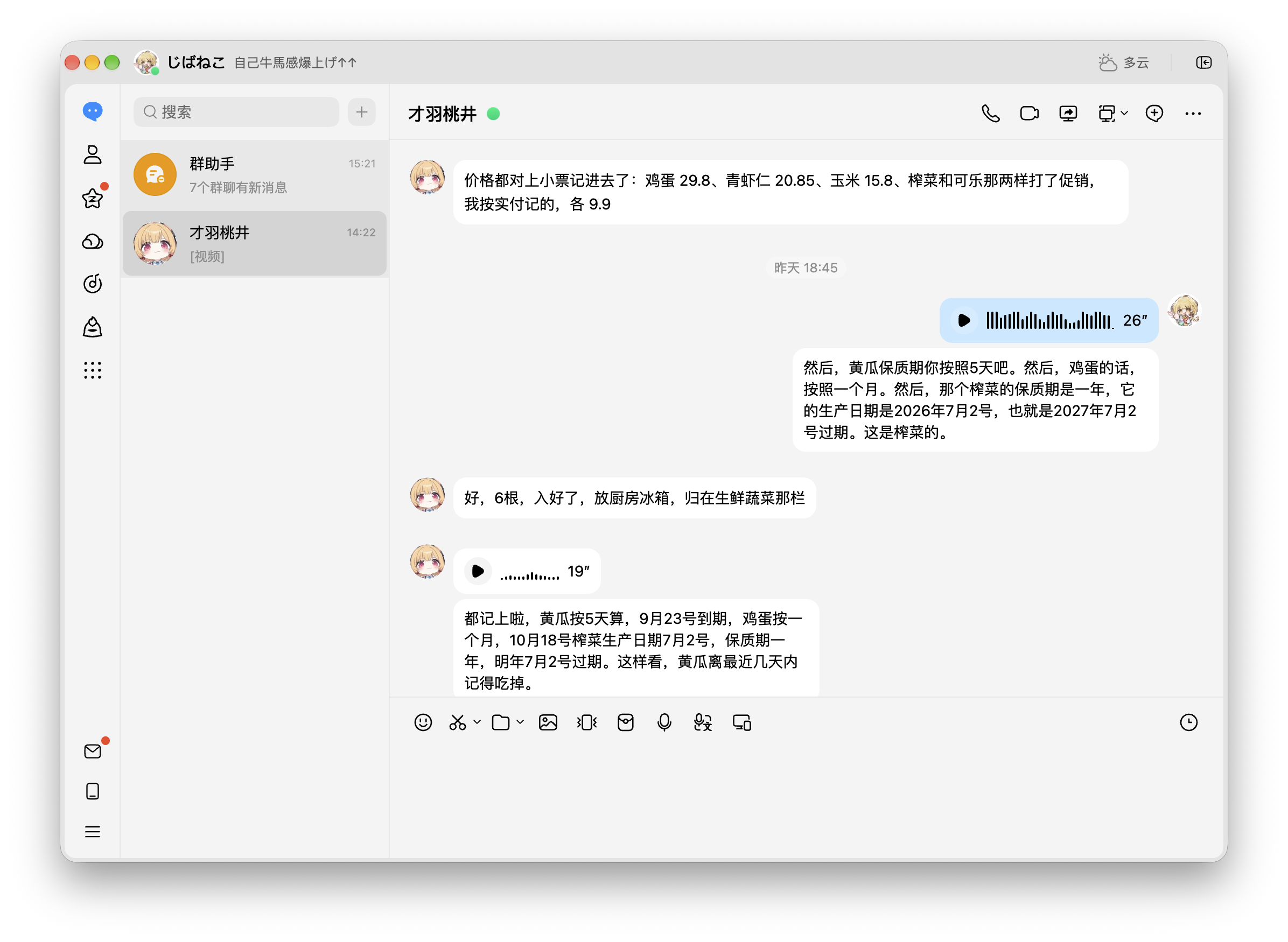
The creator says an AI assistant can enter purchases from a receipt photo. Existing stock was harder to catalogue, so they connected the assistant to QQ and walked around the house describing locations and quantities by voice. The screenshot also shows expiry details being supplied and a stock-entry reply.
The project’s MCP tool interface connects the assistant to inventory records for queries and changes. Low stock produces replenishment suggestions; planning a purchase turns a suggestion into a shopping item. Purchases, consumption and moves still need to be recorded.
Sources and further reading
- RIcter’s original project postCreator · September 19The origin, receipt-entry claim and the creator’s QQ voice workflow.
- AL1S-WMS project documentationSource · Pinned revisionInventory, batches, replenishment, deployment and unfinished features at revision c0da60d.
A small problem you can adapt
Source code and installation instructions are public. The project currently requires self-hosting, and multi-user household support remains on its TODO list. Start with the documentation and original post; we have not installed it or tested receipt-recognition accuracy.
If you mainly forget what is in the fridge, begin with a few items you often buy twice or forget to use. Record their locations, quantities and dates; consider AI entry once you actually use that record. This extends the material-to-result idea: receipts and voice messages feed something useful on the next shopping trip.
- See the project and installation instructionsSelf-hosting is required; a connected assistant can use the project’s tool interface.
- Read on: turn material you already have into a useful result
Sources and further reading
- AL1S-WMS project documentationSource · Pinned revisionInventory, batches, replenishment, deployment and unfinished features at revision c0da60d.