
01 / ANALYSIS
Product analysis
- Maturity
- Open source
- Confidence
- Partial
- Verified
- 2026-07-18
- Commercial relation
- Not sponsored
Problem solved
Ordinary HTTP telemetry can show that a request was slow or failed, but not which model call, retrieval result, tool argument, or agent branch caused it. Wiring every framework to a separate observability product creates another data silo and vendor dependency.
Why it was selected
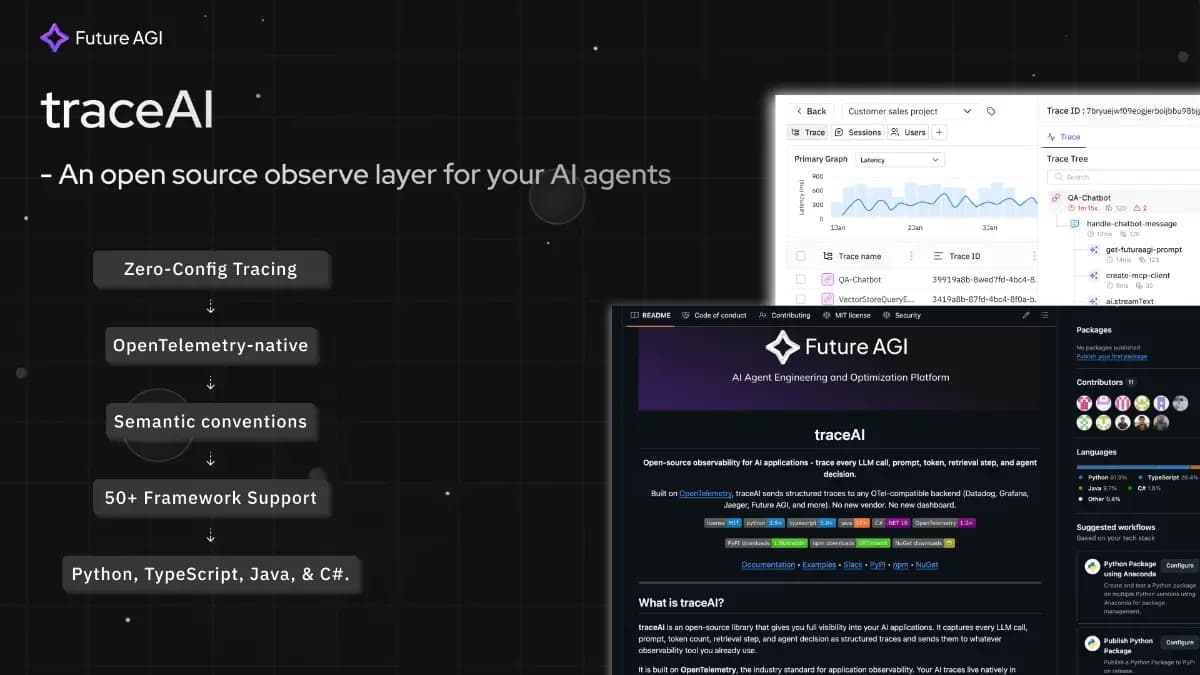
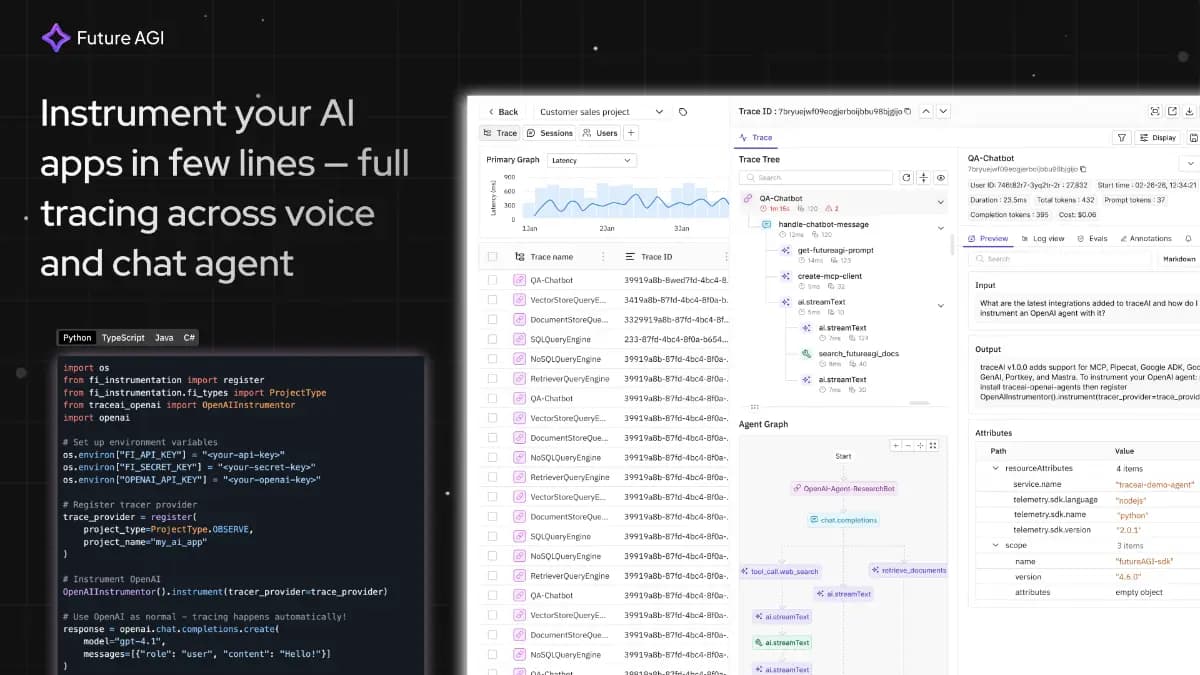
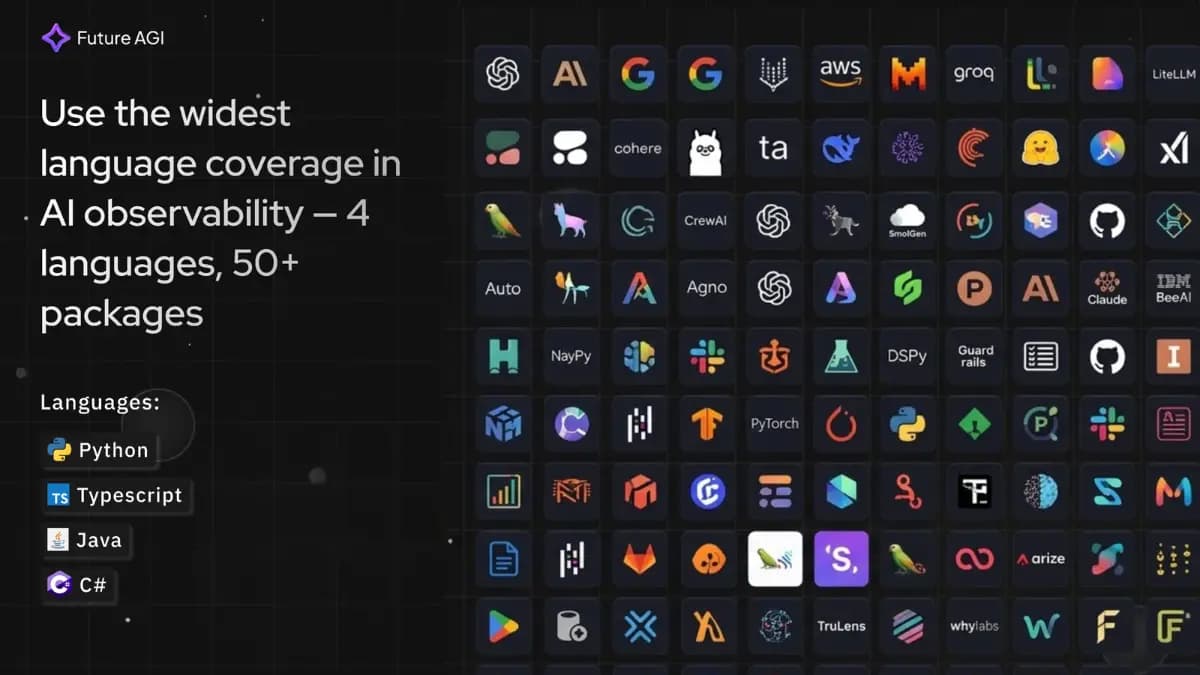
Three original publisher images show the trace tree, call detail, agent graph, setup code, and advertised framework coverage. The public repository does contain four language trees, privacy controls, tests, docs, and an Apache-2.0 license. Its README lists 50+ integrations and documents custom TracerProvider and OTLP exporters, while its own compatibility matrix shows most coverage in Python, TypeScript, and Java; C# currently lists only the core package and checks OpenAI alone. GitHub currently has one v1.0.0 release dated March 11, 2026 while main continues to change. Dependencies should be pinned per language package rather than inferred from the repository tag.
What is genuinely novel
LLM tracing and OpenTelemetry instrumentation are established ideas. traceAI's more distinctive choice is one set of GenAI semantic attributes and adapters across Python, TypeScript, Java, and C#, with spans routed into an existing OTLP pipeline. The real differentiation depends on packages keeping pace with upstream SDKs, not the number of logos on a launch image.
Best for
Python, TypeScript, or Java teams already using OpenTelemetry that need agent execution traces and will validate exporters, package versions, captured fields, redaction, and retention with non-sensitive samples; C# users should first treat the scope as the core library and only what the current matrix explicitly supports
Editorial evaluation
KEEP DISCOVERING
A few more products worth noticing
A small set selected by product shape and profile similarity, with independent verification records.
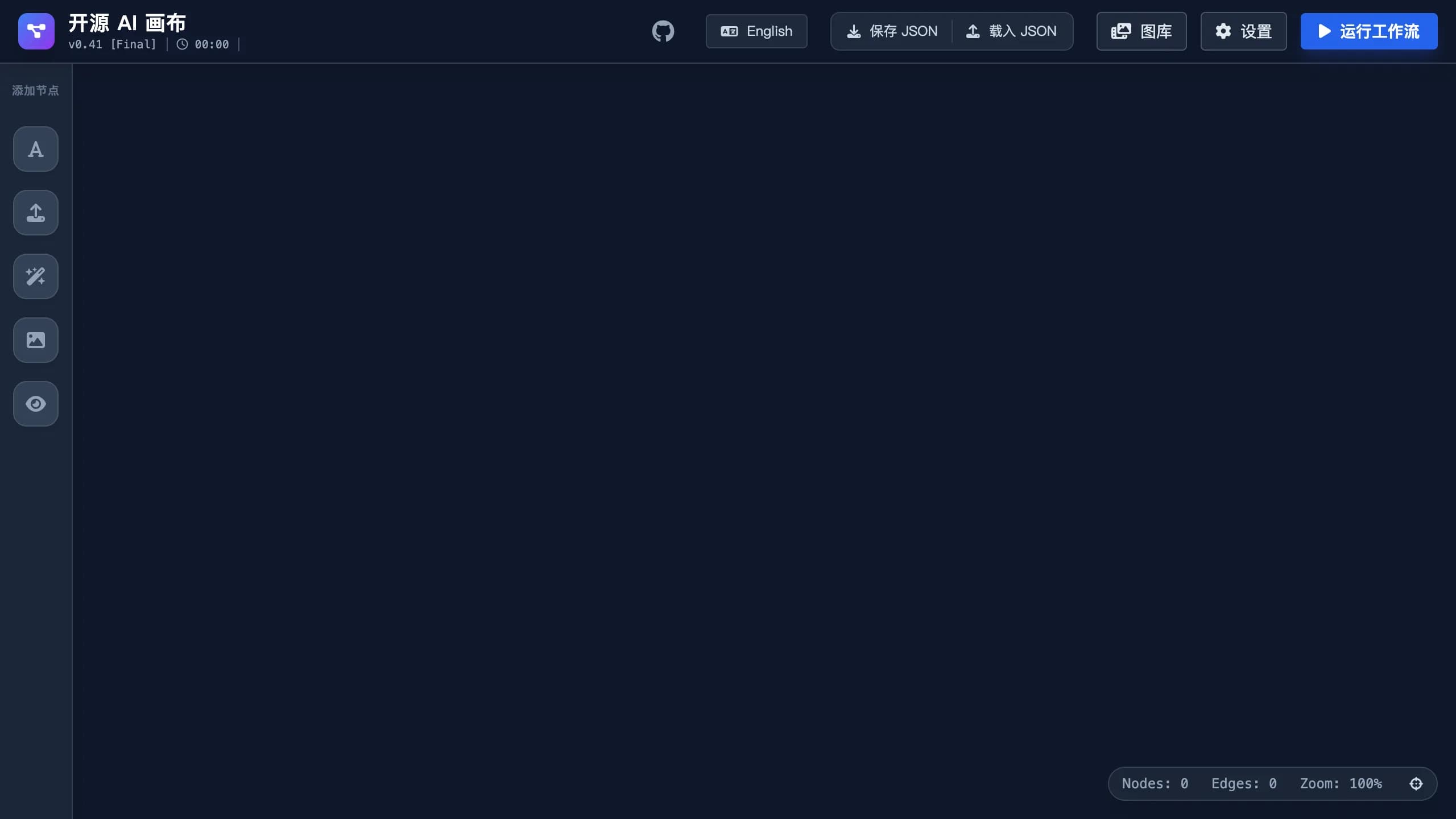
Open Source AI Canvas
Xiao Huaihua
What it solves
When experimenting with several image models, prompts, model APIs, outputs, and versions quickly scatter across tools. Developers lose reproducible working states and struggle to switch between OpenAI and Gemini.
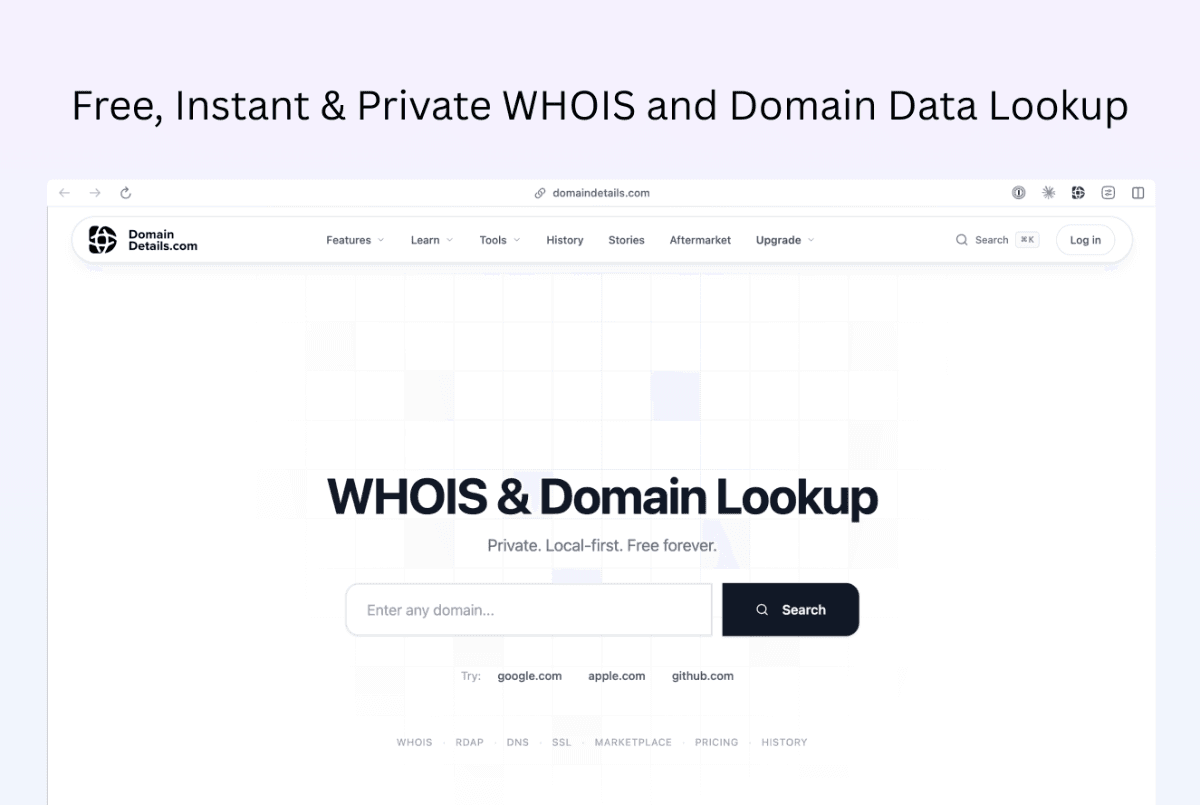
Domain Details
Uneed publisher julianengel / Julian Engel and Simple Bytes
What it solves
Domain research often means moving among registries, WHOIS/RDAP, DNS, certificates, Wayback, registrar pricing, and several aftermarket venues. Domain Details reduces that fragmentation with a shared search, browser-local history, bulk entry points, and monitoring alerts.
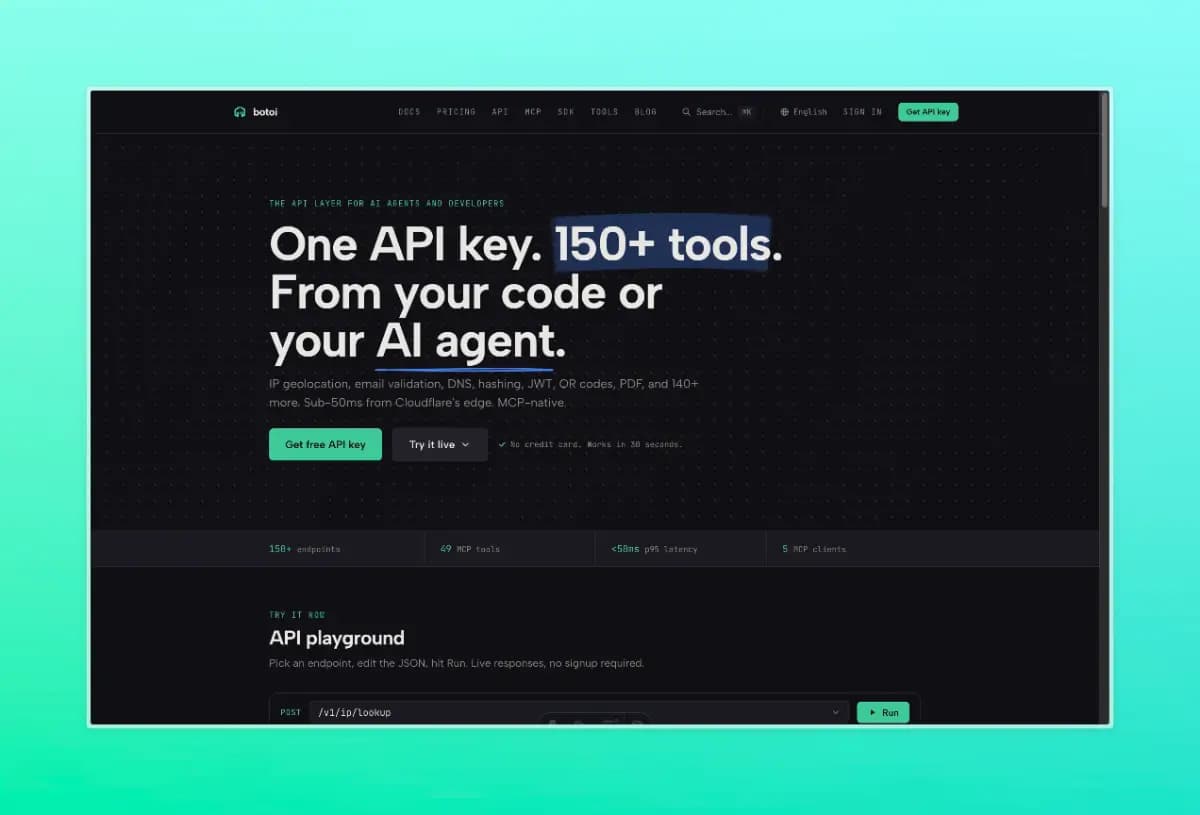
Botoi
Uneed publisher botoi / Savi Business Management LLC
What it solves
Developers and AI agents often integrate separate libraries or providers for hashing, DNS, conversion, QR, currency, text, and network checks. Botoi tries to reduce that repeated integration through shared authentication, a JSON contract, an SDK, and an MCP manifest.
02 / WHAT STANDS OUT
Three product decisions worth noticing
Use semantics as the decoupling layer
Normalize span names and attributes for models, retrieval, tools, and agent steps before choosing storage. Teams can then preserve existing alerting and visualization investments.
Design observability around data minimization
Prompts, outputs, tool arguments, and errors are prime leakage paths. Production templates should hide content by default, enable fields only as needed, and test error paths explicitly.
Replace logo walls with a compatibility matrix
Each adapter should publish its language, package, upstream versions, test status, and last verification. A '50+' claim becomes useful only when it resolves to those cells.
Product insight worth carrying forward
Map product-specific invocation events into open semantic conventions, then separate instrumentation from storage. Make content capture opt-in by field as the production baseline instead of a remediation switch after deployment.
03 / DO NOT COPY
What not to copy
04 / LIMITS & RISKS
Limits and risks
The docs explicitly say full prompts, completions, tool arguments and results, and error context are captured by default; every hide flag for inputs, outputs, messages, images, embeddings, and model parameters defaults to false. Even maximum redaction keeps model names, token counts, timing, span types, and error messages, which can themselves contain sensitive material. The default environment guide requires Future AGI API and secret keys and points HTTP and gRPC collectors to its cloud. Custom collectors and bring-your-own TracerProvider are documented but were not exercised here. Uneed copy and the first launch image say MIT, while the current repository LICENSE, README badge, and NOTICE all say Apache-2.0. Uneed claims four-language full parity and 35+ frameworks, the images and README say 50+, the repository's own matrix contains many blanks, and cloud pricing says only 30+ libraries. The cloud free tier currently advertises 50 GB of tracing per month with 30-day retention and overage from USD 2 per GB. The data-region page says US is available to all plans and EU Frankfurt only to Enterprise, while the pricing card presents US and EU side by side. Security pages self-report SOC 2 Type II and ISO 27001 certification and HIPAA support through a BAA on Scale or Enterprise; they list AWS, ClickHouse Cloud, Cloudflare, Stripe, plus platform-wide HubSpot, PostHog, Sentry, and Intercom. No downloadable certificate, audit report, or penetration-test summary was public, so procurement must request them. The open-source instrumentation, Future AGI hosted platform, and its 'Self-host it' claim are three separate boundaries and should not be treated as interchangeable.
Compared with alternatives
Compared with products such as LangSmith that more tightly couple a framework and hosted backend, traceAI puts open semantics and replaceable OTLP backends first. Compared with full observability products such as Langfuse or Phoenix, it is closer to a cross-framework instrumentation layer, while Future AGI Cloud is an optional but documentation-default destination. The tradeoff is fragmented package versioning, an asymmetric compatibility matrix, and content-capture defaults that require active governance.
05 / EVIDENCE
Visual evidence
06 / SOURCE
Source and verification
- Original author
- Uneed publisher sai.baba-396e / Future AGI, Inc. and open-source contributors
- Country / region
- United States / India
- Maturity
- Open source
- Confidence
- Partial
- Discovered
- 2026-07-18
- Last verified
- 2026-07-18
What this review checked
We verified the Uneed launch and publisher identity; three publisher-uploaded originals; Future AGI's site, pricing, privacy, terms, security, and subprocessor pages; and the current traceAI GitHub repository, README, compatibility matrix, license, NOTICE, SECURITY policy, configuration, source, release, and commit history. The public repository was shallow-cloned to a temporary directory for read-only inspection. We did not install PyPI, npm, JitPack, or NuGet packages; create a Future AGI account; generate keys; run examples; call a model; collect or transmit any trace; connect another backend; open billing; or pay. Installation, runtime overhead, field completeness, upstream-version compatibility, and exporter behavior therefore remain independently untested.
Latest change
Initial profile created from the current Uneed launch, three maker originals, Future AGI cloud pricing and data boundaries, and traceAI's repository, license, configuration, compatibility matrix, and security material. The public repository was only shallow-cloned for read-only review; no package was installed or run, no account was created, and no trace was sent. License, coverage definitions, default content capture, cloud endpoints, regions, retention, and certification-evidence boundaries are recorded.
Ready to explore further?
Open the product, or return to the original source to verify the details.
ONE-TAP FEEDBACK
Did this profile help you judge the product?
One tap. No writing required.