
01 / ANALYSIS
Product analysis
- Maturity
- Open source
- Confidence
- Verified
- Verified
- 2026-07-11
- Commercial relation
- Not sponsored
Problem solved
When experimenting with several image models, prompts, model APIs, outputs, and versions quickly scatter across tools. Developers lose reproducible working states and struggle to switch between OpenAI and Gemini.
Why it was selected
This is a complete build log with a working product. The author documents a failed all-at-once attempt, the shift to detailed notes and module delivery, and compatibility problems across OpenAI-style and Gemini image endpoints.
What is genuinely novel
Turn complex requirements into versioned notes, ship one verifiable module per iteration, and keep rollback points.
Best for
First-time builders using AI for a multi-module tool
Editorial evaluation
KEEP DISCOVERING
A few more products worth noticing
A small set selected by product shape and profile similarity, with independent verification records.
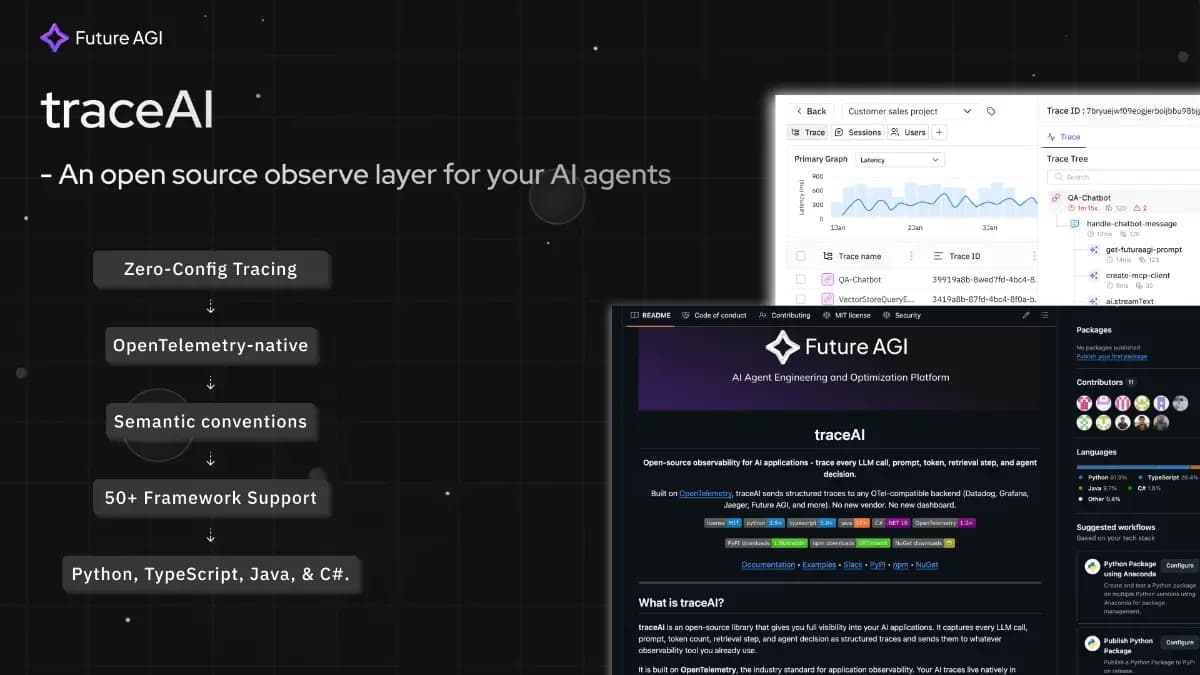
traceAI
Uneed publisher sai.baba-396e / Future AGI, Inc. and open-source contributors
What it solves
Ordinary HTTP telemetry can show that a request was slow or failed, but not which model call, retrieval result, tool argument, or agent branch caused it. Wiring every framework to a separate observability product creates another data silo and vendor dependency.

Domain Details
Uneed publisher julianengel / Julian Engel and Simple Bytes
What it solves
Domain research often means moving among registries, WHOIS/RDAP, DNS, certificates, Wayback, registrar pricing, and several aftermarket venues. Domain Details reduces that fragmentation with a shared search, browser-local history, bulk entry points, and monitoring alerts.
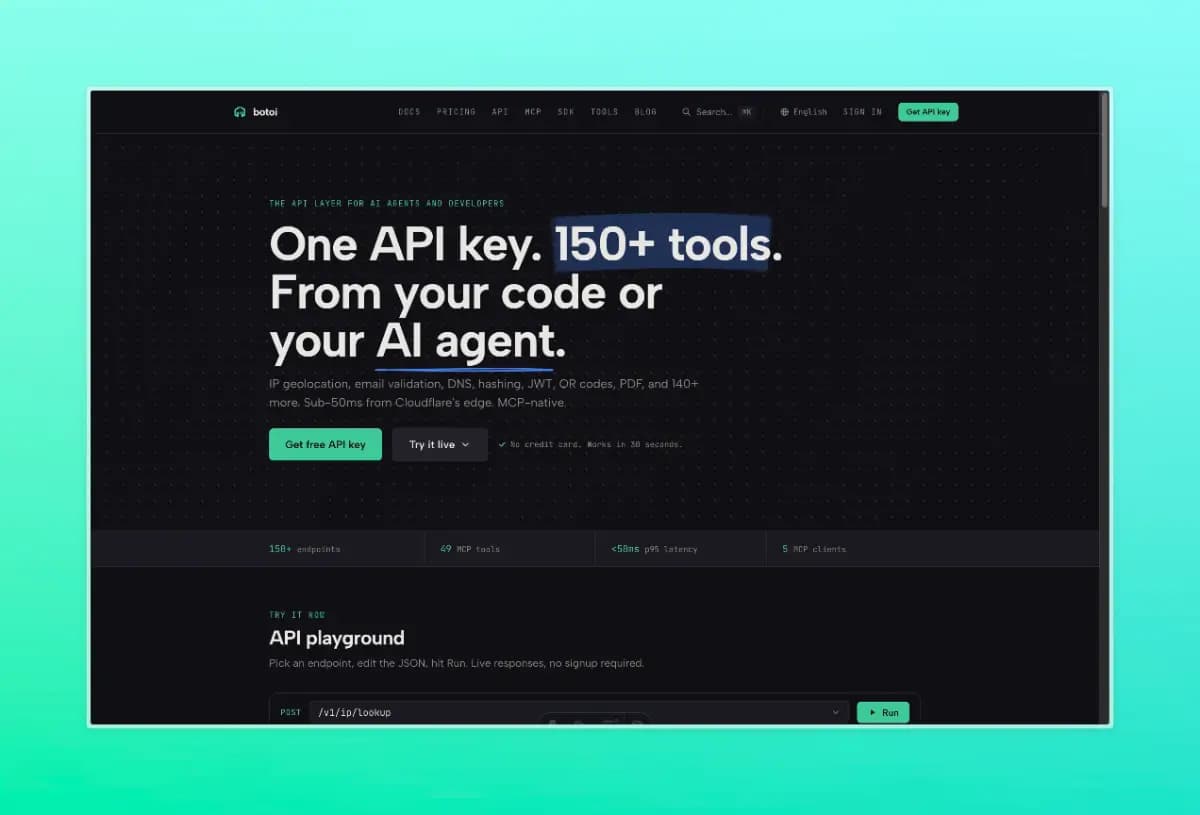
Botoi
Uneed publisher botoi / Savi Business Management LLC
What it solves
Developers and AI agents often integrate separate libraries or providers for hashing, DNS, conversion, QR, currency, text, and network checks. Botoi tries to reduce that repeated integration through shared authentication, a JSON contract, an SDK, and an MCP manifest.
02 / WHAT STANDS OUT
Three product decisions worth noticing
Open source
Turn complex requirements into versioned notes, ship one verifiable module per iteration, and keep rollback points.
Build log
Turn complex requirements into versioned notes, ship one verifiable module per iteration, and keep rollback points.
Product insight worth carrying forward
Turn complex requirements into versioned notes, ship one verifiable module per iteration, and keep rollback points.
03 / DO NOT COPY
What not to copy
04 / LIMITS & RISKS
Limits and risks
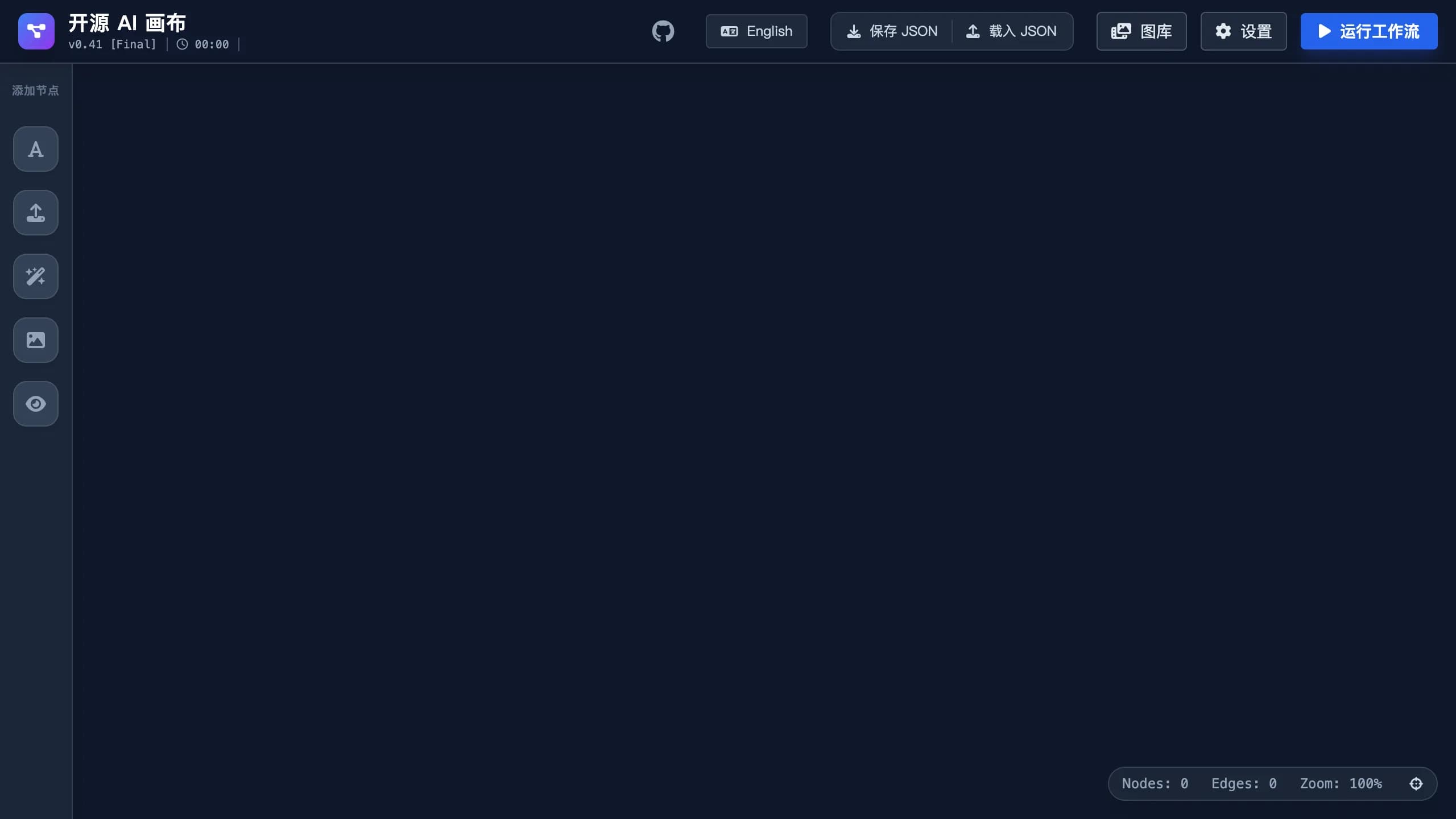
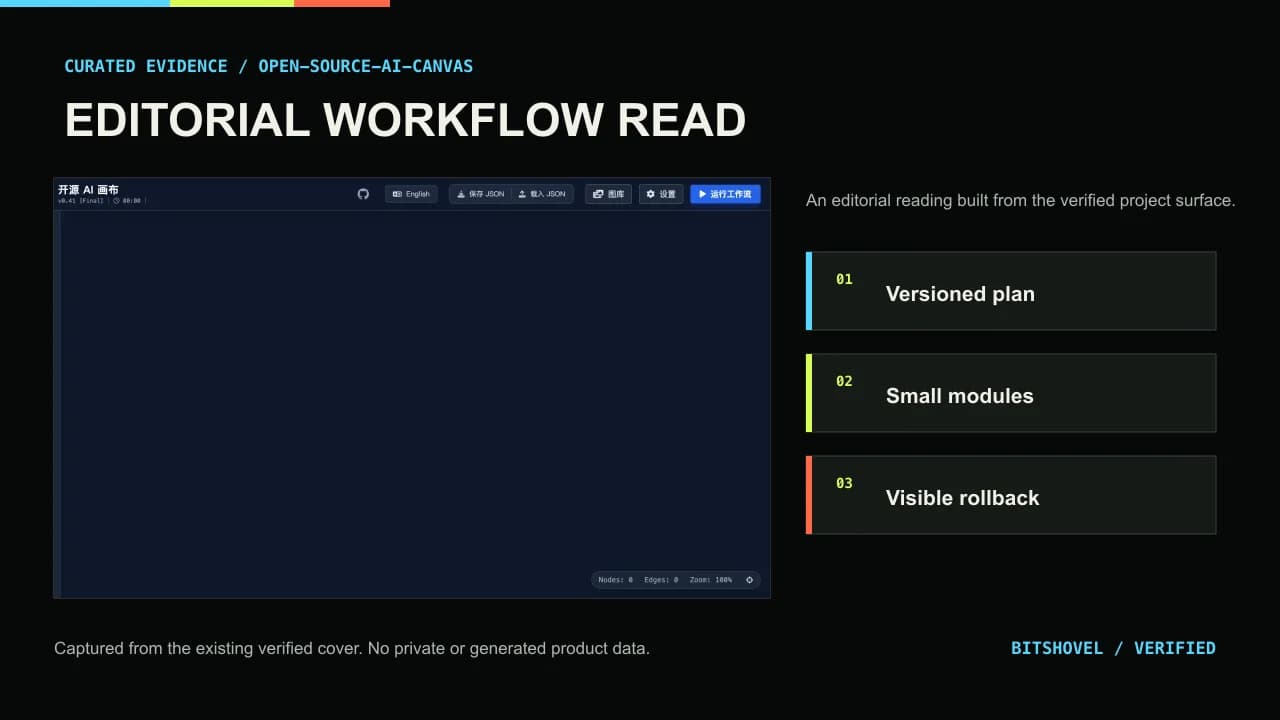
The empty canvas has limited onboarding and prototype-level recovery. Custom API keys and multi-provider support create security, cost, and protocol-change risks, while a front-end-only model limits persistence and collaboration.
Compared with alternatives
Compared with closed workflow platforms, it offers front-end-only deployment, custom APIs, and portable JSON. Its weaker points are limited onboarding and prototype-level visual polish.
05 / EVIDENCE
Visual evidence
06 / SOURCE
Source and verification
- Original author
- Xiao Huaihua
- Country / region
- China
- Maturity
- Open source
- Confidence
- Verified
- Discovered
- 2025-12-10
- Last verified
- 2026-07-11
What this review checked
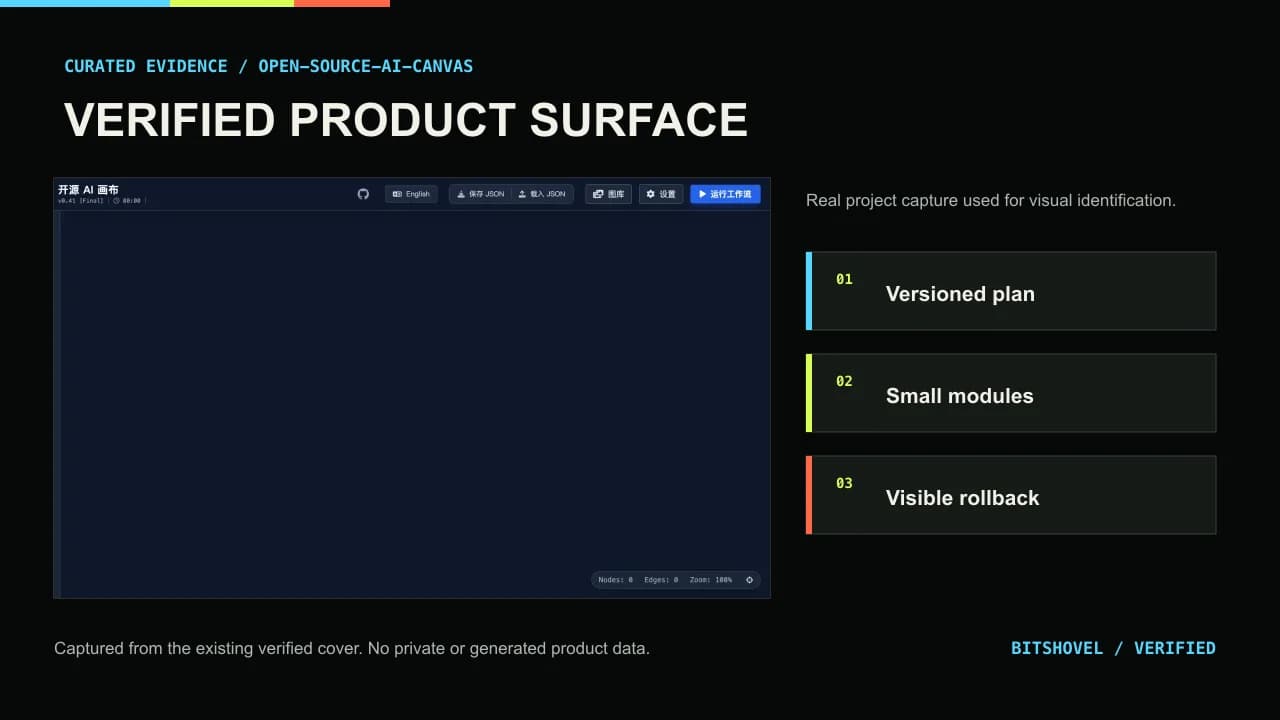
The live version opened to an empty workflow canvas with text, upload, generation, image, preview, JSON portability, gallery, settings, and execution. The interface maps clearly to the modular process in the article.
Ready to explore further?
Open the product, or return to the original source to verify the details.
ONE-TAP FEEDBACK
Did this profile help you judge the product?
One tap. No writing required.