
01 / ANALYSIS
Product analysis
- Maturity
- Commercial
- Confidence
- Partial
- Verified
- 2026-07-19
- Commercial relation
- Not sponsored
Problem solved
Developers and AI agents often integrate separate libraries or providers for hashing, DNS, conversion, QR, currency, text, and network checks. Botoi tries to reduce that repeated integration through shared authentication, a JSON contract, an SDK, and an MCP manifest.
Why it was selected
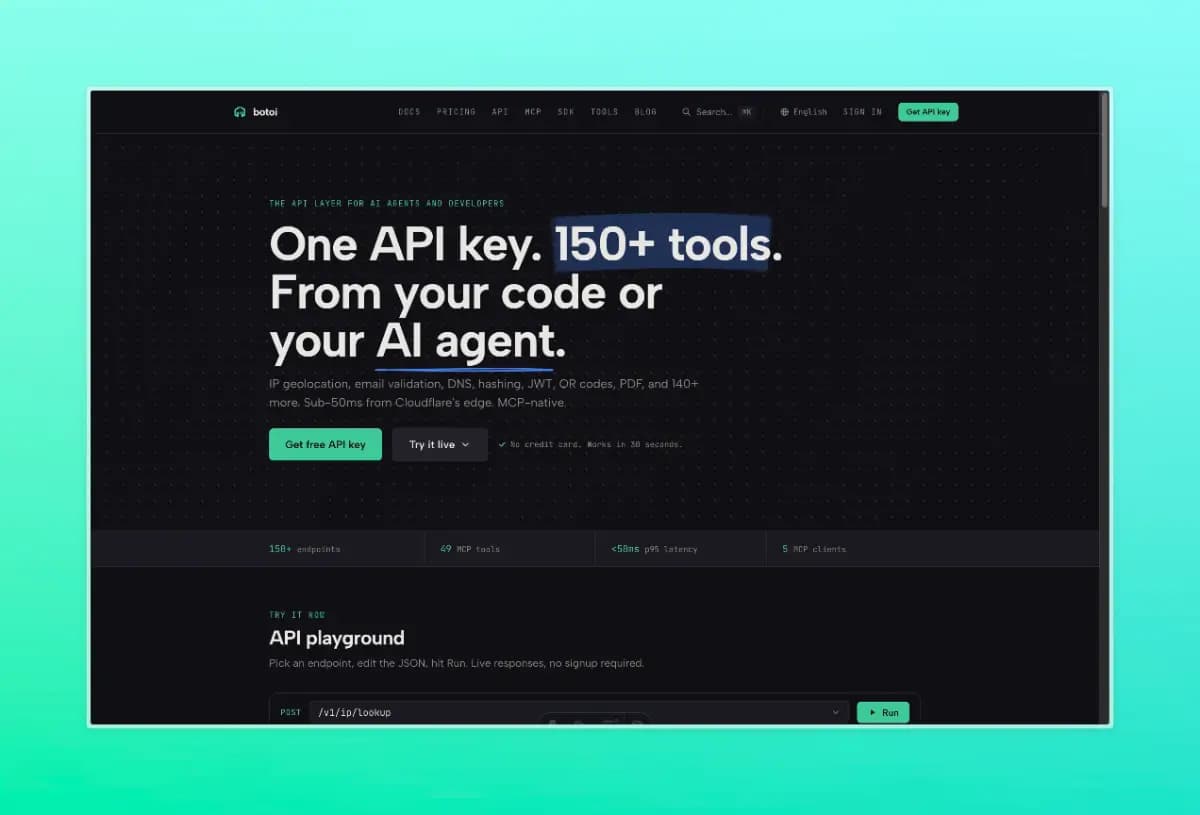
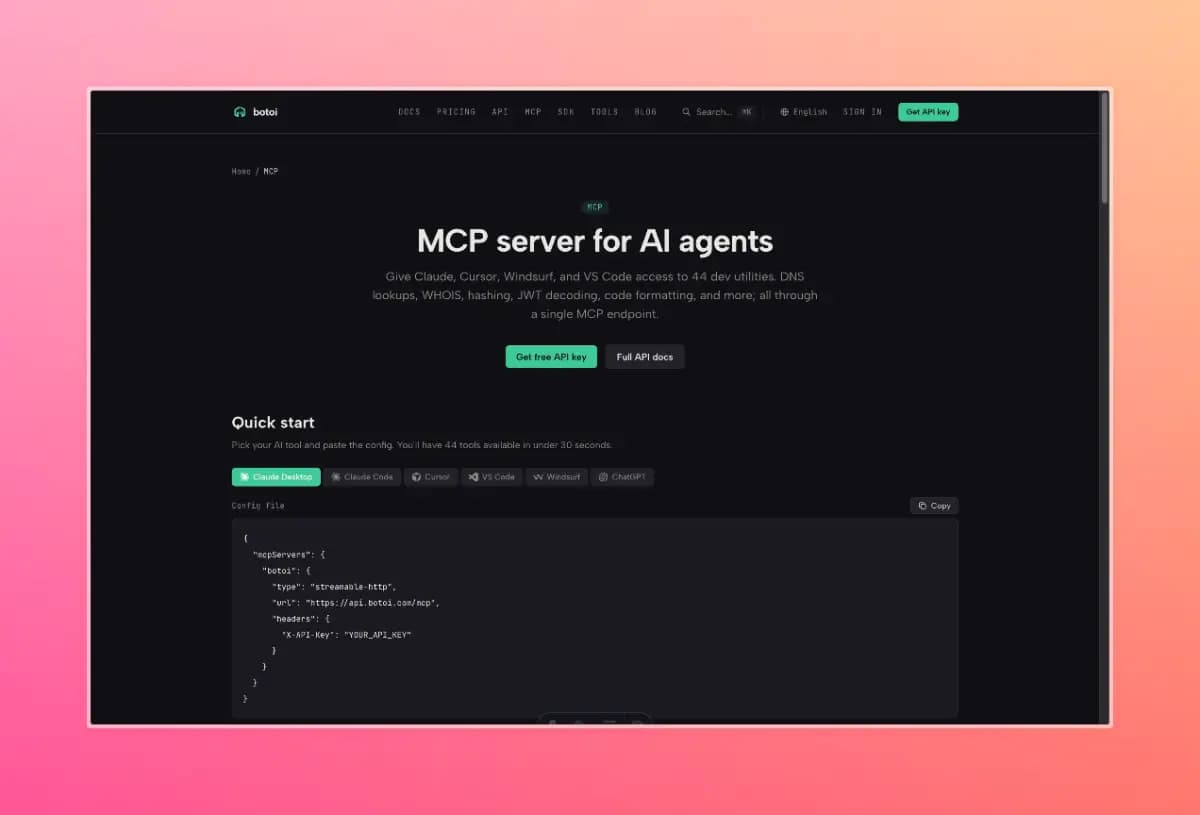
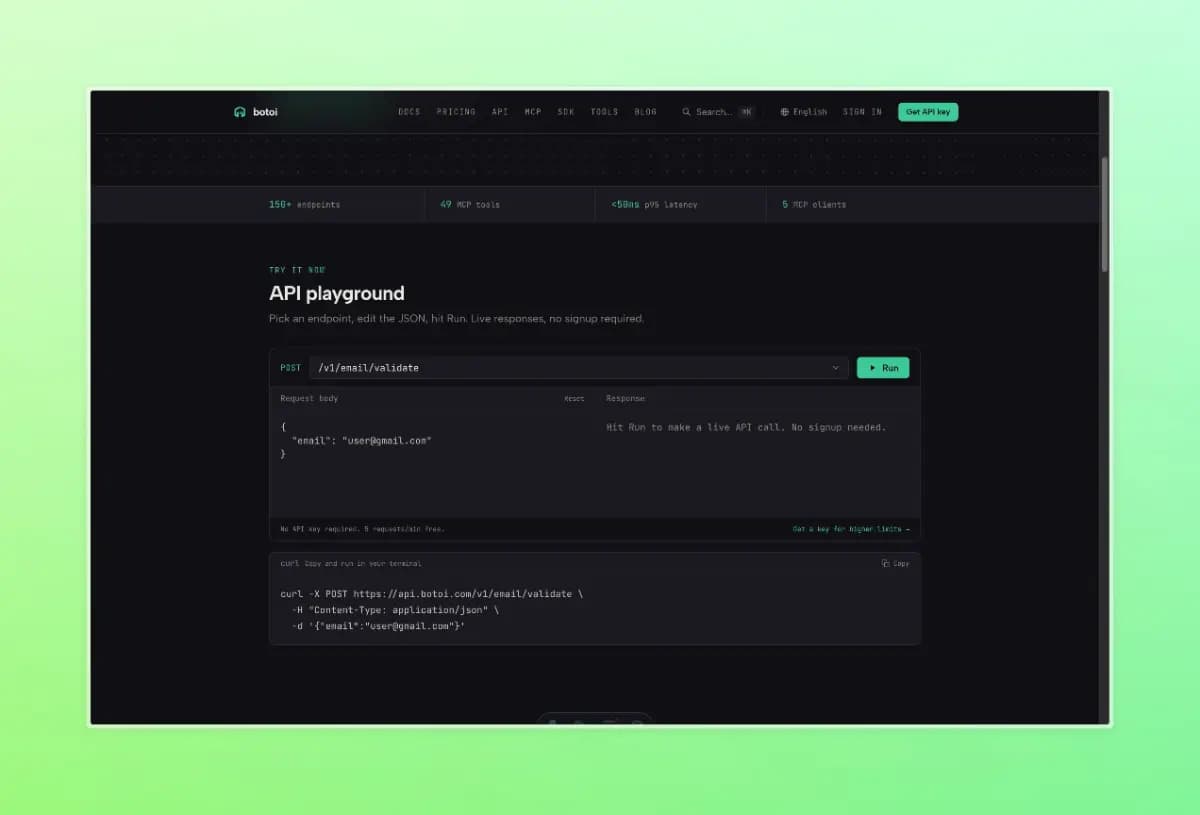
All three selected 1200 × 815 images are current product media uploaded by Botoi's publisher to Uneed. The first shows the site and API Playground, the second shows remote MCP configuration, and the third gives a closer view of the Playground request and code sample. They are attributable product pages, not decorative images generated by BitShovel. Text such as 44/49 MCP tools is retained as the maker's launch-era presentation and explicitly separated from the live manifest. The images prove how the publisher presents Botoi, not independently run APIs, latency, SDK, MCP clients, keys, limits, or payment flows.
What is genuinely novel
Utility API aggregators, SDKs, and MCP servers are not individually new. The useful combination is exposing the same capabilities to code and agents with machine-readable OpenAPI and MCP manifests. The current catalog drift also shows that this combination is maintainable only when capabilities, permissions, and plans are generated from one source.
Best for
Developers who want one API or MCP connection for common utilities, can allowlist operations, and will independently verify outputs, limits, and data handling; not for granting an agent the entire changing tool catalog, processing highly sensitive data, or depending on untested latency and SLA claims in critical systems
Editorial evaluation
KEEP DISCOVERING
A few more products worth noticing
A small set selected by product shape and profile similarity, with independent verification records.
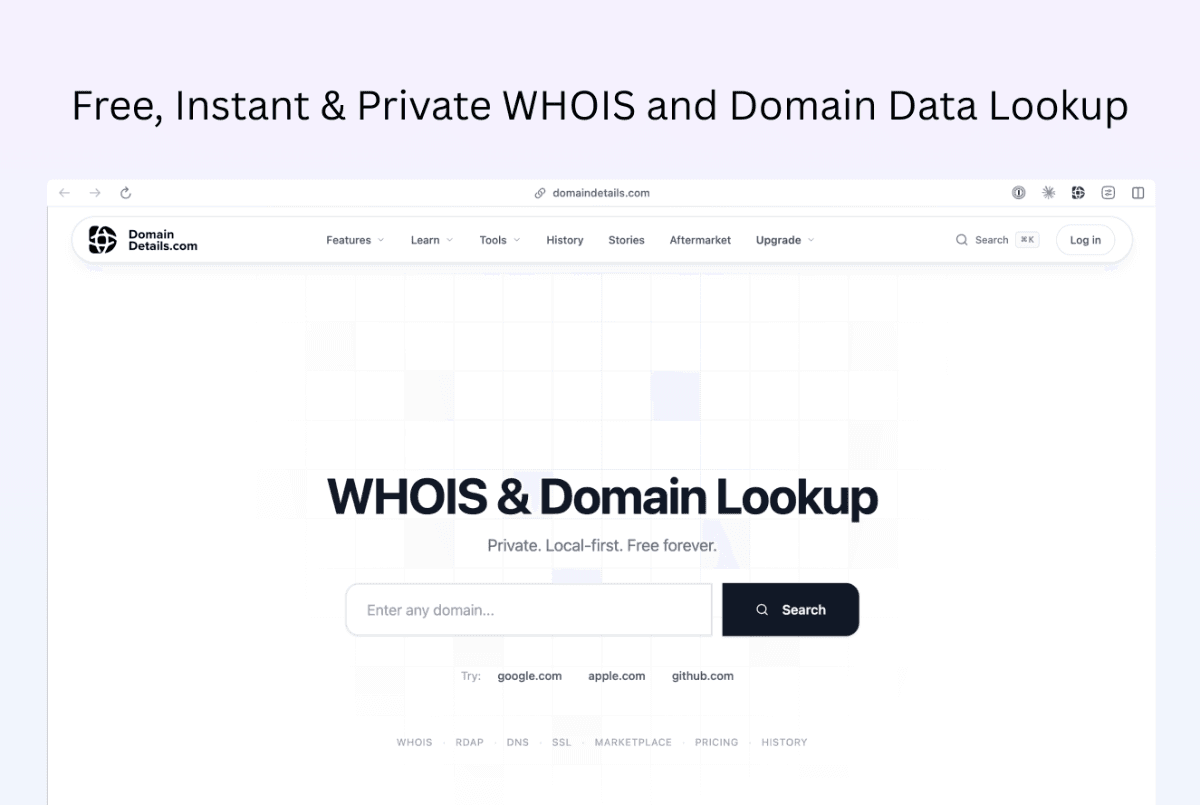
Domain Details
Uneed publisher julianengel / Julian Engel and Simple Bytes
What it solves
Domain research often means moving among registries, WHOIS/RDAP, DNS, certificates, Wayback, registrar pricing, and several aftermarket venues. Domain Details reduces that fragmentation with a shared search, browser-local history, bulk entry points, and monitoring alerts.
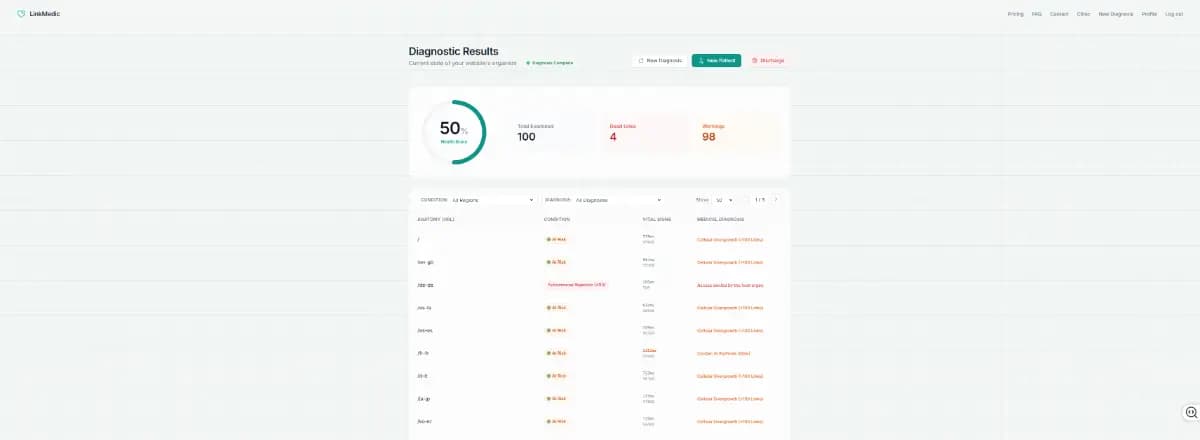
LinkMedic
Uneed publisher stoki (LuckyHacky) / service operator Martin Štuka
What it solves
Broken links, failed redirects, and server errors accumulate as content and external destinations change. Many site owners do not need a full SEO suite; they need to know what broke, where it appears, when it changed, and what to fix first.
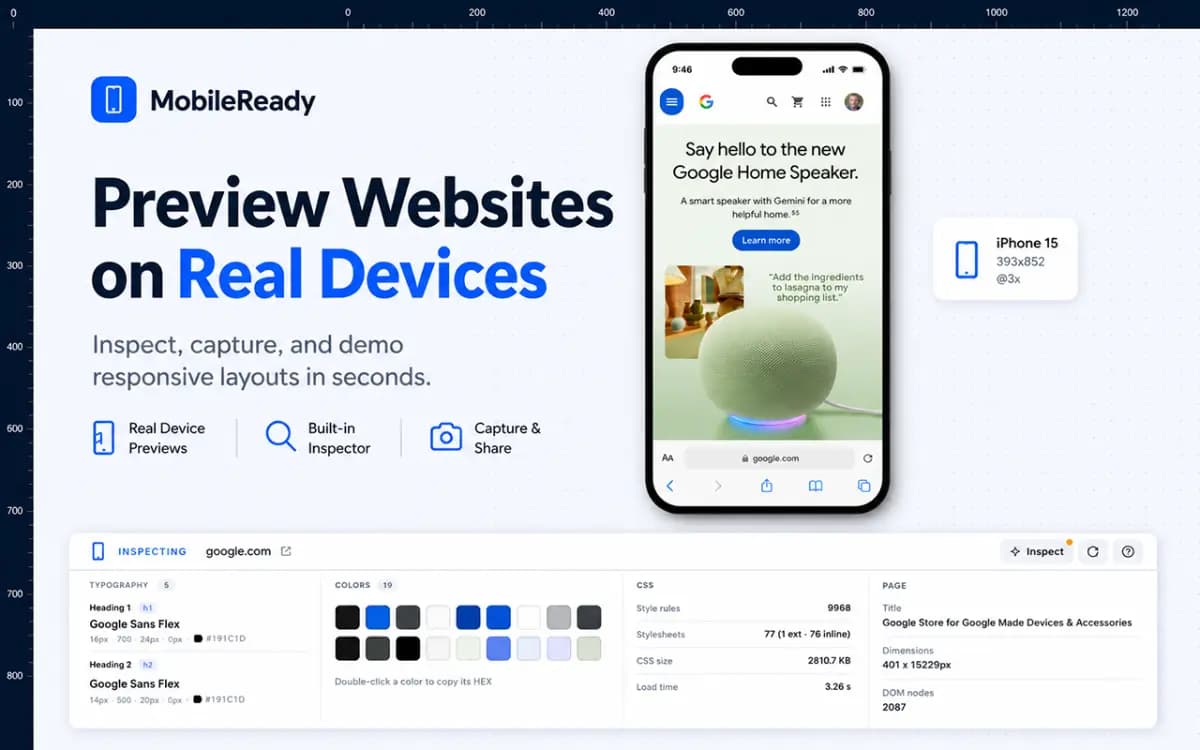
MobileReady
Uneed publisher artur-196f / Kenton Commerce Studio
What it solves
Responsive review often jumps among browser developer tools, multiple windows, screenshot and annotation apps, and client presentations. Device sizes, page typography and colors, spacing, and full-page captures are difficult to compare in one context.
02 / WHAT STANDS OUT
Three product decisions worth noticing
Generate every count and plan claim from machine data
OpenAPI, the MCP manifest, SDK methods, and plan entitlements should generate site counts and examples at release time. If 44, 49, 150, 190, 204, and 207 are all maintained by hand, every update creates an untrustworthy entry point.
Make side effects first-class tool metadata
Read-only work, KV writes, public-link creation, third-party fetches, billing, and sensitive inputs need machine-readable labels so MCP clients can deny or confirm by risk instead of relying on one blanket 'read-only' sentence.
Separate browser tools from server-side tools
A browser converter can keep input local, while the API Playground, REST, MCP, paste, and short URL each follow different data paths. Every entry point should explain processing location, logs, retention, deletion, and downstream providers before submission.
Product insight worth carrying forward
Make OpenAPI the single publishable source for API, SDK, MCP, plan entitlements, and marketing counts, then attach side-effect, external-network, retention, authentication, and cost labels to every tool. Disclose browser-local tools separately from server-side APIs.
03 / DO NOT COPY
What not to copy
04 / LIMITS & RISKS
Limits and risks
The main risk is drift across versions, permissions, and data claims. The home/API/SDK pages say 49 MCP tools, the MCP page says 44, while the live official manifest returns 207 unique tools. The site also alternates between 150+ and 190+ APIs while current OpenAPI has 204 paths and 207 operations. For plans, the maker's Uneed copy says 100 free requests/day and $5/month for 10,000; the home footer says 500/day; API and MCP pages describe anonymous access as 5/minute and 100/day; and the current pricing page gives registered free users 1,000/day with Starter at $9/month. Some may be anonymous versus registered tiers, but the surfaces do not consistently qualify them. The SDK page still shows 0.1.3 while npm latest is 0.6.0. For permissions, the MCP page says its 44 tools are read-only apart from encryption/decryption, yet the live 207-tool manifest includes `paste_create`, `short_url_create`, short-link click counters, and multiple external URL/DNS lookups; granting the whole catalog to an agent is not equivalent to read-only access. For data, the privacy policy says API payloads are kept only long enough to fulfil a request, while official OpenAPI says `paste/create` stores about 1 MB in KV for up to 24 hours and short URLs retain targets and click counts without a stated privacy-page retention or deletion path. Sentry may also receive truncated request context. About's no-account, no-premium, no-gating language accurately describes browser tools but not the account-based paid API. Terms require users to be over 18 while privacy only says the service is not directed below 16. Claims of <50 ms p95, 300+ edge locations, 99.9% SLA, output accuracy, and fully first-party endpoints were not independently tested here.
Compared with alternatives
Compared with multi-provider marketplaces such as RapidAPI, Botoi aims for one operator, key, and JSON shape. Compared with installing small libraries directly, it reduces dependency work but adds network, vendor, and data boundaries. Compared with REST-only utility APIs, it exposes the same surface to MCP agents. The meaningful difference is not raw count but whether catalog, permissions, and retention stay synchronized.
05 / EVIDENCE
Visual evidence
06 / SOURCE
Source and verification
- Original author
- Uneed publisher botoi / Savi Business Management LLC
- Country / region
- United Arab Emirates
- Maturity
- Commercial
- Confidence
- Partial
- Discovered
- 2026-07-19
- Last verified
- 2026-07-19
What this review checked
This was a read-only review of the current Uneed launch and publisher identity, three maker originals, live site, About, API, MCP, SDK, pricing, privacy, terms, public OpenAPI, public MCP tool manifest, and npm registry metadata. The live manifest returned 207 unique tools; OpenAPI 1.0.0 contained 204 paths and 207 operations; npm currently marks 0.6.0 as latest and requires Node.js 20+. We did not register, obtain an API key, run the Playground, submit content to a tool, connect an MCP client, install or import the SDK, create a paste or short URL, trigger an external lookup, test limits/latency/SLA, subscribe, or pay.
Latest change
Initial profile created from the current Uneed launch, publisher identity, three exact 1200 × 815 maker product originals, live site, About, API, MCP, SDK, pricing, privacy, terms, public OpenAPI, public MCP manifest, and npm metadata. No registration, key request, Playground run, content submission, MCP connection, SDK installation, state creation, limit/latency/SLA test, or payment occurred. Exact image provenance, count and plan drift, tool side effects, payload retention, processors, SDK version, age, and evidence boundaries are recorded.
Ready to explore further?
Open the product, or return to the original source to verify the details.
ONE-TAP FEEDBACK
Did this profile help you judge the product?
One tap. No writing required.