AI video · Case study
Migration: bringing hand-drawn characters and AI backgrounds into one film
This team drew its characters by hand, used AI to animate the world around them, and joined the two shot by shot.
Published · Reviewed
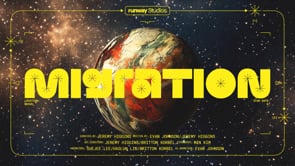 Watch original film ↗
The 'first' claim and production timeline come from Runway's behind-the-scenes account. Grant amount, sales, platform receipts and profit are not public.
Check this resultMigration is especially useful for working backward from the finished film. Its characters are hand-drawn; generated and animated backgrounds are joined through compositing, shadows and sound. Runway also exposes drafts and unused tests, making the failures and changes visible.
Verified material
Watch the film, then open the making-of material
The director's Vimeo page and Runway's official page identify the same film.
The complete Migration film is available on director Jeremy Higgins's Vimeo page, which credits writing, art direction, animators, AI animation and typography. Runway embeds the film in its making-of page alongside storyboards, rough animation and production imagery.
The film lets viewers judge whether characters and environments serve one story. In the making-of material, hand-drawn figures, generated backgrounds, manual compositing and sound work have different roles; the film was not a one-prompt output.
Sources for this section: Jeremy Higgins: complete Migration film · Runway: behind the scenes of Migration
Public account
From script to a blocked visual story
The team spent about two weeks blocking chosen story beats into boards.
Runway says Higgins and Evan Johnson began with a script, then spent about two weeks turning selected beats into storyboards. They kept the explorer's face and white outfit simple, inviting identification while letting changes in background colour carry the journey.
The team included a director and co-writer, three cel animators, a type designer, a sound designer and a screenwriter who handled AI animation. A roughly two-minute result still depended on distinct story, visual and sound roles.
Sources for this section: Runway: behind the scenes of Migration · Jeremy Higgins: complete Migration film
Public account
Why characters were drawn while the world was generated
Hand animation and generation ran in parallel: animators created performance while the team searched through backgrounds.
Three animators spent nearly four weeks rough-animating the characters by hand. In parallel, Johnson prompted hundreds of background candidates; Runway says some individual backgrounds took up to about 200 images to settle. The article shows unused early backgrounds, so the search is visible.
The team assigned palettes and themes to scenes to help continuity, then animated selected backgrounds with Runway Gen-3 Alpha, including ambient wind and clouds. The model animated the world; the character performance remained hand-drawn.
Sources for this section: Runway: behind the scenes of Migration
Public account
What was rejected and what changed
The official page preserves unused backgrounds and rough cuts; a printed-frame treatment was abandoned after tests.
Runway's making-of page exposes unused generated backgrounds and rough animatics. A background had to fit a scene's colour, space and continuity, not merely look striking alone. The team kept selecting and sometimes incorporated an unexpected model result, including the bioluminescent cave.
In the final week, the team tested printing every frame, drawing over it and scanning it back for a tactile look. The director felt the test weakened what made the hand-drawn characters and generated world work together, so he dropped that step. The article explains the decision, but does not publish every prompt or failed generation.
Sources for this section: Runway: behind the scenes of Migration
Public account
How two visual methods became one film
The team manually added contact shadows and interactions before the final composite.
Once character animation and background motion were ready, the team composited them and hand-animated contact shadows and interactions. This helped the explorer feel present in the generated spaces rather than pasted over them.
The Vimeo credits identify sound and typography specialists. Runway does not expose multitrack audio or edit files, so their participation is documented, but exact music prompts, voice models and mixing settings are not.
Sources for this section: Runway: behind the scenes of Migration · Jeremy Higgins: complete Migration film
Evidence still needed
Fund support without disclosed accounts
Runway confirms fund support without disclosing this film's award amount or returns.
Runway calls Migration the first released film supported by its Hundred Film Fund. This documents a funding relationship, but the making-of page gives no film-specific grant, budget, licensing income, client orders or profit. The fund's overall size is not this film's payment.
Its practical lesson is to write and board the story, decide which layers need hand work and which can be generated, then leave time for compositing and rework. A sustainable business case would still require contracts, rights, budgets and receipts that are not public here.
Sources for this section: Runway: behind the scenes of Migration
Sources and limits
Where the material comes from
- Jeremy Higgins: complete Migration filmOriginal film and credits from the directorChecked
Watch the film and check director, Runway Studios production and credited roles.
- Runway: behind the scenes of MigrationOfficial production accountChecked
Script, team, boards, hand animation, generated and unused backgrounds, compositing and Hundred Film Fund support.