Ongoing topic · Compiled October 13, 2026
Meta models: from FAIR and Llama to Wonder
Wonder Full enters the current frontier capability range. Follow Meta’s research, open models, team transitions and original leadership interviews to connect this change to works, tools and everyday life.
01The change this topic follows中文
Wonder changes how we place Meta
On October 12, Meta released Muse Wonder and Wonder Full. The consequential change is that a Meta model now competes in the current frontier capability range. Our October 13 reread of Artificial Analysis v4.3.2 puts Full at max at 56, matching Sonnet 5.5’s highest tested setting and approaching Opus 5.5’s 58. Full's position alongside these models makes Meta a serious first-tier comparison. First tier here is our interpretation of this text intelligence index; Chinese, vision, long tasks and cost need their own evidence.
The change becomes clearer in its history. Meta began FAIR in 2013, contributing research infrastructure and training tools. Llama put model weights in developers' hands. A 2025 reorganization concentrated frontier models, people, compute and products around a more focused objective. In 2026, Spark, Muse Code, personal Muse and Wonder gradually connect that history to ongoing work and everyday interfaces. Each phase has its achievements and difficulties; today's results are a reason to reassess the whole trajectory.
Three threads organize the topic: model evolution, the choices of key people, and how capabilities reach works and products. Official releases establish design and access; independent evaluations provide comparisons; original interviews explain the participants' thinking; developer work shows integration. Base materials were checked through October 13, 2026. Historical dates below refer to the original events; the update rail dates this site's actual publication. Later additions will continue within this topic.
Sources and notes
- Meta · Muse Wonder release ↗Official release · 2026-10-12Two models, memory and long-task direction, artifacts and access.
- Artificial Analysis intelligence leaderboard ↗Independent evaluation · Reread 2026-10-13One v4.3.2 index with tested configurations; scores are not combined with historical index versions.
02Historical overview中文
How did Meta get from research to frontier products?
Four connected phases help orient the history: build research and tools; put large language models in researchers' and developers' hands; refocus investment through model competition and organizational choices; then bring models and execution environments together for longer work. This is our editorial organization of the material, rather than an official Meta periodization.
Each milestone links to primary supporting material, including contemporary releases, first-person biographies and later retrospectives; the chapters below explain why it changed the route. Scores, parameter counts and tasks from different years cannot simply be added together or used to establish today's rank. The useful longitudinal questions are who could get a model, what it could handle, how developers brought results to people, and where the company directed its resources next.
- · FAIR begins as a long-term AI research team
- · Torch deep-learning modules are shared
- · PyTorch is first released and builds a research ecosystem
- · OPT-175B: research weights and training records
- · LLaMA: smaller models and research access
- · Llama 2: broader commercial and developer access
- · Llama 3 advances alongside the Meta AI product
- · Llama 3.1: 405B, multilingual use and longer context
- · Llama 3.2: vision and smaller on-device branches
- · Llama 3.3: a further 70B text-model iteration
- · Llama 4: native multimodality and mixture of experts
- · Meta's earnings call explains MSL and key responsibilities
- · Muse Spark: the first model of the rebuilt route
- · Muse Wonder / Full enters the frontier capability range
032013–2016 · Research origins中文
Long-term research came before today’s assistants
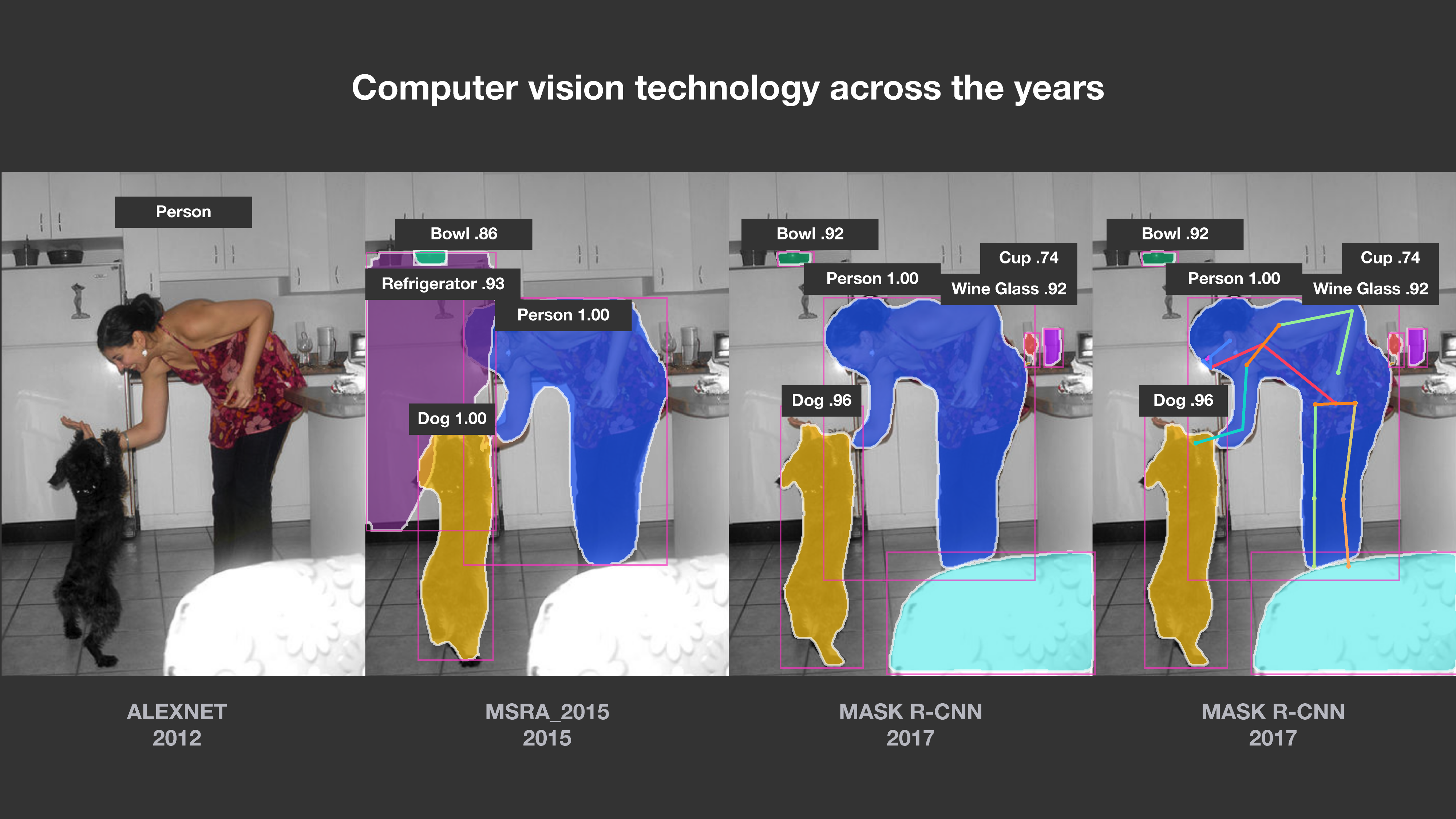
Facebook established FAIR in late 2013, and Yann LeCun joined that December. Zuckerberg recruited researchers at an academic conference for long-term work on images, language, memory and prediction, before the conversational assistants familiar today.
Research reached services early. Automatic alt text, introduced in 2016 for English iOS screen readers, replaced a bare announcement of a photo with descriptions of likely people, objects and scenes, helping people participate in friends’ photo conversations.
FAIR’s 2014 memory-network experiment answered questions about where characters and objects ended up in a supplied Lord of the Rings summary. This bounded task addressed a lasting question: using current material and context beyond training knowledge.
Our reading places Wonder in accumulated work: specific capabilities reached features before assistants organized more of them. Earlier research and today’s products share questions, but are not one model upgraded since 2013. Research, models and products remain distinct.
Sources and notes
- Meta: FAIR’s ten-year retrospective ↗Official retrospective · November 30, 2023Establishment in late 2013 and Zuckerberg’s recruiting role; the date is the retrospective’s publication.
- Meta: FAIR at five and memory networks ↗Official research retrospective · December 5, 2018The 2014 memory-network plot-question example and the relationship between foundational and applied research.
- Facebook: Automatic alternative text ↗Official product release · April 4, 2016A specific path from photo recognition to screen-reader descriptions, with initial platform and language scope.
- Meta: Yann LeCun profile ↗Official historical biographySupports his December 2013 arrival; current roles are checked separately in this topic’s people section.
042015–2023 · Tools and open research中文
What became public went beyond a model that answers questions
In 2015, FAIR shared optimized Torch modules to accelerate neural-network training; Meta did not invent Torch. PyTorch’s public release followed in January 2017 as a framework for experimentation and deployment, rather than a conversational model.
Shared implementations supported further experiments and software integration. PyTorch moved to an independent foundation within the Linux Foundation in September 2022, with Meta’s continued investment and shared governance, becoming infrastructure for a wider community.
NLLB-200, released in July 2022, targeted translation across 200 languages, including low-resource languages. Segment Anything followed in April 2023, selecting image regions from prompts such as points or boxes. Both offered concrete uses beyond general conversation.
Meta’s influence came both from its own features and from tools and models other people used to build products. Our interpretation is that value spread through many participants, beyond one assistant’s ranking. Shared code, weights, data and permitted uses varied by project.
Sources and notes
- FAIR: Open-sourcing optimized Torch modules ↗Official tool release · January 16, 2015Shared GPU, convolution and multi-GPU implementations intended to accelerate research.
- PyTorch team: One year after public release ↗Project retrospective · January 19, 2018States that the day marked one year since public release, supporting the January 2017 release.
- Meta: Announcing the PyTorch Foundation ↗Official announcement · September 12, 2022The independent foundation, shared governance and Meta’s continued investment.
- Meta: NLLB-200 translation model ↗Official release · July 6, 2022Translation across 200 languages and low-resource-language scope, rather than a general-model score.
- Meta: Segment Anything ↗Official research release · April 5, 2023SAM, SA-1B and promptable image segmentation illustrate a specific vision-model task.
052022 · Research access to large language models中文
Opening large models to researchers also exposed their limits
Meta released OPT in May 2022, sharing training code and daily logs. API answers did not provide weight access. OPT enabled research into model scale while exposing hardware, stability and human work during large training runs.
OPT-175B used a noncommercial license and offered access to academic, government, civil-society and industry research laboratories. It was not a finished assistant for everyone. Sharing weights did not include hosting, product integration or maintenance.
That November, the Papers with Code team at Meta AI introduced Galactica for scientific citations, equations and questions. Its card described a model without instruction tuning that required suitable prompts. Its noncommercial weight license differed from the code’s Apache license.
Galactica’s card acknowledged hallucinations despite high-quality academic data, including unreliable citations. Scientific-looking writing and reliable organization of knowledge were different capabilities. We read this as an early lesson about models, presentation and trust, beyond a demo’s fate.
Sources and notes
- Meta: OPT-175B release and access ↗Official release · May 3, 2022Model scale, training logs, research access and noncommercial scope.
- Original OPT paper ↗Research paper · first submitted May 2, 2022Distinguishes API use from weight access and describes the model family and training logbook.
- Meta: Original Galactica model card ↗Original model documentation · released November 2022Scientific tasks, training material, noncommercial weights and limitations including citation hallucination.
- Papers with Code: Galactica code and model license ↗Original author repositoryPrompting a model without instruction tuning, with separate code and model-license files.
062023 · LLaMA and Llama 2中文
From research weights to Llama in products
LLaMA arrived on February 24, 2023, in 7B, 13B, 33B and 65B sizes. Meta trained smaller models on more data to widen research access. Weights required applications under a noncommercial research license; these foundation models were not today’s Meta AI or Muse apps.
Llama 2 expanded pretrained and conversational weights and starter code to commercial use on July 18, with partner distribution. Developers could choose hosting, fine-tuning or their own deployment, then build software without training a comparable foundation model from scratch.
Commercial use followed a custom Community License, a usage policy and additional licensing at a specified user scale. We describe an open-weight route, without treating code, training data and every generation’s permitted uses as entirely unrestricted.
Meta AI’s beta rollout in September initially served US users in WhatsApp, Messenger and Instagram. It used a custom model drawing on Llama 2 and newer research, with search and image tools. The assistant organized model capabilities into conversation and social contexts.
Sources and notes
- Meta: First-generation LLaMA ↗Official release · February 24, 2023Model sizes, the smaller-model research approach, applications for access and noncommercial licensing.
- Meta and Microsoft: Llama 2 ↗Official release · July 18, 2023Weights, pretrained and conversational variants, commercial access and partner distribution.
- Llama 2 Community License ↗Original license fileUsage and additional commercial conditions, separate from model performance.
- Meta: Assistants across apps and devices ↗Official release · September 27, 2023Meta AI beta, its custom model, search and image tools, and initial US availability.
07April–July 2024 · Models and systems中文
405B put open weights in contention at the frontier
Llama 3 first released 8B and 70B text models with 8K context on April 18, 2024. Meta expanded and curated training data, improved instruction tuning and integrated it into Meta AI. Using a chat product and obtaining weights remained distinct routes.
Llama 3.1 added 405B and updated 8B and 70B on July 23, extending context to 128K and supporting eight languages. Meta claimed competitive results against GPT-4, GPT-4o and Claude 3.5 Sonnet. This records historical self-evaluation, not a universal winner.
Meta also allowed the family’s outputs to improve other models, supporting synthetic data and distillation. Beyond research weights, the open route now addressed strong capabilities, deployment requirements and transferring capabilities into more manageable models.
A reference system, Llama Guard 3, Prompt Guard and the Llama Stack API brought system components into the release. We read this as enabling complete systems rather than only supplying models. Actual uses still depended on data, tools, runtime and outcomes.
Sources and notes
- Meta: Llama 3 ↗Official release · April 18, 20248B and 70B text models with 8K context, training and product integration, without attributing later capabilities to the initial release.
- Meta: Llama 3.1 ↗Official release and evaluations · July 23, 2024405B, 128K context, languages, Meta’s comparisons, output use and the reference system.
- Llama team: The Llama 3 Herd of Models ↗Original research paper · first submitted July 31, 2024Pretrained and post-trained variants, evaluations and training systems; the submission date differs from launch.
08September–December 2024 · Vision, edge and efficiency中文
Capabilities split across sizes and uses
Llama 3.2 split on September 25: 11B and 90B handled images, while 1B and 3B were edge-oriented text models. Understanding charts or photos differed from local summarization, and image understanding did not imply image generation.
Smaller models offered device-based processing for simpler tasks, with optimization for some chips. This did not guarantee smooth performance on every older phone. Model, quantization, hardware and integration together shaped the experience.
The 70B text instruction model Llama 3.3 arrived December 6. Meta reported HumanEval at 88.4 versus 89.0 for 3.1 405B, and IFEval at 92.1 versus 88.6. Lower MMLU-Pro showed that comparable or better results on some tasks were not universal equivalence.
Progress included vision, edge deployment and a stronger 70B text model, not only size. Our interpretation connects choices to tasks, inputs and runtimes. Historical benchmarks do not automatically describe today’s apps, whose costs and experience depend on services and devices.
Sources and notes
- Meta: Llama 3.2 vision and edge models ↗Official release · September 25, 2024The distinction between 11B/90B vision and 1B/3B text models, including hardware optimization scope.
- Meta: Original Llama 3.3 model card ↗Official model and evaluations · released December 6, 2024The 70B text model, 128K context, eight languages and same-table HumanEval, IFEval and MMLU-Pro comparisons.
09April 2025 · New architecture and version comparisons中文
Llama 4’s turn also raised the question of which version was tested
Llama 4 released Scout and Maverick on April 5, 2025, using native multimodality and mixture of experts. Roughly 17B active parameters came with 109B and 400B total parameters. Memory requirements and their respective 10M and 1M context windows were distinct.
Meta emphasized images, coding, reasoning and efficiency. The card listed text and image input with text and code output; video-frame training did not imply video generation. Behemoth was still training, a preview and teacher rather than a third delivered model.
The release’s Arena score of 1417 came from the experimental chat variant Llama-4-Maverick-03-26-Experimental. Arena published its battle material. That score could not be assigned directly to the downloadable Maverick; the actual version and service mattered.
This stage combined architectural progress with questions about claims and use. Downloadable weights enabled scrutiny, but names alone did not ensure comparable models. Wonder likewise needs official goals, independent tests, developer examples and actual product models connected to assess its progress.
Sources and notes
- Meta: Llama 4 release ↗Official release and evaluations · April 5, 2025Scout, Maverick, the Behemoth preview and the qualifier that the Arena score came from an experimental chat variant.
- Meta: Original Llama 4 model card ↗Official models, modalities and configurationsActive and total parameters, per-model context and input/output scope, separate from product performance guarantees.
- Arena: Maverick experimental-variant battles ↗Evaluation platform’s original material · published April 2025The original repository of the experimental model identity, user prompts, responses and choices, without transferring its rank to the downloadable version.
102025: reconnecting models, research and products中文
What did Wang, Zhao and Friedman take on?
On June 12, 2025, Scale announced that founder Alexandr Wang would join Meta while Scale remained independent. He moved from supplying AI data to building frontier models inside a lab. Meta’s July 30 earnings call described the new division of work: Wang led MSL overall, Nat Friedman led AI products and applied research, and Shengjia Zhao was chief scientist for the new effort.
Zhao brought prior model-training experience at OpenAI. GPT-4’s original contribution statement names him as reward model lead and lists him under ChatGPT evaluations. Reward models turn feedback about better responses into training signals. That experience connects his scientific responsibility to how models learn and are evaluated, rather than merely adding a title. These are documented contributions, not sole credit for a product.
Zhao’s appointment was formally announced on July 25. The distinction matters: running the overall effort, setting its scientific direction and building its products are different responsibilities. LeCun commented on Meta’s announcement that his FAIR role still concerned long-term research. That appointment did not mean FAIR disappeared that day; later changes have their own dates.
In the Wonder interview, Wang recalled receiving Zuckerberg’s WhatsApp call invitation during a staff meeting, followed by assembling a core group and recruiting researchers. Zuckerberg credited Wang’s strategy, recruiting and communication. The startup-like lab still depended on Meta’s infrastructure and other teams. Connecting scientific, organizational and product responsibilities describes the reset; its results still need tests.
Sources and notes
- Scale: Wang joins Meta ↗Company announcement · June 12, 2025Wang’s move and Scale’s continued independence; this was not a full acquisition.
- Meta’s Zhao appointment and LeCun’s own response ↗Official post and first-person comment · July 25, 2025The new lab’s scientific role, distinguished from FAIR’s role at that time.
- OpenAI · Original GPT-4 technical report ↗Original contribution statement · Reward models and evaluationNames Zhao as reward model lead under Reinforcement Learning & Alignment and lists ChatGPT evaluations; no unsupported project list is added.
- Meta Q2 2025 earnings call ↗Company transcript · July 30, 2025Pages 1–2 describe MSL’s scope and the three responsibilities.
- Cheeky Pint · First-person account of building MSL ↗Original interview and transcript · October 13, 2026 in BeijingFrom 1:40:46: the call, core group and recruitment; leaders’ accounts are distinct from independent model evaluation.
11Three interviews across the changing strategy中文
Zuckerberg: from sharing models to training how they behave
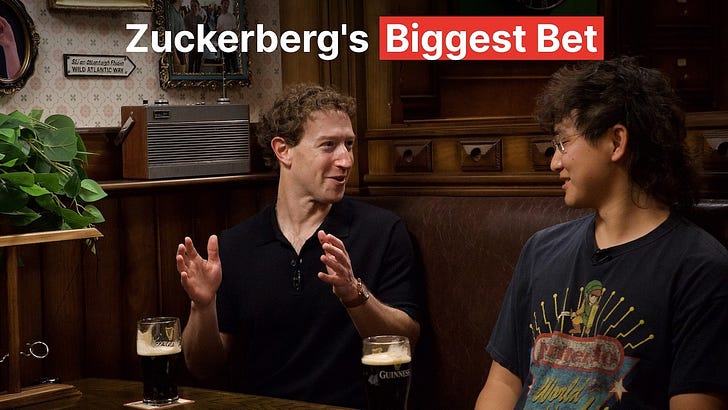
In the April 18, 2024 Dwarkesh interview accompanying Llama 3, Zuckerberg distinguished FAIR’s long-term research from the generative AI team bringing foundation models into products. He recalled ordering extra GPUs after Reels recommendations hit infrastructure limits. That reserve later helped large-model work. Sharing models, improving Meta’s products and preparing infrastructure were already connected.
On April 29, 2025, he said excessive attention to external benchmarks had led the team away from product quality, emphasizing speed, natural interaction, multimodality and personalization. Patel challenged how Meta’s user feedback could support fair comparisons. That exchange distinguishes usefulness from leaderboard performance and gives context to the subsequent reset.
After Wonder’s release, their Cheeky Pint conversation went further: capabilities and behavior increasingly belong in the model, including proactivity, tone and tool use. Our synthesis is that Meta is moving from inserting a general model into apps toward jointly designing models for personal tasks. This interpretation does not establish reliability on every task.
- 2024: sharing models, products and computeThe original page includes the full transcript and video link.
- 2025: benchmarks and actual user valueIncludes a transcript; these are views and plans from that time.
- 2026: Wonder and rebuilding MSL07:28 model and product; 14:35 Wonder; 1:40:46 rebuilding the team.
Sources and notes
- Dwarkesh: Llama 3 and infrastructure ↗Interview and human-edited transcript · April 18, 202404:22 covers Reels infrastructure; 08:32 begins FAIR, products and general capabilities.
- Dwarkesh: Llama 4 and user value ↗Interview and transcript · April 29, 2025The opening discusses benchmarks, speed and personalization; 39:49 begins open models.
- Cheeky Pint: the Wonder launch conversation ↗Original episode and transcript · October 13, 2026 in BeijingPublished October 12 at 19:26 UTC, or October 13 at 03:26 Beijing; 07:28 discusses model and product. Recording date is not separately stated.
12How product experience feeds into model work中文
Friedman: from GitHub feedback to Muse’s training and iteration
Friedman’s own site records his 2018–2021 tenure as GitHub CEO. In the 2026 Stripe Sessions interview, he recalled listening to customers before taking over and helping the team overcome anxiety about changing a beloved product. The connection to Muse is practical: capabilities need contact with real users before a team knows what to improve.
His learning loop runs from an idea to something usable, through feedback to a better idea. At Meta, he described cumbersome labeling tools encouraging bundled, infrequent tasks; easier tools could enable more experiments. This explains how teams learn faster, rather than proving that fewer meetings automatically yield a better model.
In the Wonder conversation, Zuckerberg connected Friedman’s product work to post-training: reliability, timing and interaction need training and evaluation. Our reading is that a natural personal agent requires both stronger capabilities and product teams bringing people’s situated experience back into model work.
- Read Friedman on products and teamsPublic transcript covering GitHub, feedback loops and Meta’s labeling tools.
Sources and notes
- Nat Friedman’s own site ↗First-person background and views · checked October 13GitHub tenure; personal views are not product-effectiveness evidence.
- Stripe Sessions: Friedman and Gross ↗Organizer’s transcript · 2026 conferenceVideo upload metadata is April 30; the transcript is public while the full-video page requests a form.
- Cheeky Pint: product teams and post-training ↗First-person interview · October 13, 2026 in BeijingExplains the link between behavior and training; not an independent test.
13FAIR’s history and a different research path中文
LeCun: understanding the world is not the same as Wonder
LeCun joined Facebook in December 2013 and became FAIR’s founding director, later moving to a chief scientist role. Long-term research, open exchange and new learning methods were central to that work. Meta’s history therefore begins before Llama, with sustained work on vision and representations.
In the March 7, 2024 Lex Fridman interview, he identified world understanding, persistent memory, reasoning and planning as problems to solve. A system should anticipate an action’s consequences, not merely produce plausible language. JEPA seeks useful abstract representations rather than predicting every pixel. These were his technical views at that time, not a verdict on every later model.
On November 19, 2025, he announced plans to leave Meta at year-end and pursue Advanced Machine Intelligence in an independent company. His own site, checked October 13, now lists him as executive chairman of AMI Labs. Here he represents Meta’s early research and another research path, not current leadership of Wonder.
Wonder also emphasizes memory and long tasks, but similar goals do not establish a shared architecture. Those words do not prove that Wonder uses LeCun’s world-model approach or solves all his concerns. FAIR’s research, Llama and MSL’s personal agents belong to several parallel lines in Meta’s history.
- Hear LeCun on world models and planningJEPA begins at 25:07 in the original video; the transcript is linked in sources.
Sources and notes
- Meta’s historical LeCun profile ↗Official historical biographyDecember 2013 entry; its old title is superseded by newer first-person material.
- Lex Fridman #416: LeCun ↗Interview and human-generated transcript · March 7, 2024Video: 02:18 LLM limits, 25:07 JEPA, 44:22 planning. The audio page includes ads and uses different timestamps.
- LeCun’s own departure announcement ↗First-person post · November 19, 2025An announced plan to remain until year-end, not an immediate departure.
- LeCun’s own site ↗Current first-person role · checked October 13, 2026Now lists AMI Labs executive chairman; the old footer date is not this check’s date.
142026 · Models moving toward practical work中文
From Spark to Wonder, progress reaches beyond answer scores
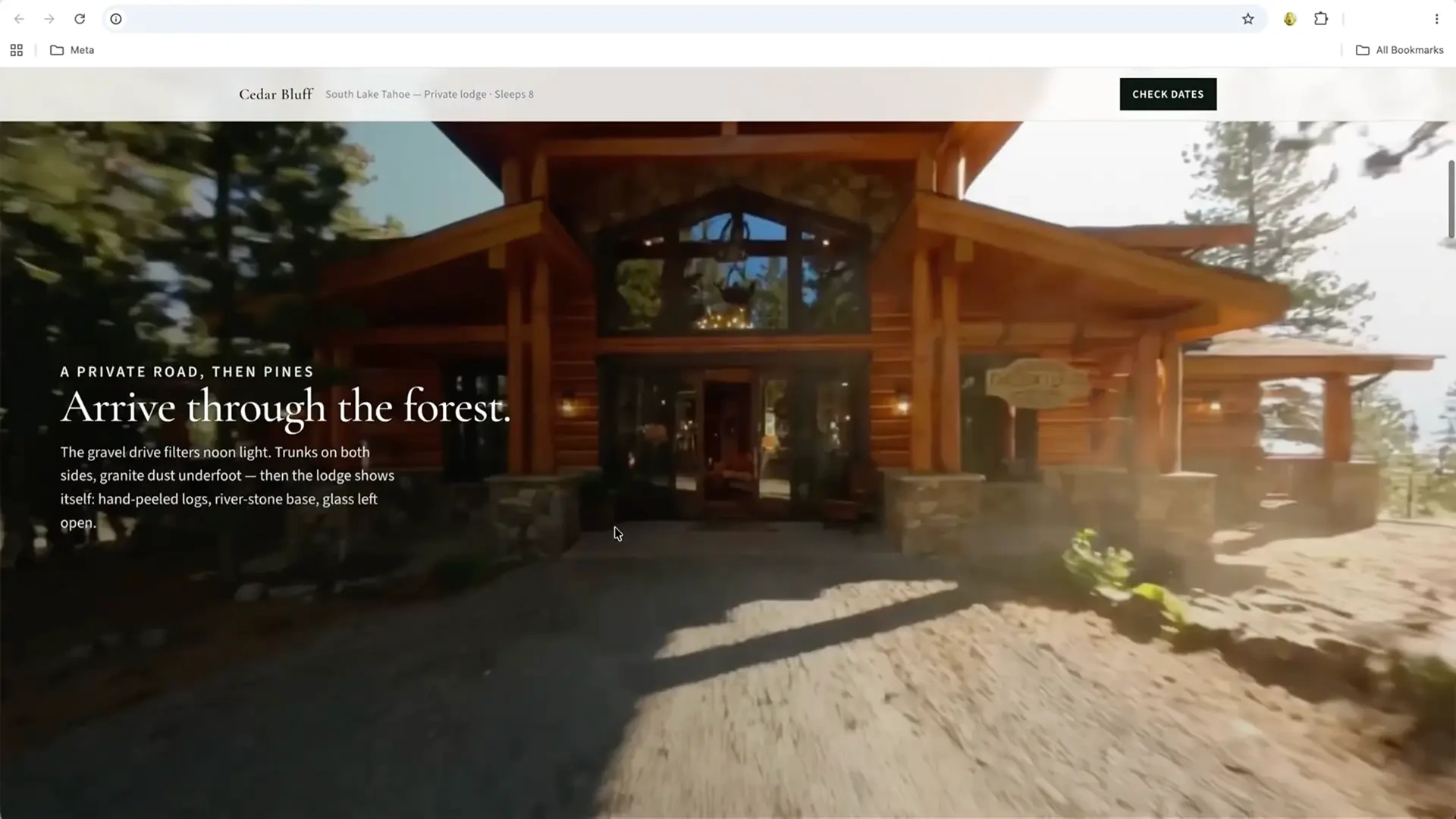
Muse Spark launched on April 8 as the first product of Meta’s rebuilt model stack, combining multimodal understanding, tools and multi-agent coordination. On July 9, version 1.1 strengthened computer use, coding and context management while reaching developers through the Meta Model API public preview. The emphasis moved from answers toward interpreting material and handling changing tasks.
Spark 1.2 and Muse Code beta launched together on August 5. The model advanced code generation, debugging and codebase understanding; the terminal agent supplied tools, planning and persistent subagents. Meta co-trained them. Its house-video-to-website demonstration connects visual input, code and browser validation, with both model and agent environment contributing.
Version 1.3, released September 2, emphasized longer work: preserving detailed requirements, repairing plans, separating requests within a long thread, and asking or confirming when appropriate. Wonder arrived October 12 on larger, stronger base models, emphasizing relevant memory and persistence through blockers. The progression runs from understanding and tool use toward context and sustained delivery.
There are complementary branches. Glimmer, released August 10, is a 30B open-weight model under Apache 2.0 for local agents; its four-bit configuration still requires suitable memory. Voice Transcribe, released September 1, handles streaming transcription, speaker separation and speech endpoints, including a Mandarin–English example. They address deployment and audio input; Wonder’s general score does not describe every model.
| Release date | Model | Emphasis |
|---|---|---|
| 2026-04-08 | Muse Spark | Multimodality, tools and multi-agent coordination |
| 2026-07-09 | Spark 1.1 | Computer use and a developer API |
| 2026-08-05 | Spark 1.2 / Muse Code | Coding and model–agent co-training |
| 2026-08-10 | Glimmer 30B | Open weights and local agents |
| 2026-09-01 | Voice Transcribe | Live transcription, speakers and endpoints |
| 2026-09-02 | Spark 1.3 | Long tasks, instruction retention and tool use |
| 2026-10-12 | Wonder / Full | Stronger bases, memory and sustained execution |
Sources and notes
- Meta · Initial Muse Spark release ↗Official release · April 8The rebuilt stack’s first model, multimodality, tools and multi-agent capability.
- Meta · Spark 1.1 and API ↗Official release · July 9Model changes, computer use and the public preview.
- Meta · Spark 1.2 and Muse Code ↗Official release · August 5Co-training and the official video-to-website example.
- Meta · Spark 1.3 ↗Official release · September 2Long tasks, instruction retention and deliverables.
- Meta · Glimmer ↗Official release · August 1030B, Apache 2.0 and memory requirements for local operation.
- Meta · Voice Transcribe ↗Official release · September 1Streaming transcription, speakers, endpoints and a Mandarin–English example.
15Wonder · Official capabilities and methods中文
Can remembered context help with the next step?
Wonder’s emphasis becomes clearer through a task: after you provide a budget, schedule and preferences, can it recover that context when revising a plan? If a page changes or a tool fails, can it try another route? Meta calls these Active Memory and Active Focus. Their value lies in continuing the work, beyond storage capacity alone.
MemoryBench uses 64K–100K-token conversations with distractions and revised facts; FocusBench tests blockers and changes in housing, travel, IT and finance tasks. Both are Meta’s internal evaluations. They explain the training goals; reviewing or correcting context and verifying the model used depend on the product integration.
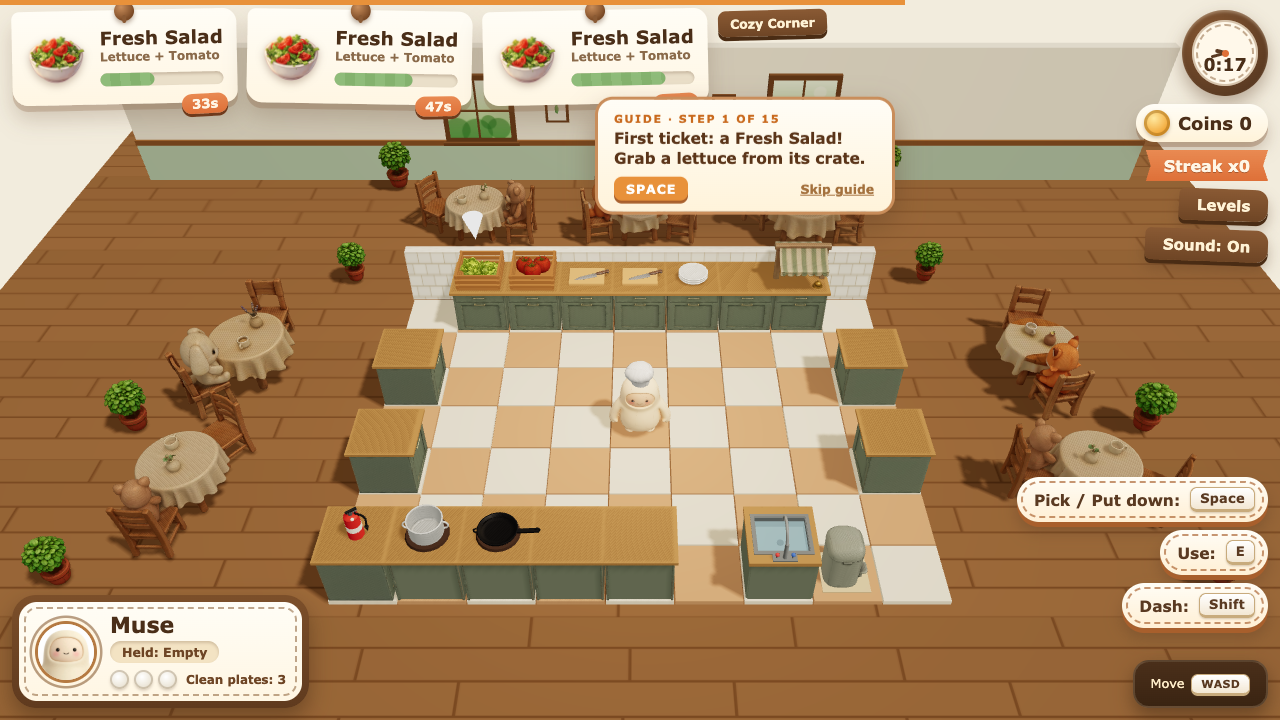
The Wonder card lists text, image, video and audio input, with text output. Its kitchen game illustrates producing a work through code and tools. Media generation has separate Muse Image and Muse Video branches: their July 7 announcement launched Image and previewed Video. Understanding these roles connects video interpretation, website creation and video generation to the appropriate models and tools.
Sources and notes
- Meta · Wonder release ↗Official capability account · October 12Stronger base models, Active Memory, Active Focus and artifacts.
- Meta · Wonder model report ↗Original model card · Methods and limitationsInput/output modalities and the internal MemoryBench/FocusBench evaluations.
- Meta · Muse Image and Video ↗Official historical release · July 7Image’s launch and Video’s preview, distinct from Wonder’s text output.
16Independent reference · Checked October 13中文
Wonder Full gives Meta a clear place in the leading group
Our assessment is that Meta’s latest large general models have entered the leading group, especially Wonder Full. In the complete Artificial Analysis table checked October 13, Full at max scores 56, matching Sonnet 5.5’s highest included setting and approaching Opus 5.5’s 58. Standard Wonder scores 52, making the family a practical contender among high-end models.
Within the same index version, Spark 1.3 max scores 48, Wonder 52 and Full 56; Astra max and Fable 5.1’s highest included setting score 53. ‘Leading group’ is our editorial interpretation of this independent general reference. The table retains effort and fallback settings; score differences are not capability percentages.
Coding deserves attention, with task-dependent strengths. Meta’s report attributes DeepSWE 1.1 results of 79.0 for Full and 78.8 for Wonder to Datacurve; its ProgramBench row gives Full 59.0 and Opus 5.5 70.5. These evaluate different software tasks, demonstrating why the intended work still shapes a choice.
The live Abundant AI SWE-Marathon v1.1 board places both Wonder models through Muse Code at max in its first two rows: Full 53.1%, standard 52.5%, then Sonnet 5.5 through Claude Code at 51.3%. It uses 20 tasks with eight trials each and requires every verifier test to pass. Model and agent jointly contribute; the two Wonder models differ by one successful trial, a narrow gap to interpret cautiously.
| Model | Original configuration | Intelligence index |
|---|---|---|
| Claude Opus 5.5 | max with fallback | 58 |
| Claude Sonnet 5.5 | max with fallback | 56 |
| Muse Wonder Full | max | 56 |
| GPT-6 Astra | max | 53 |
| Claude Fable 5.1 | max with fallback | 53 |
| Muse Wonder | max | 52 |
| Muse Spark 1.3 | max | 48 |
- Open the model page for the full reference and scope
- Continue with costs and small errors on shared tasks
Sources and notes
Current SWE-Marathon Full is max at 53.1%; Meta’s launch report uses xhigh at 57.5. Different settings do not establish a score decline. The newer DeepSWE figures remain attributed to Meta’s account; the public page currently shows September 22.
- Artificial Analysis · Complete original leaderboard ↗Independent general evaluation · v4.3.2All 271 rows were read; included intelligence scores match the morning, while serving-speed columns changed.
- Meta · Wonder model report ↗Vendor report · Result provenance retainedDistinct DeepSWE, ProgramBench and SWE-Marathon tasks, sources and agent settings.
- Abundant AI · Original SWE-Marathon leaderboard ↗Independent agent evaluation · v1.1 · Browser readback20 tasks, eight trials each, effort and actual agents; current Full max 53.1 is separate from launch-reported xhigh 57.5.
- Datacurve · Original DeepSWE leaderboard ↗Evaluator’s page · Dated September 22The public model scope and shared-agent method; vendor launch figures are not presented as an updated public row.
17Access · Checked October 13中文
Before trying it, distinguish the API, Muse Code and personal Muse
Standard Wonder is available through Meta Model API and Muse Code. The developer page checked October 13 lists $4 input, $0.20 cached input and $20 output per million tokens. This is standard-model pricing, not Full pricing. Developers can connect a compatible client to muse-wonder-1.0 and compare their own tasks.
Full currently requires Muse Code’s Power Usage or Maximum Usage subscription. Meta describes Maximum as 80 times Everyday’s usage limit, with five-hour and weekly resets. That is not a fixed token budget per task. If an existing assistant already works well, compare an important longer task before adding another service.
Personal Muse is another product layer. The October 12 release says Wonder will arrive soon, first for subscribers; model availability does not establish an upgrade across phones, glasses or Charm. This topic explains the models, while the existing Muse topic follows context, connected services and portable hardware into everyday use.
Sources and notes
- Josh Walters · Wonder developer release ↗Official access and pricing · Released October 12Readable this round; standard API USD pricing, Full subscriptions and usage resets are kept distinct.
- Meta · Wonder integration plan ↗Official release · Personal Muse remains forthcomingCurrent developer access versus future personal-agent integration.
18Connect to works and everyday life中文
From a strong model to AI someone keeps using
- Open the official kitchen-game artifactExternal interactive artifact; we entered the first level without rerunning generation or verifying every level.
The Llama phase gave developers weights to adapt around their data, compute and applications. Wonder adds direct model-service and Muse Code routes. These change how the capability is used: the former enables research and deployment control, while the latter offers existing interfaces to frontier capability. Meta now connects a research ecosystem, model services and consumer-facing products; access conditions still depend on each version.
For a creator, the official kitchen game turns coding and image inputs into an interactive work. A developer then needs the correct session, tools, files and actual model execution. Personal Muse and portable hardware bring context, messages and everyday tasks into the product. A stronger model expands the possibilities; the product must still handle memory, permissions, recovery and human decisions. Our existing Muse topic follows devices and real tasks, while this topic follows the models and history underpinning them.
If you already use Opus, Astra, GLM or Kimi, Wonder provides another reference point. Compare the same material, a work that needs revision or a task with a clear result: do requirements survive, can the changes continue, and does the output fit what you wanted? Then consider cost and waiting. A new frontier entrant gives people another route to explore. Concrete developer work and usage accounts will fill in questions that today's index cannot answer.
- Continue with Muse glasses, Charm and everyday tasks
- An author's 23-task test and its limits
- Helicon: how an interface actually uses Wonder
- Compare Opus editable works and video practice
Sources and notes
- Meta · Wonder artifacts and direction ↗Official artifacts and capability accountThe kitchen is a public official artifact; scenario comparisons are our analysis, with device experiences checked in the linked topic.
What we are following
19What comes next中文
What we are following
- When will Chinese, vision and long projects have matched inputs, processes and editable artifacts for Wonder comparisons?
- How do standard Wonder and Full differ on quality, cost and waiting for the same work?
- How will open weights and hosted frontier models coexist, and what research or reproducible material will Meta release?
- When memory reaches personal Muse and devices, how will context revision, task continuity and human choices work?
- How will later research, products and original interviews explain the continuing work of Wang, Zhao and Friedman’s teams?