Model updates · Everyday choices
Sol, Luna and Opus 5.5 cost less. Should you switch?
Separate API rates, the cost of finishing a task and subscription allowances, then compare a familiar job to decide what to keep, upgrade or combine.
Both releases are dated September 22. Sol/Luna are rolling out in Work, Codex and the API, but were not yet in Chat at launch. Check the product you already use first.
If you already use an assistant, what is worth retrying?
Astra showed what complex creations can become. These releases raise a daily question: can a less costly model finish the same work? OpenAI positions Sol/Luna for speed and affordability; Anthropic lowers Opus 5.5 rates and raises five-hour allowances on some paid plans.
GPT users can compare generations of Sol/Luna or retry a routine Astra task. Opus users can check whether the update reduces rework. Grok, GLM and other users can keep familiar tools and choose one task that currently causes friction.
Sources and further reading
- OpenAI: GPT-6 Sol and LunaOfficial release · September 22Versions, standard API rates, availability and the vendor’s evaluation settings.
- Anthropic: Claude Opus 5.5Official release · September 22Rates, cost claims and allowance changes; vendor tests are not our own tests.
A new model can stay inside a familiar tool
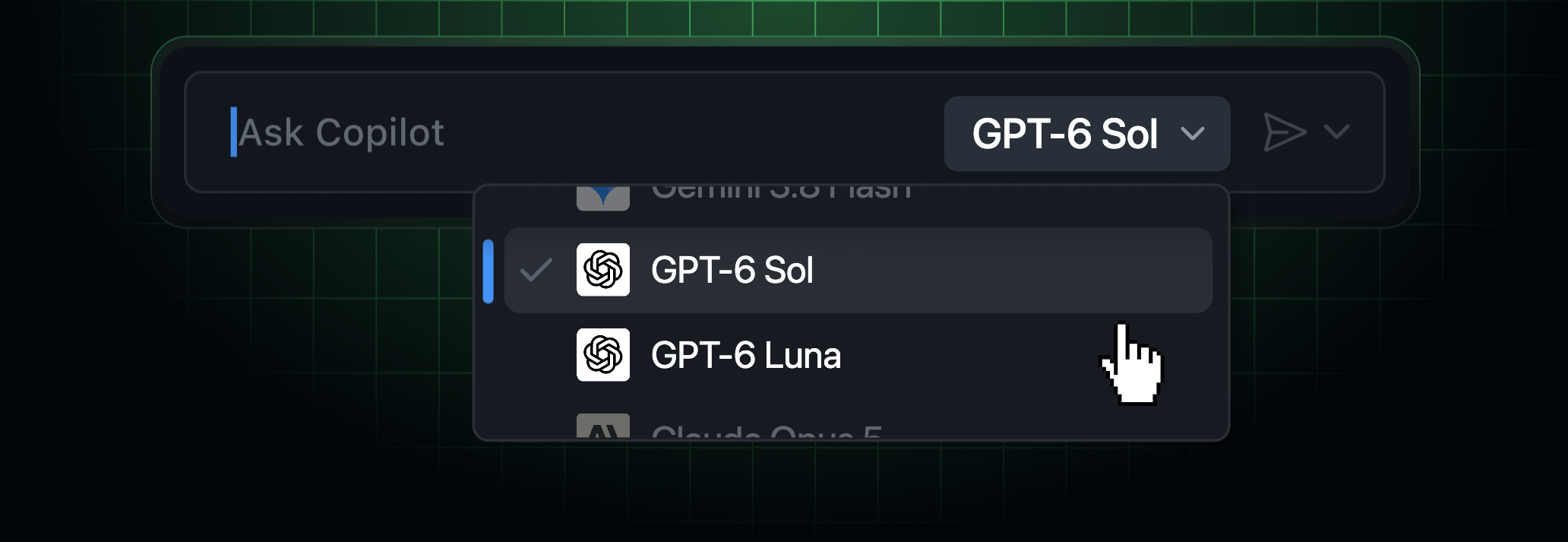
One concrete route is GitHub Copilot. Luna supports Pro and the listed higher paid tiers; Sol and Opus 5.5 support Pro+, Max, Business and Enterprise. Rollout is gradual and team access depends on administrator policies. Existing subscribers can check the picker without moving their whole workflow.
Sources and further reading
- GitHub: Sol and Luna availabilityProduct integration · September 22Supported products and plan tiers, with a gradual rollout.
- GitHub: Opus 5.5 availabilityProduct integration · September 22Plan tiers and administrator model policies.
Lower API rates and subscription savings are different
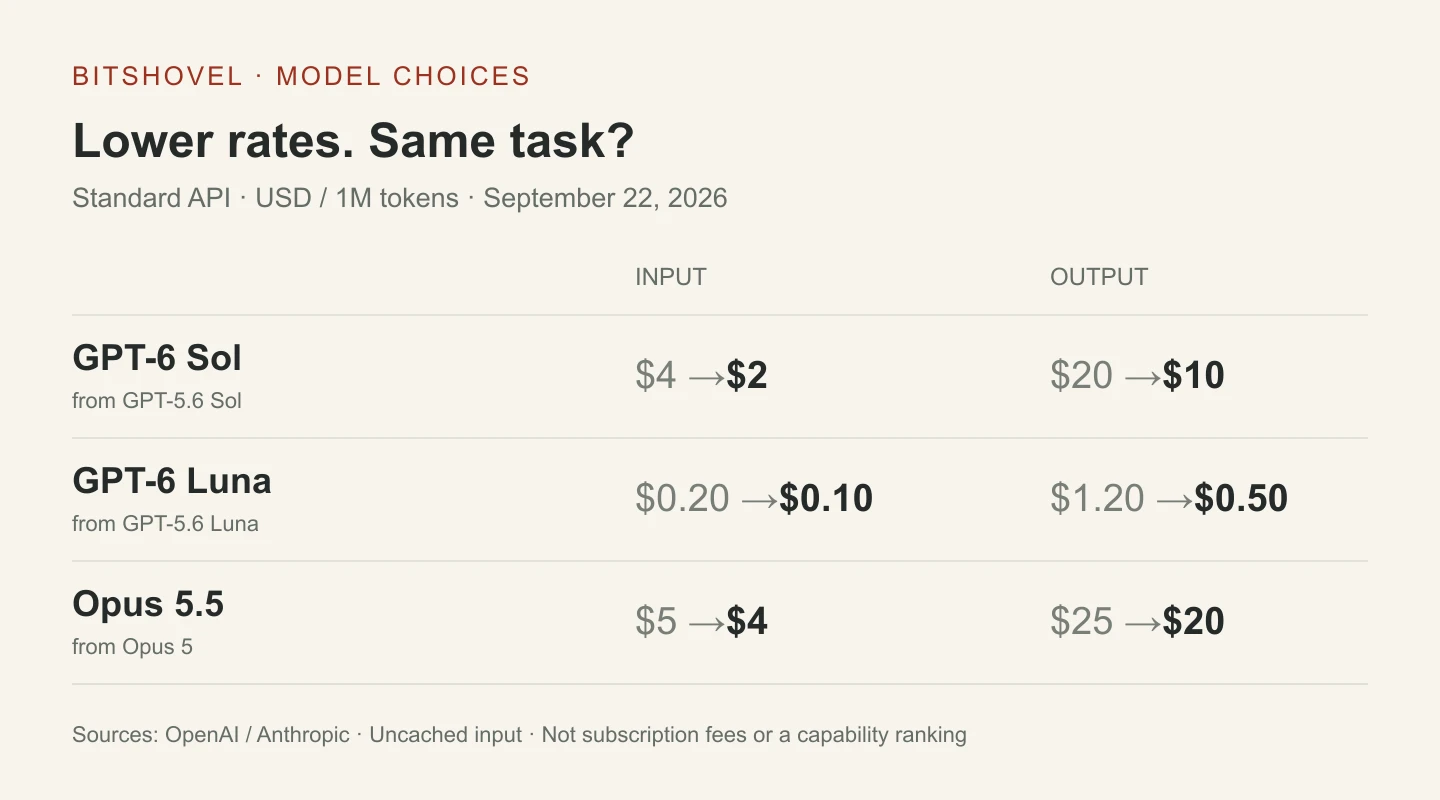
The table lists standard API input/output dollars per million tokens, the service’s metering units rather than words. These rates describe developer usage, not a halving of subscription fees.
Opus 5.5 input and output rates fall 20%; cache reads fall from $0.50 to $0.20. The announced 40% reduction concerns typical workloads at default settings, including usage changes. It is not a promise for every report or account.
| Version | Input | Output |
|---|---|---|
| Sol 5.6 → 6 | 4 → 2 | 20 → 10 |
| Luna 5.6 → 6 | 0.20 → 0.10 | 1.20 → 0.50 |
| Opus 5 → 5.5 | 5 → 4 | 25 → 20 |
Sources and further reading
- OpenAI: GPT-6 Sol and LunaOfficial release · September 22Versions, standard API rates, availability and the vendor’s evaluation settings.
- Anthropic: Claude Opus 5.5Official release · September 22Rates, cost claims and allowance changes; vendor tests are not our own tests.
Compare the cost of a finished task
Three revision rounds and eight can produce very different costs. Anthropic’s explanation notes that tool loops repeatedly process context; cached input is cheaper, while output and thinking also count. Lower rates may not offset extra retries.
For subscribers, record whether the job fits the allowance, how long it takes and how much manual editing remains. Claude Code’s /usage shows usage; its estimated dollar figure on a subscription is not an extra bill. API users can also record actual charges.
Sources and further reading
- Addy Osmani: What a task costsOfficial explanation · September 22Caching, retries and subscription usage; its calculated examples are illustrations, not measured task runs.
Use the same material and keep a comparable result
An editorial suggestion: use meeting notes you are allowed to share and request a one-page decision summary and action table, retaining owners, dates and source references. Give identical material and instructions to your current model and one alternative. Check omissions, inventions and editability before recording revision rounds, time and usage. This is a suggested comparison, not our completed benchmark.
When both results are usable, less waiting and lower usage matter. If an alternative leaves key work to redo, keeping your current tool is reasonable. For more complex creations, return to the Astra topic. The two vendors’ release comparisons use different opponent versions and settings, so combining their leaderboards does not establish a direct Sol versus Opus 5.5 winner.
Sources and further reading
- OpenAI: GPT-6 Sol and LunaOfficial release · September 22Versions, standard API rates, availability and the vendor’s evaluation settings.
- Anthropic: Claude Opus 5.5Official release · September 22Rates, cost claims and allowance changes; vendor tests are not our own tests.
- Addy Osmani: What a task costsOfficial explanation · September 22Caching, retries and subscription usage; its calculated examples are illustrations, not measured task runs.