AI in everyday life · A single-stroke practice
Before AI can assess a stroke, it has to follow the right player
Pickle Sensei turns a single pickleball stroke into slow-motion review and one improvement cue. Its developer explains why pose detection also needs to resist switching players or mistaking walking and camera movement for a swing.
These are original product images and the developer's account, without a BitShovel installation or court test. The technical post appeared October 3 and was edited October 4; the US App Store lists version 1.1 from September 25. This reading examines those choices rather than claiming a new launch today.
One stroke, one next step
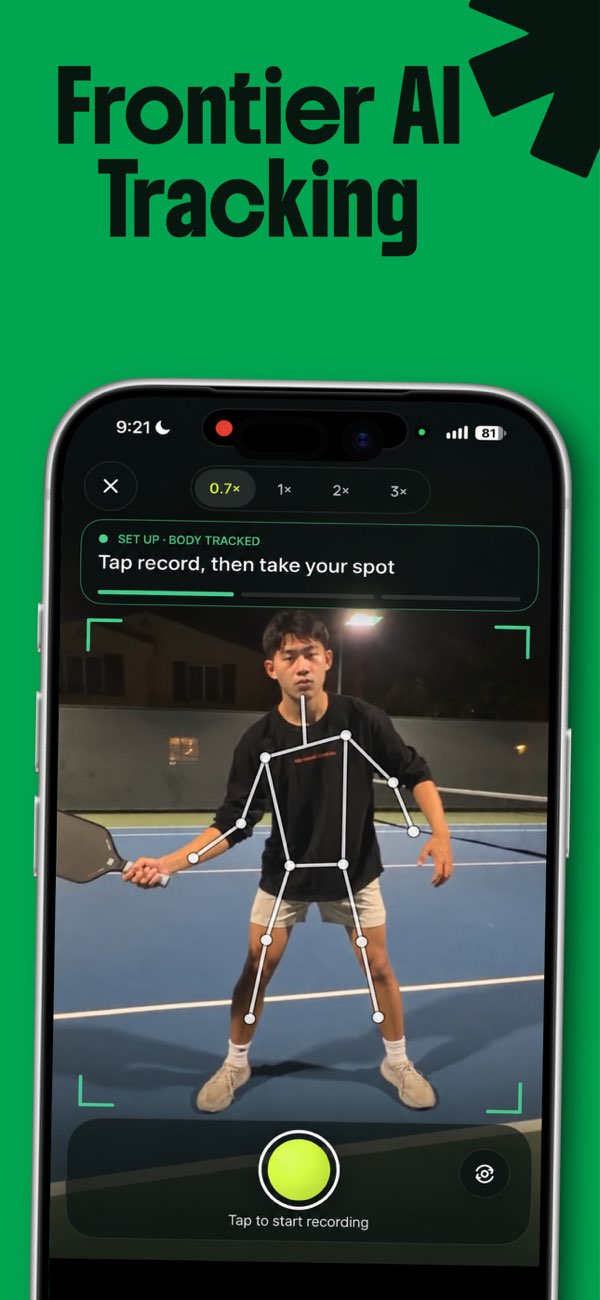
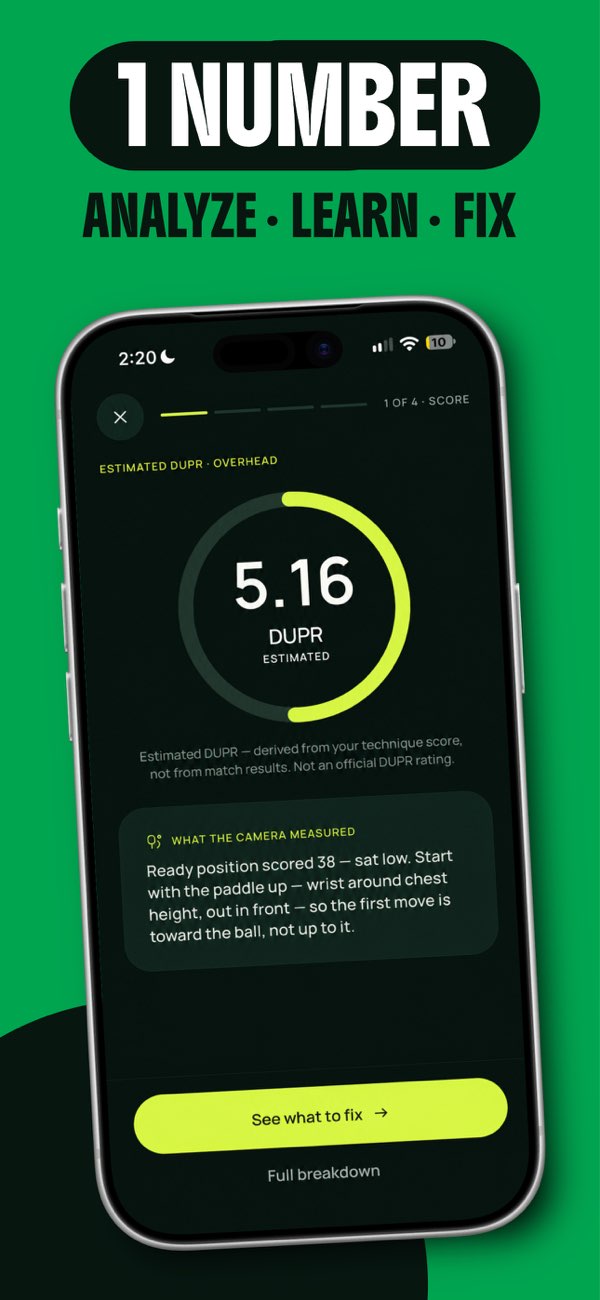
The task is deliberately small: place the iPhone side-on at roughly waist height, enter the indicated area alone and record one stroke. The developer describes on-device pose tracking, automatic capture completion, technique scores and phase-by-phase replay. It is for solo practice rather than whole matches. A clip becomes a specific movement to inspect; its score remains a computer estimate, not an official player rating.
Sources and further reading
- Pickle Sensei · Original US App Store listingDeveloper's product account and original imagesChecked October 13 for solo capture, phase replay, estimated scores, version 1.1, English/iOS requirements and US prices; not BitShovel practice results.
A nearby person must not steal the tracking
Apple Vision supplies body poses. The maker initially chose the largest torso, but a closer bystander could take over. Tracking then considered the previous player's position, favored the incumbent and allowed a manual selection. Compare The Oldest Tree's missed character check: following a player and reading the intended character reference are different problems. A visible skeleton alone does not establish a correct assessment.
Sources and further reading
- Raunak Gengiti · Three fixes to court pose trackingDeveloper's account · Published October 3, edited October 4Player switching, body/camera movement and readiness at real frame cadence. The maker discloses AI assistance; implementation details are his account, not our rerun.
Walking and camera movement can look like swings
Image displacement initially confused walking or a bumped phone with a stroke. The maker moved to body-relative wrist motion and body-size normalization, dropping samples without visible hips. A separate readiness-window bug prevented starting at real 30 fps cadence. His account explains the fixes and refusal to score unreliable input, without an independent accuracy result for every setting.
Sources and further reading
- Raunak Gengiti · Three fixes to court pose trackingDeveloper's account · Published October 3, edited October 4Player switching, body/camera movement and readiness at real frame cadence. The maker discloses AI assistance; implementation details are his account, not our rerun.
Video stays on the phone, with conditions
Checked October 13, the US listing offers an English-language interface and requires iOS 15.1 or later. Each sign-in identity gets one lifetime successful free score; failed scoring does not spend it. US Pro prices are $7.99 monthly, $59.99 yearly or $159.99 once; the local purchase screen governs. The privacy notice keeps raw clips and pose landmarks on device while syncing accounts and some results and purchase records. Inspect whether its feedback fits your practice; BitShovel has not verified training outcomes.
Sources and further reading
- Pickle Sensei · Original US App Store listingDeveloper's product account and original imagesChecked October 13 for solo capture, phase replay, estimated scores, version 1.1, English/iOS requirements and US prices; not BitShovel practice results.
- Pickle Sensei · Original privacy noticeDeveloper's processing account · Dated September 11Raw video, sound and pose landmarks stay on device; accounts and some structured results sync, a separate data scope.