
01 / ANALYSIS
Product analysis
- Maturity
- Live
- Confidence
- Partial
- Verified
- 2026-07-23
- Commercial relation
- Not sponsored
Problem solved
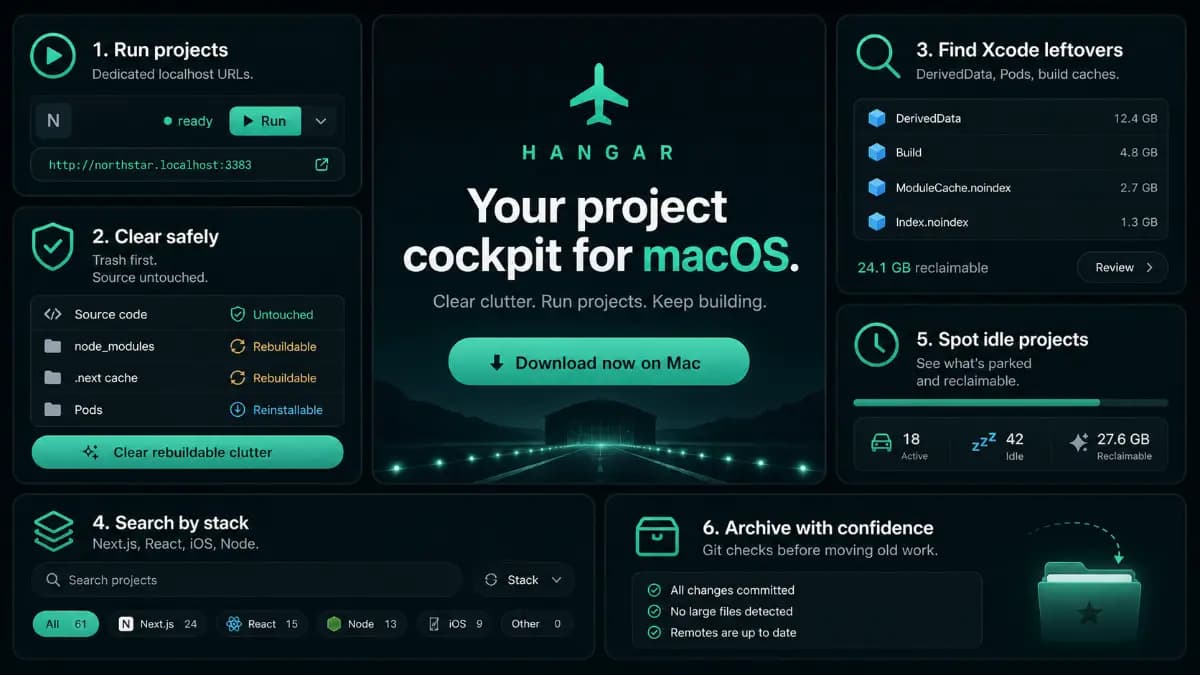
Long-lived local projects mix source, dependencies, build caches, development servers, Git worktrees, and unpushed work that exists only on one machine. Generic cleaners see file size without project meaning, while terminal scripts require developers to remember every directory, launch command, port, and backup state.
Why it was selected
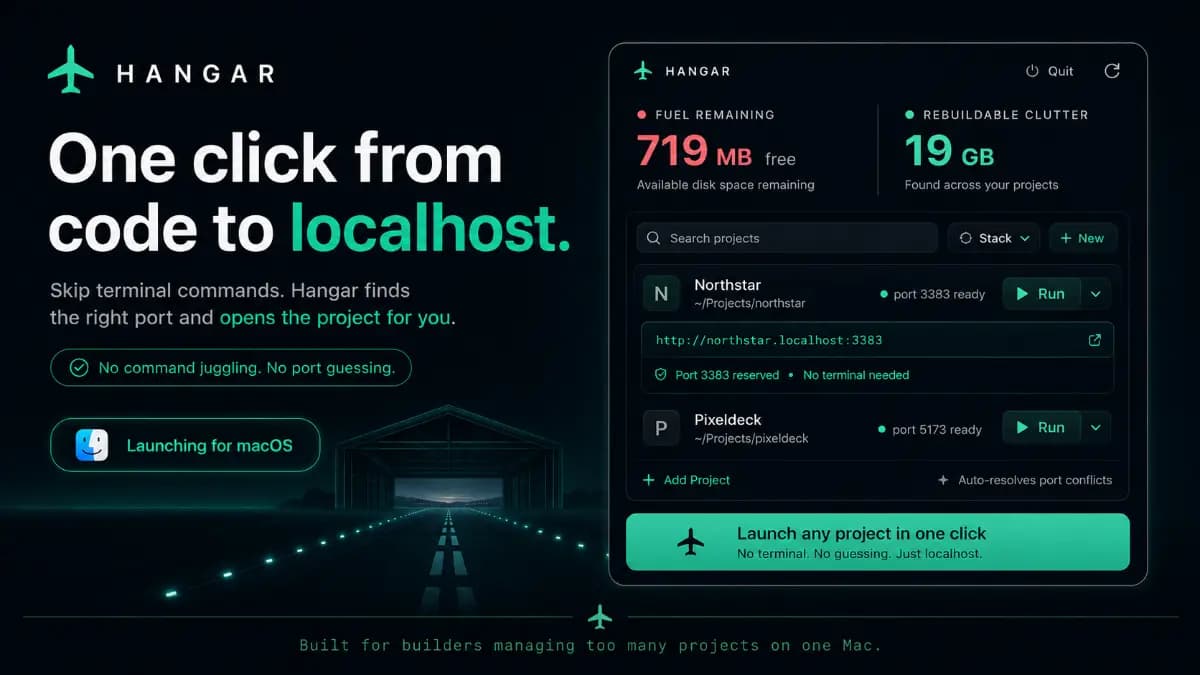
The official changelog lists 1.0.0, released July 16, 2026, as current, supporting Apple Silicon and Intel Macs on macOS 14 or later and recognizing multiple development stacks. The site also says it never force-pushes, rebases, or merges and stops when histories diverge; cleanup targets only rebuildable dependencies and build output. At verification, launch pricing was $9 for Solo and $19 for Fleet as one-time purchases; pricing can change.
What is genuinely novel
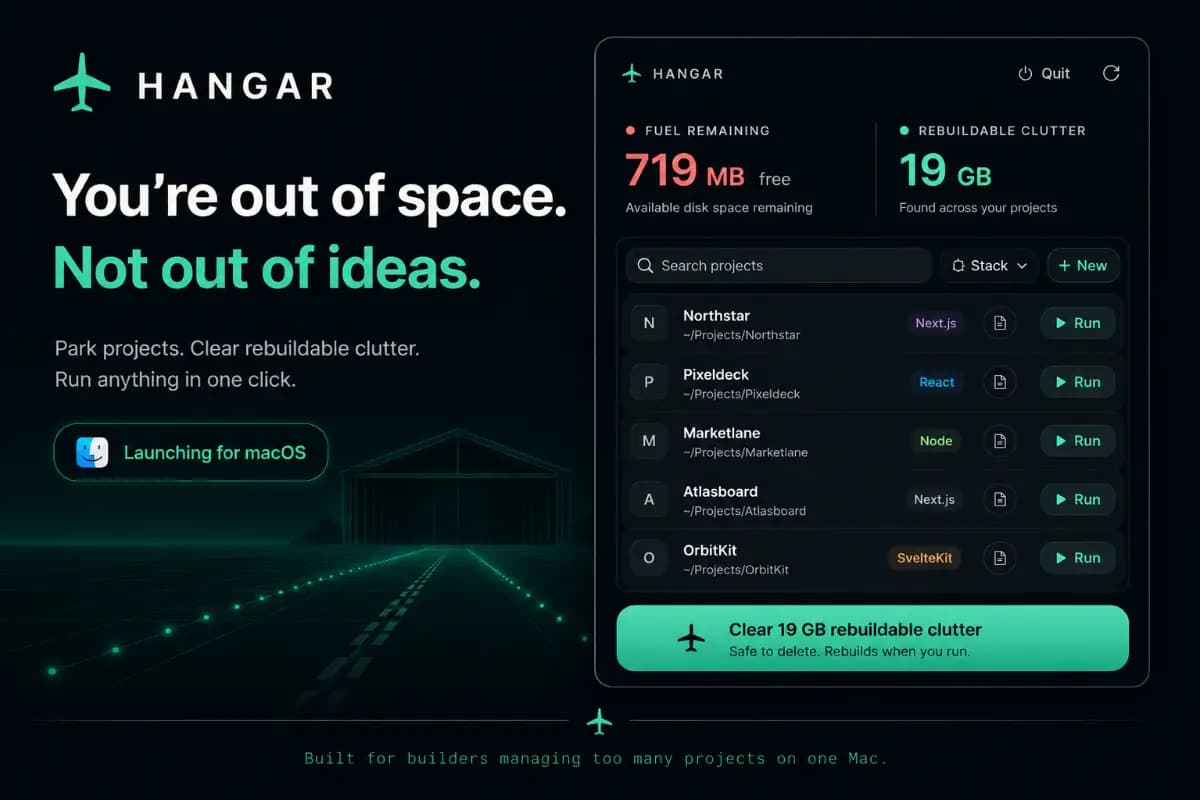
Project launchers, port management, Git checks, and dependency cleanup are not individually new. The stronger combination carries one project manifest through discovery, running, protection, maintenance, and archiving, while placing cleaned files in Trash and Pending Review instead of deleting them permanently at once.
Best for
Developers maintaining many JavaScript, Python, Rust, Go, iOS, or other local projects on one Mac who need a unified view of storage, ports, Git risk, and rebuildable files
Editorial evaluation
KEEP DISCOVERING
A few more products worth noticing
A small set selected by product shape and profile similarity, with independent verification records.
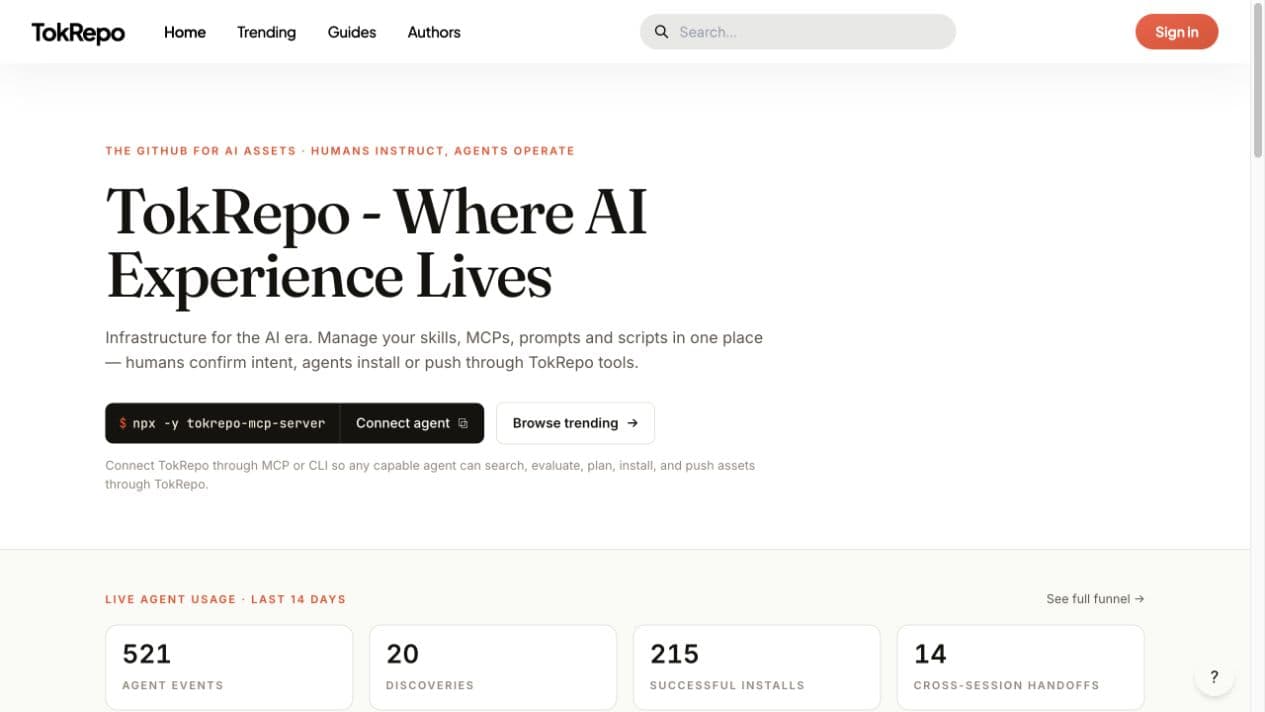
TokRepo
Regulus K.K.
What it solves
Agent skills, system prompts, MCP configurations, and workflows are scattered across repositories, documentation, and chat history. Before copying them, teams lack a consistent way to assess provenance, permissions, dependencies, target tools, write scope, rollback, and reusable install records.
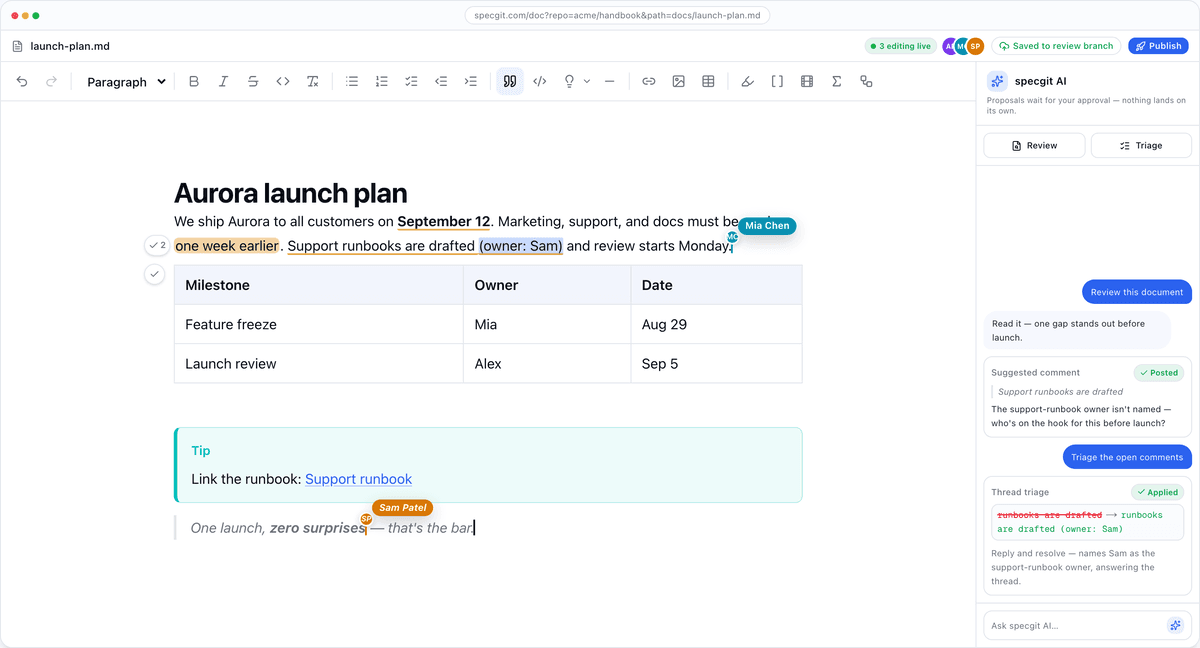
specgit
Fn First Holdings LLC
What it solves
Product specs are often written in a document tool while code lives in GitHub. Engineers read a linked doc once, implementation moves on, and the two drift apart. Plain Markdown can colocate them, but shifts Git and PR mechanics onto collaborators who may not know that workflow.
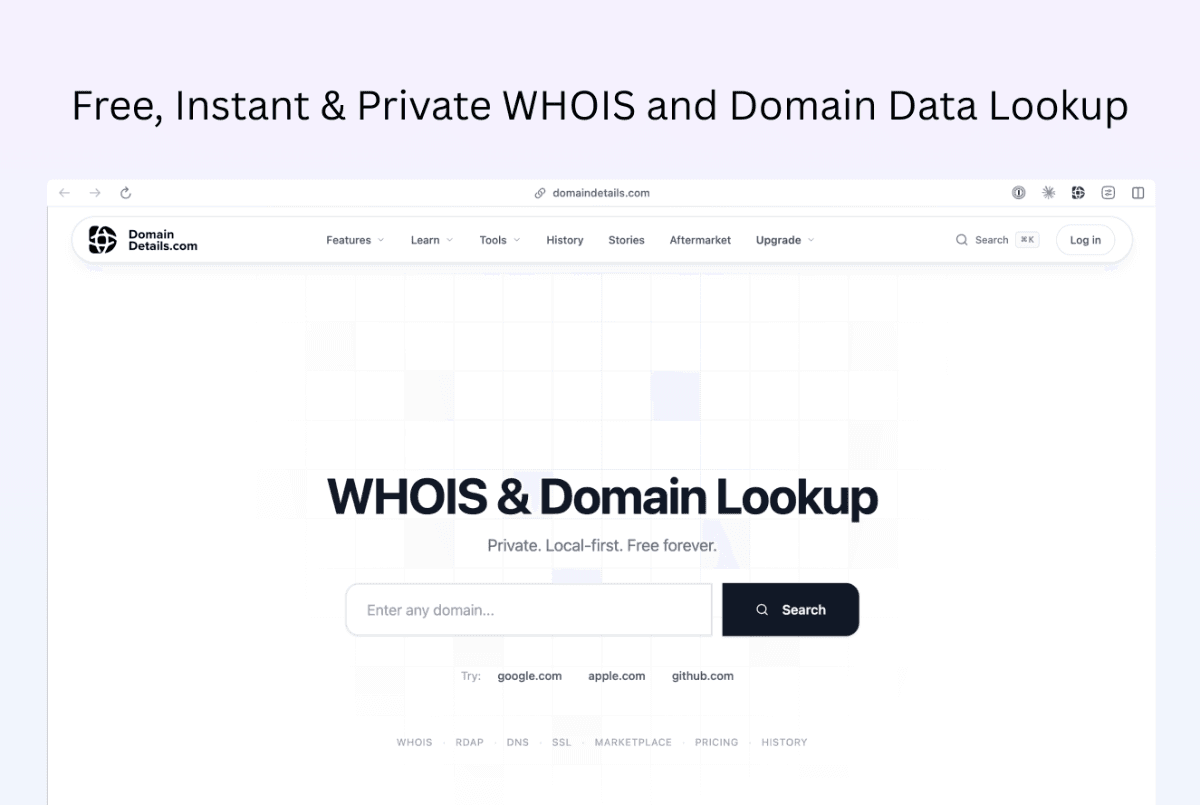
Domain Details
Uneed publisher julianengel / Julian Engel and Simple Bytes
What it solves
Domain research often means moving among registries, WHOIS/RDAP, DNS, certificates, Wayback, registrar pricing, and several aftermarket venues. Domain Details reduces that fragmentation with a shared search, browser-local history, bulk entry points, and monitoring alerts.
02 / WHAT STANDS OUT
Three product decisions worth noticing
Classify before offering cleanup
File size is not safety evidence. Lockfiles, configuration, Git state, remote sync, and running processes jointly determine whether a directory can be moved or rebuilt.
Design deletion as a recoverable state
Moving items through Pending Review and system Trash, counting space only when it is truly freed, and preserving Put Back is easier to understand and correct than one-click permanent deletion.
Local-first still needs per-path disclosure
App telemetry, license validation, website analytics, payments, and support chat are distinct data paths. 'No account, no telemetry' cannot replace field, provider, and retention disclosures for each path.
Product insight worth carrying forward
Before cleanup or archiving, build a project-level state model: whether code is versioned, whether the remote is current, whether dependencies can be rebuilt from a lockfile, whether processes are running, and whether the action is reversible. Offer an action only when the evidence is complete.
03 / DO NOT COPY
What not to copy
04 / LIMITS & RISKS
Limits and risks
At verification, the site exposed no public privacy policy or terms and identified the publisher only as Hangar; the maker name comes from the Uneed launch account. The app claims no telemetry, yet periodically contacts a license service with a seven-day offline window, without disclosing the provider, transmitted fields, identifiers, retention, or deletion. The website itself loads DataFast analytics and the support chat is hosted by Landbot, whose public chat configuration has no privacy link or legal-consent text; those website data paths should be disclosed separately from app telemetry. The site says the app is signed and notarized but offers no public installer, checksum, signature details, or reproducible build for this review. Filename-level secret checks do not replace content scanning, and rebuildability rules, automatic sweeps, process termination, port assignment, restoration, and archive checks still need testing against real repository edge cases.
Compared with alternatives
Compared with generic cleaners such as CleanMyMac, Hangar reasons in terms of projects, Git, and dependencies. Compared with Raycast, terminal scripts, or framework-specific launch commands, it puts storage, running state, ports, and backup status in one interface. The tradeoff is granting a closed-source tool broad local file and process capabilities while public security and privacy evidence remains limited.
05 / EVIDENCE
Visual evidence
06 / SOURCE
Source and verification
- Original author
- Adithya Shreshti
- Country / region
- Global
- Maturity
- Live
- Confidence
- Partial
- Discovered
- 2026-07-18
- Last verified
- 2026-07-23
What this review checked
We verified the live site, first-release changelog, support page, no-sign-in Uneed launch page, maker profile, and three maker-published product images, along with pricing, cleanup rules, Git stop conditions, supported stacks, and public network disclosures. We did not purchase, create a checkout session, download or install the app, activate a license, grant disk or GitHub CLI access, run a project, stop a process, move files, empty Trash, commit, or push, so detection accuracy, recovery behavior, and signature status remain untested independently.
Latest change
Rechecked the official site, 1.0.0 changelog, support page, and Uneed maker page on July 23, 2026. The version, launch pricing, recoverable Trash / Pending Review cleanup, and Git stop rules showed no material change. A public request now asks the maker to clarify rebuildability checks and the seven-day license-validation fields; no purchase, download, install, or authorization occurred.
Ready to explore further?
Open the product, or return to the original source to verify the details.
ONE-TAP FEEDBACK
Did this profile help you judge the product?
One tap. No writing required.