
01 / ANALYSIS
Product analysis
- Maturity
- Pilot
- Confidence
- Partial
- Verified
- 2026-07-18
- Commercial relation
- Not sponsored
Problem solved
Once several coding agents run in parallel, their execution gains can be erased by polling terminals, reconstructing context, finding sessions waiting for approval, and reconciling overlapping edits. Plain terminal panes can display processes side by side but do not understand each agent's task, state, or change scope.
Why it was selected
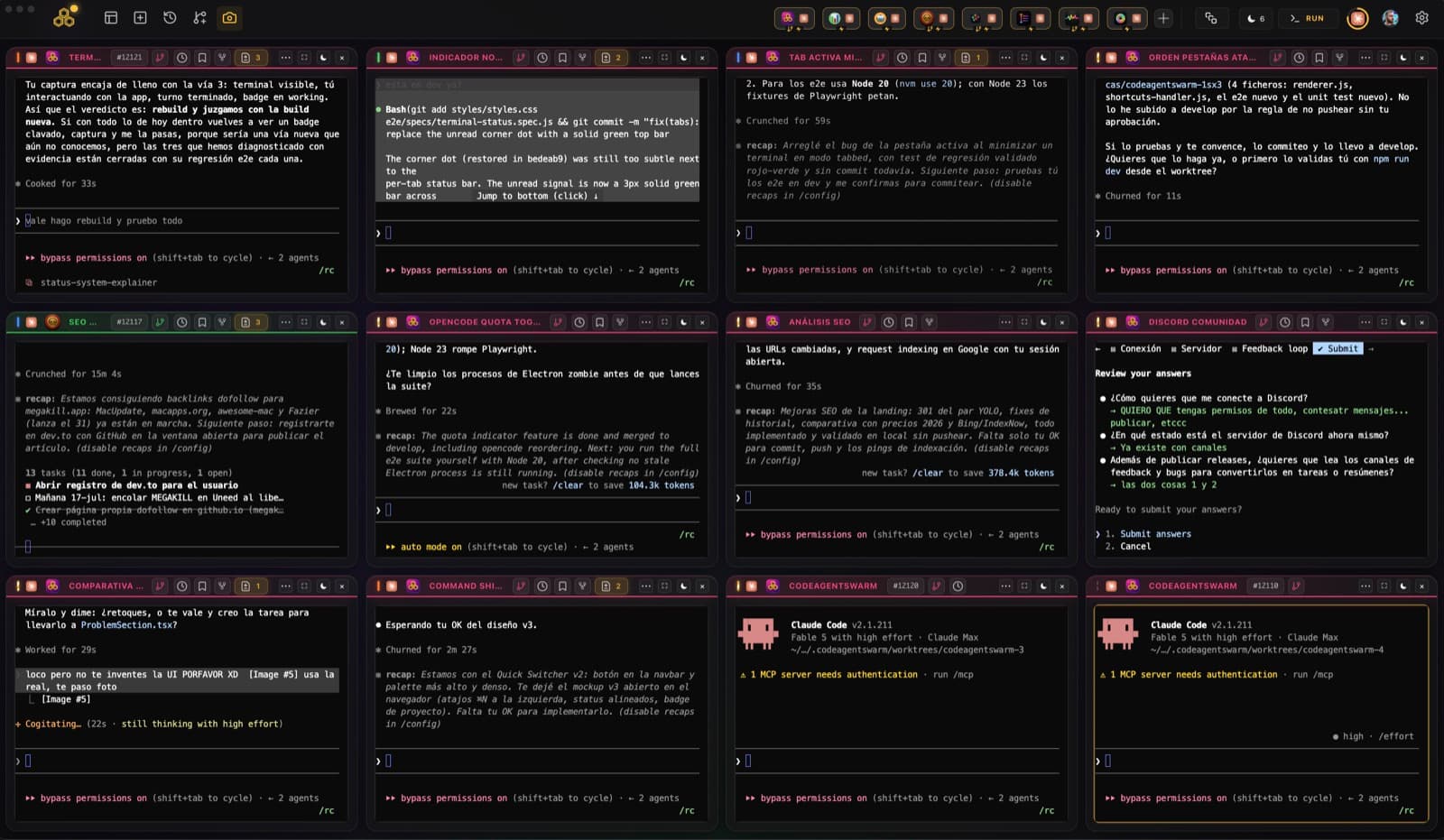
The official site publishes a real product view with 12 terminals running together and combines a task board, live diffs, notifications, history search, and MCP permissions in one app. At verification it was labeled open beta: macOS and Windows available, Linux still planned; Pro was €0 during beta and activated after sign-in, with €6.99 per month shown for after beta. Pricing, platforms, and beta status can change, so these are verification-time facts only.
What is genuinely novel
Multi-terminal layouts and task boards are not new. The more interesting combination is dynamic terminal state, an agent-updated task board, cross-session search, per-terminal file diffs, notifications, and tool-level permissions. It tries to turn parallel execution into supervised parallel execution.
Best for
Developers already running several Codex, Claude Code, or other CLI agents who are willing to validate permission rules first on disposable branches and low-risk repositories
Editorial evaluation
KEEP DISCOVERING
A few more products worth noticing
A small set selected by product shape and profile similarity, with independent verification records.
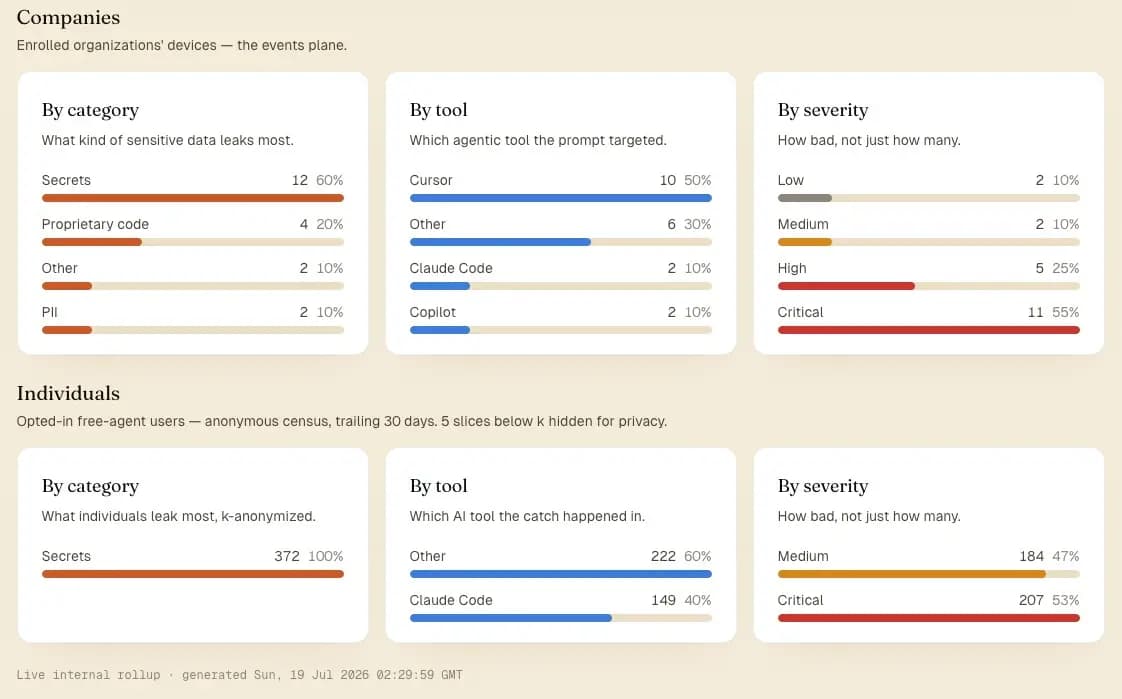
HeimWall
Uneed publisher atacinargenc / the HeimWall team
What it solves
Developers paste `.env` values, logs, customer records, or proprietary code into Cursor, Claude Code, Copilot, and similar tools. Traditional network DLP may not see an app's composer, while vendor dashboards do not provide one cross-tool signal.
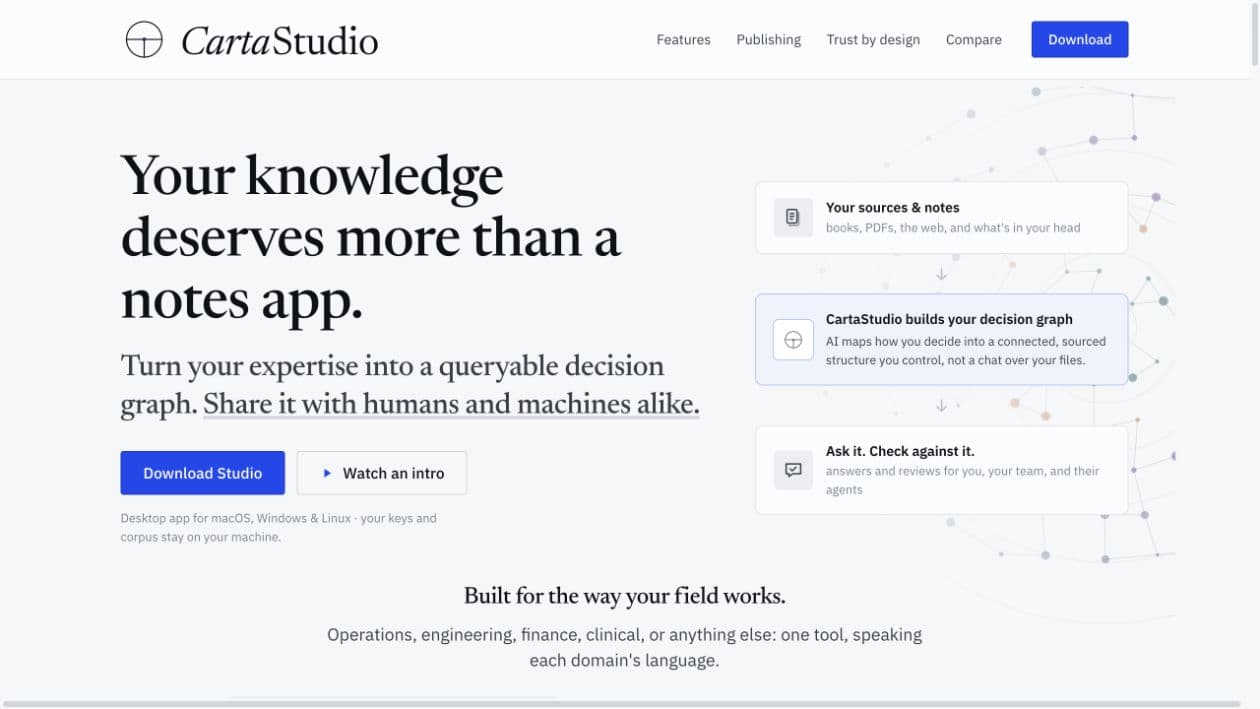
CartaStudio
12vectors team (Nik Eleftheriou and Ronald Ashri)
What it solves
Real decision criteria are scattered across documents, PDFs, web pages, and individual experience. Generic chat and file search struggle to express applicability, exceptions, and rationale. CartaStudio turns that material into typed, scoped, sourced decision graphs stored as Markdown in a user-chosen folder.
nForms
Noah Kellner
What it solves
A basic contact form often needs separate delivery, bot protection, and accessible validation systems. nForms accepts submissions through a form action or one script tag and layers SHA-256 proof-of-work with ARIA error states.
02 / WHAT STANDS OUT
Three product decisions worth noticing
Make waiting a first-class state
Done, running, failed, and waiting-for-user states must be visible in the overview; otherwise parallelism only hides idle time and blockers across more windows.
Configure auto-approval by impact
Reads and diffs can be automated, while push, merge, delete, migration, and external writes should default to denied; permission UI should reflect final effects, not merely tool names.
Separate the data planes
Model CLI traffic, app telemetry, crash logs, OAuth accounts, help-assistant content, and local history are separate paths and cannot be collapsed into a single 'runs locally' claim.
Product insight worth carrying forward
Parallel agents need a shared control plane more than more chat: task ownership, running or blocked state, change scope, recovery points, and default-deny rules for irreversible operations.
03 / DO NOT COPY
What not to copy
04 / LIMITS & RISKS
Limits and risks
'Code and prompts do not pass through the CodeAgentSwarm backend' does not mean the product has no data flows. The current policy says desktop usage events go to its backend; crash reports are forwarded to Sentry and stack traces may contain local file paths; optional sign-in stores OAuth profile data, tokens, IP address, and device information; and the Swarmi help assistant sends questions plus recent history to the backend and stores the exchange. The policy gives no fixed deletion period for analytics, errors, or support messages, and does not explain storage location, encryption, portability, or deletion for the complete local conversation history. The Turbo Mode guide also says Ask effectively behaves like Allow while confirmation skipping is on, so actions that must never auto-run need Deny. Conflicts from several agents editing one repository, guardrail coverage, and bypass paths were not independently tested.
Compared with alternatives
Compared with tmux, terminal tabs, or IDE panes, CodeAgentSwarm adds agent-aware task ownership, waiting state, notifications, cross-session history, per-terminal diffs, and permission presets. Compared with using each CLI directly, it also adds a closed desktop application plus account and telemetry boundaries. A plain terminal is lighter for one occasional session; this control plane becomes potentially useful when manually polling three or more agents becomes the bottleneck.
05 / EVIDENCE
Visual evidence
06 / SOURCE
Source and verification
- Original author
- Arturo Garcia
- Country / region
- Spain / global
- Maturity
- Pilot
- Confidence
- Partial
- Discovered
- 2026-07-18
- Last verified
- 2026-07-18
What this review checked
We verified the live site, pricing and roadmap, first-party dashboard and Turbo Mode explanations, privacy policy, terms, and cookie notice updated June 22, 2026, the Uneed launch page, and the official 1600×931 interface image. We did not download or install the desktop app, create an account, provide OAuth or model credentials, open a repository, run any CLI agent, connect MCP, enable Turbo Mode, test permission blocks, or inspect network traffic, so runtime stability, history search, diff attribution, and safety controls remain first-party claims.
Latest change
Initial profile created from the live site, pricing and roadmap, dashboard and Turbo Mode explanations, privacy, terms, cookie notice, Uneed launch page, and the official interface image; the product was not installed or authorized, and auto-approval, telemetry, error, account, help-assistant, and local-history boundaries are recorded.
Ready to explore further?
Open the product, or return to the original source to verify the details.
ONE-TAP FEEDBACK
Did this profile help you judge the product?
One tap. No writing required.