Simon Willison · author updates · Published 2026-08-20
Simon Willison: faster coding still takes understanding
When AI makes another feature easy to add, who understands the product those features form? Simon discusses engineers’ review, explanation and maintenance through conceptual integrity.
Someone still has to understand the result
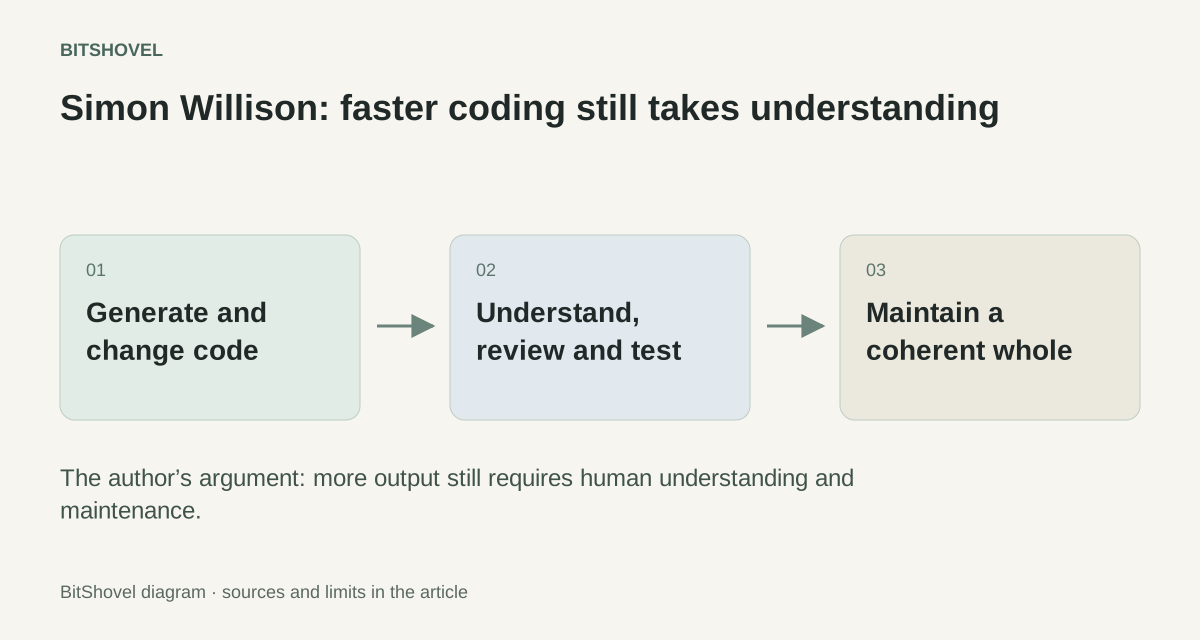
In interview excerpts, Simon Willison argues that coding agents can increase output while engineers still need to understand, review and maintain the software. Cheaper feature additions increase the importance of a coherent product.
The account describes how AI changes the distribution of understanding and maintenance work, as well as coding speed.
Features and conceptual integrity
Drawing on conceptual integrity from The Mythical Man-Month, he explains that individually feasible features may not combine into understandable software. Teams also share the burden of understanding and maintenance.
This is personal experience and argument, not a productivity experiment. The numerical expressions are not measured gains that apply to every team.
Important additions and corrections
Dates below mark changes to our coverage.
- Addition ·
Clarified the argument about shared cognitive work and conceptual integrity, retaining its personal-experience scope.
Sources and notes
sources中文
Sources and notes
- Read the originalSimon Willison · author updates
Sources and evidence · 1 link
Each link has a purpose and scope. Link counts do not establish independent confirmation; direct support applies only to the statements specified below.
Source timeline
- · The author published an article arguing that cognitive capacity and conceptual integrity become constraints as coding-agent output rises.
- · The author’s public updates returned 15 long-form entries. BitShovel retained titles, links, dates, and author metadata—not summaries or article bodies.
- · A repeat fetch returned the same 15 metadata entries, with no new or metadata-updated entries, so no duplicate information card was created.
Collection record
First discovered:
Collection and source publication have distinct dates.
Editorial record
Corrected
· Beijing time (UTC+8)
Clarified the argument about shared cognitive work and conceptual integrity, retaining its personal-experience scope.
Sources and full record
This dates our review of the wording and sources, not a project release or product update.
Full record: before, after and sources (JSON)See how these changes connect
Another author describes the human work from planning through agent implementation to acceptance.
Retain context, progress and next steps so the work can continue.