Ongoing topic · Compiled November 11, 2026
How Chixie Rusong made it, step by step
From a March 2025 course and commercial gigs to a rights-library pick, three-week prep, asset libraries and card-pull economics, then the climb from a flat first season to a chart-topping fourth and a reported 12 billion plays — with the OPC organization and the unsettled account.
01The question this topic answers中文
How Chixie Rusong made it, step by step
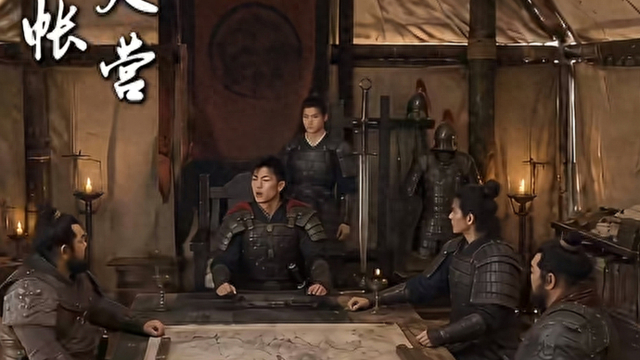
A six-person team of non-professionals shipped an AI realistic-human drama whose first season landed quietly on Hongguo on August 21 — and by November 6 it was reported at 12 billion cumulative plays, top of Hongguo's AI chart, with peak season heat of 82.06m, a reported 11.41m collections, and 4.83m reservations for season eleven. The outside story is the gap between "six people" and "12 billion". Laid out on a timeline, nothing here happened overnight: the show climbed one season at a time. This topic walks that line — from a paid online course in March 2025, through story selection and front-loaded craft and organization, to the accounts still nobody has settled.
Boundaries first: every figure is a media or platform caliber (heat, plays, collections and reservations are four different fields); the makers' statements and media estimates are kept separate wherever money appears; we have not watched every episode. The evidence chapters live in the application case (/applications/ai-video/chixie-rusong); this topic tells why it worked as one followable line.
Sources and notes
- Wenyu Value Officer's creator interview (on 36Kr) ↗Creator interview · November 6, 2026The backbone for the climb line and the income disclaimer.
- China Writers Net relaying Beijing Youth Daily ↗Interview relay · November 10, 2026Team shape, coordination and the front-loading method.
02Step one · drilling the craft中文
A year of commercial gigs: from a 54-year-old's online course to a 30-person loose network
Planner Zhang Hansheng, 54, from Shijiazhuang's Jingxing mining district, had failed at several businesses before. From March 2025 he spent 1,000 yuan on an online course to learn AI video generation from zero; riding the window when studios outsourced AI drama production, he took commercial gigs at up to 3,000 yuan per minute. Peers gathered into a loose 30-plus-person network across six provinces — stay-at-home moms, former ride-hail drivers, couriers, small traders, none film-school trained.
The drill yard was assembly-line drama: five groups turning out twenty-plus titles a month of uneven quality. Two earlier shows are on record — one took 20m-plus plays on Douyin; the next hit 160m there with 300k Hongguo collections, then came down after six days for crossing a review line. Those failures and habits became the footing for the third show — and for the later line about building it to a premium-hit standard. The starting point of so-called AI democratization was not a tool button but a year of delivering to commercial standards.
Sources and notes
- Wenyu Value Officer interview ↗Makers' accountThe course, gig rates, two earlier shows with one takedown, and the bodyguard title's smaller hit.
- Shanghai Observer in conversation ↗Creator interview · November 9, 2026Team make-up, provincial spread and the assembly-line output rate.
03Step two · choosing the story中文
A sub-100k-click novel, and the decision to build it like a hit
Zhang Hansheng picks IP from the creators' rights library, where rights are free — which is why outside estimates of a six-figure rights bill fell apart. The chosen novel sat under 100k clicks. Three tests drove the pick: a time-travel premise with no system cheat, forcing the lead to work inch by inch inside historical rules; an author meticulous about Song institutions, offices and dialogue, with the dialogue craft weighed heavily; and an upright, hot-blooded subject matching this male-frequency team's taste. The target was fixed at project kickoff: build it to premium-hit standard — where a hit means surviving scrutiny of taste and historical detail, not just numbers.
The visual form also runs against the market. DataEye's September count of Hongguo's board: of 500 AI dramas and comic dramas, 460 were 3D comic dramas (92%) and only 38 realistic-human dramas (7.6%). This show took the minority path for a subject reason: villages, camps, battlefields and courts borrow the visual memory audiences bring to historical and war drama, which a fantasy 3D look cannot supply — and on the production side it lowers the cost barrier of war, crowds and period scenes that live shooting would price in.
Sources and notes
- Wenyu Value Officer interview ↗Makers' accountFree rights library, sub-100k clicks, the three tests and the premium-hit positioning.
- Zhihu column (Luogu Yinhe): consistency and the form split ↗Third-party analysis · November 8, 2026DataEye's 92/7.6 form split and the subject-side case for the realistic-human route.
04Step three · front-loading中文
Work before generation: four steps, the asset library and the economics of card-pulling
Season one entered preparation on August 1: about seven days picking the crew (five or seven were weighed; six chosen), the first twenty minutes done by August 9, the first ten episodes by two people in a week, the whole season up in roughly three — slower than anything the team had made, because character sheets, scene art and script adaptation got extra grinding. The pipeline in the makers' summary has four steps: read the novel, iterate the script, refine character designs, lock tone with a sample reel. Every speaking character gets dedicated reference material, down to ministers, soldiers and passers-by — "even without a name tag, the audience should know who this is".
Verification decides whether frames read as Song: robe colors by rank, accessories, footwear, household permits and etiquette were checked, and the Li Qingzhao-inspired Li Qingtang tuned against surviving paintings. Only then the economics of card-pulling: routine shots average 3 generations, battles and crowded frames 10 to 20-plus; a clean-but-flat "60-point take" is a discard. Project compute topped one million yuan — under OPC nearly the only cost (no payroll, free rights), spent through Seedance annual memberships whose 2.5 multi-reference upgrade visibly helps crowd scenes. The method in one line: spend front-loaded certainty to reduce late-stage randomness.
Sources and notes
- China Writers Net relaying Beijing Youth Daily ↗Makers' account · November 10, 2026The three-week calendar, front-loaded effort, card-pull counts and Seedance 2.5's role.
- Wenyu Value Officer interview ↗Makers' account · November 6, 2026The August 1 start, August 9 first-twenty, the 60-point discard bar, and the million-yuan compute with free rights.
05Step four · the climb中文
Nine flat weeks, then fermentation season by season
The climb deserves frame by frame: season one launched August 21 to a flat response — producer Li Zhaohua later called it lukewarm, with collections around 600–700k; by any ROI logic the story should have ended there. The team bought no traffic ("we don't buy traffic, and we won't") and kept shipping on rhythm. The day after season four, it topped Hongguo's AI new-drama chart with heat above 50m — the first verifiable turn. Heat then fermented season by season: at season nine the team itself finally felt the scale, and season ten hit 82.06m, the series' single-season peak.
The break-out markers cluster in early November: November 4, a Weibo topic on Hongguo historical dramas trends; November 6, plays reported at 12 billion and the top of Hongguo's AI chart (against 4 billion in October and 6 billion on November 3 — snapshots, not a sum); Outlook's commentary gets republished by CCTV while Economic Daily and Guangming Net write their own, all on one line — AI cuts costs but never standards. Audience participation changed levels too: bullet comments trading Song history, volunteer annotation platforms marking institutions and battle maps as fact, fiction or conjecture, and a Yue Fei entrance that moved viewers beyond the makers' expectations. Iteration ran both ways: no script stockpile — comments and fan groups are the writers' room, and each season adjusted to them.
- · Zhang Hansheng begins systematically learning AI video generation
- · Preparation begins; crew picked in about a week, first ten episodes by two people
- · Season one launches on Hongguo to a flat response, 600–700k collections
- · Season four tops the AI new-drama chart the day after launch, heat above 50m
- · Cross-platform plays reported past 4 billion
- · The play caliber rises to 6 billion
- · A Weibo topic on Hongguo historical dramas trends
- · Plays reported at 12 billion and the AI chart topped; season ten's 82.06m is the peak
- · Season eleven expected: 4.83m-plus reservations (November 9 caliber)
Sources and notes
- Wenyu Value Officer interview ↗Makers' account · November 6, 2026The full low-start-high-walk chain and the no-traffic statement.
- Sohu commentary (quoting Li Zhaohua) ↗Commentary · November 7, 2026One source for the lukewarm season one; an opinion piece, facts cross-checked against the interviews.
06The base · organization中文
OPC: selection plus self-drive, paid by effective finished minutes
What carries the line is a deliberately simple relation: OPC, one person one company. Members are collaborators, not employees — no fixed salaries, revenue split by role and effective finished minutes, each production self-funding; entry is gated on mature finished-work ability, with trial pieces as the exit ramp. Thirty-plus people across six provinces work fully online over WeChat, Feishu, shared drives and Tencent Meetings under no-meeting-by-default; finished cuts are cross-reviewed with notes, and a process owner signs off. Roles match ability, daily talk happens in the production group, and people work days or nights as they choose.
Two premises get overlooked: the machinery runs on trust banked over a year of collaboration, not a copyable management template; and it prices the hidden cost of card-pulling — revenue follows effective finished minutes, so wasted generations eat their own pocket. The post-hit adjustments are statements, not results: monthly output drops from twenty-plus titles to single digits while per-title compute rises; new IP is in preparation (the bodyguard drama is live past a million collections, reported caliber), and the team explicitly will not lock itself to history. Zhang Hansheng's caution belongs on the record verbatim: luck is a large part — good script, good team, good timing, all three or nothing — and a raw beginner entering now will not find it easy.
Sources and notes
- China Writers Net relaying Beijing Youth Daily ↗Makers' account · November 10, 2026OPC's selection-plus-self-drive mechanics, the revenue split and the output cut.
- Zhihu column (Luogu Yinhe): the organization dissected ↗Third-party analysis · November 8, 2026The framing that the bottleneck moved from tool skill to process management.
07What it can prove中文
It proves the container, not a compound formula
Aligned across accounts, the show genuinely proves three things. First, the container forgives: two-minute episodes allow twenty re-rolls and deferred fixes, where a 120-minute film grants one chance — the same year's AI theatrical feature Sanxingdui: Future Past, after two years of exploration, earned 1.689m yuan against a nine-figure-budget in the millions, and that gap is exactly the tolerance difference. Second, consistency is an engineering problem: an asset library, per-character references and cross-checked sign-offs beat a stronger model at keeping faces from drifting. Third, the content standard is not negotiable: three state-media pieces land on one line — AI cuts costs but never standards — and the makers say it plainer: AI has no feelings; the feeling for home and country is put there by people.
What it does not prove is equally clear. The "ten-million return" remains creator-disputed with no evidence; only about 0.5% of the 221.9k AI short dramas in review broke 100m plays, and one case erases no head effect. The AI feel and logic gaps persist — Liberation Daily's commentary benchmarks the live-action historical drama Taiping Nian, and some viewers avoid this show for its AI feel; the regulator is tightening (review-everything is now the stated direction, per commentary); and the team's own worry is being read as everyone can do this. For readers, the practical meaning: to watch, search the title inside Hongguo; to try, start from the reader practice in the application case — think it through before opening a generation tool.
- Back to the case: chaptered evidence and two season screenshots
- Compare: Wanyao Tulu Zhuan's 3D comic-drama run
Sources and notes
- Zhihu column (Luogu Yinhe): container and consistency ↗Third-party analysis · November 8, 2026The two-minute tolerance contrast and the Sanxingdui box-office caliber.
- China Writers Net relaying Beijing Youth Daily ↗Makers' account · November 10, 2026AI has no feelings and the warning to newcomers.
- 36Kr carrying industry commentary: hit rates and the regulatory line ↗Industry commentary · November 2026221.9k titles, about 0.5% breaking 100m, the review-everything direction and where profit accrues. Commentary caliber.
What we are following
08What comes next中文
What we are following
- Does the heat and goodwill carry through season eleven?
- Will production details like prompt structures or asset-library conventions be published by the team or peers?
- Can the next, smaller-output title validate the method rather than the luck?
- When do actual revenue-share numbers surface, and how do platform and makers split?