From model to creation · Change and preservation
Krea 3: what should stay when the furniture changes?
A room gets different furniture and a can a new setting: which details remain? Read the official inputs and outputs, then distinguish app access, API eligibility, reference limits and the cost of one generation.
Krea 3 launched October 15 and entered our model catalog October 18. On October 19 we checked original inputs and outputs, the user guide and API documentation. These are vendor examples; we did not generate images, request beta access or perform a renovation.
The furniture changes; the room provides the reference
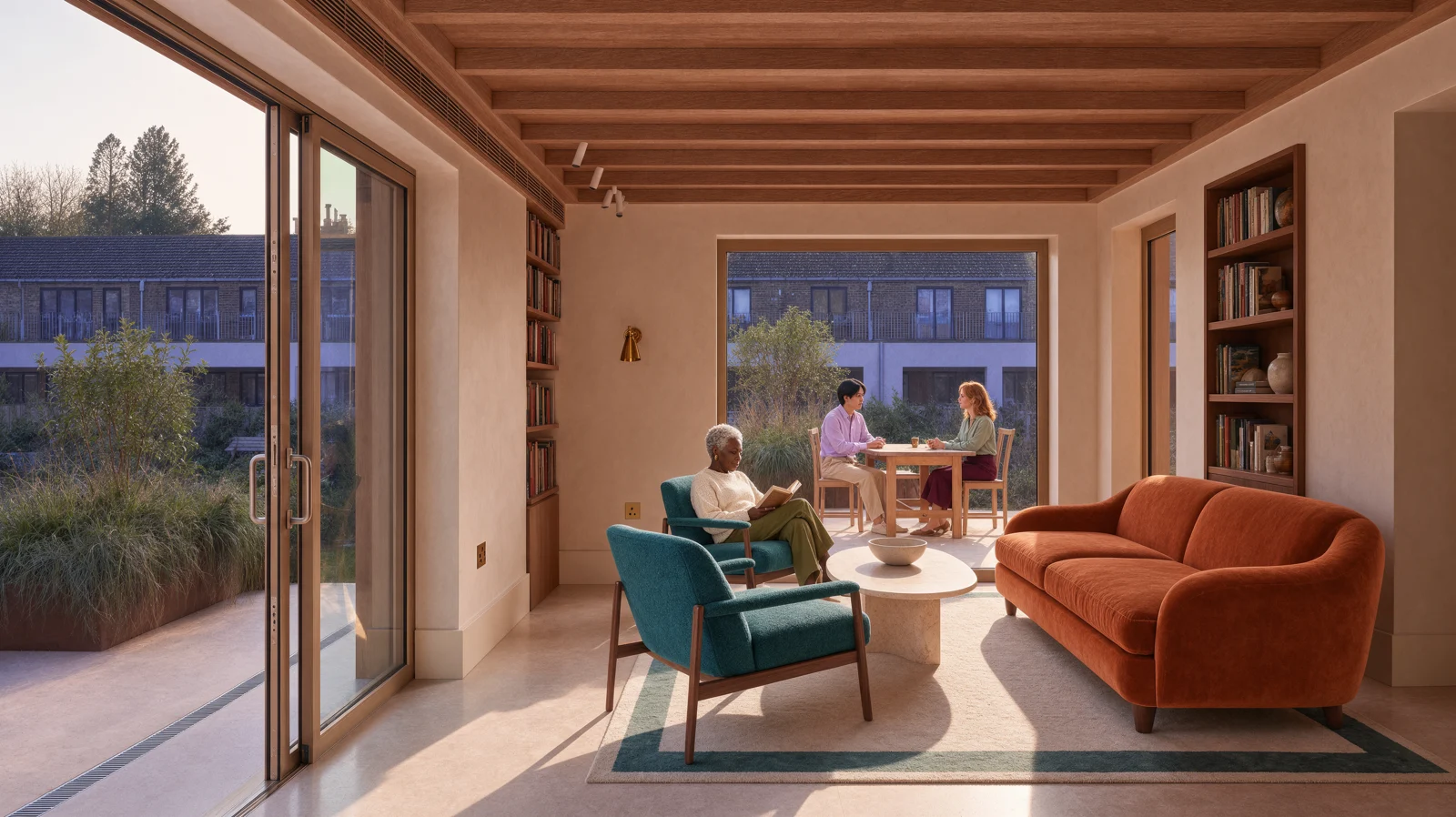
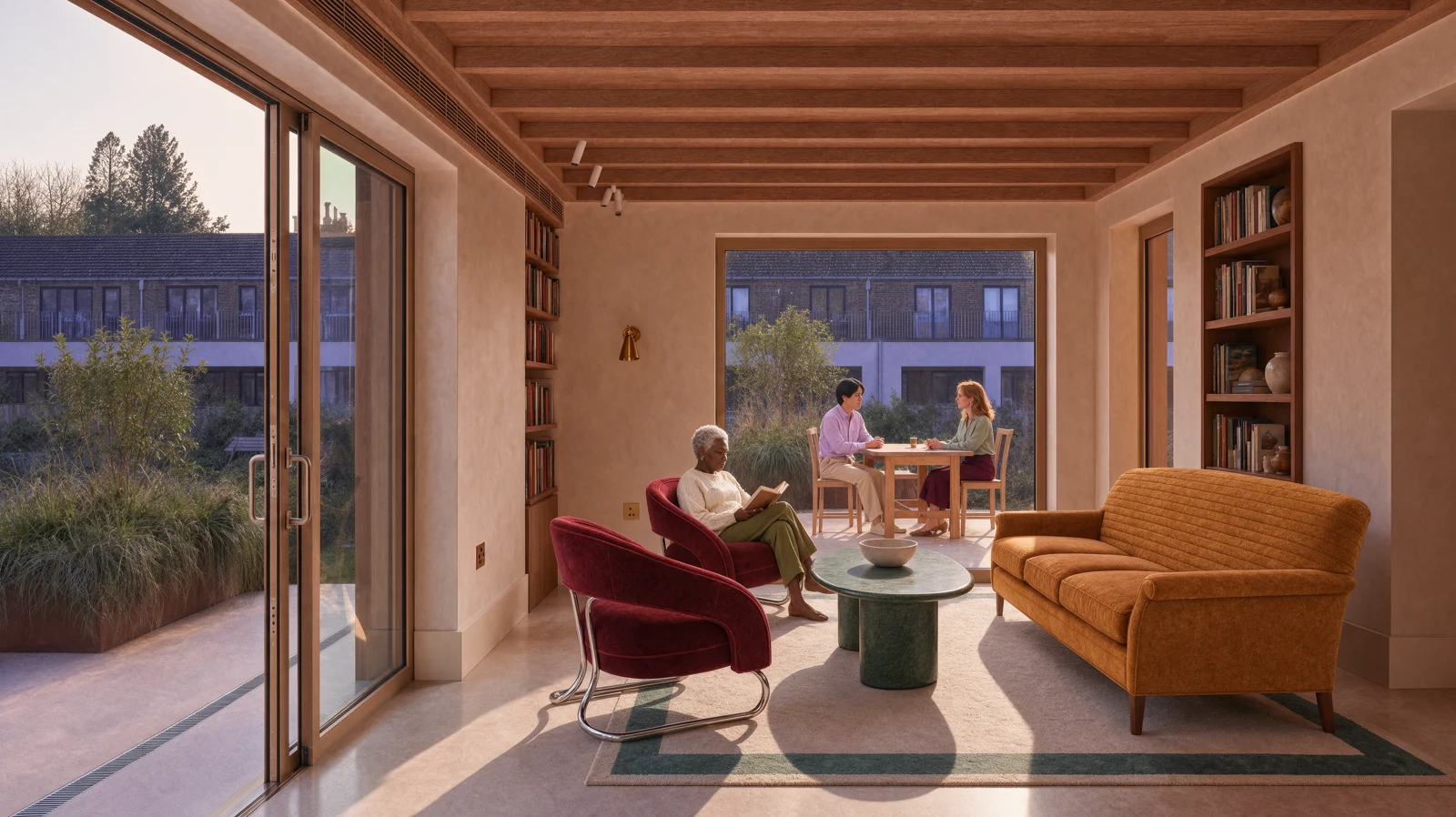
The example supplies an existing room and three furniture references, asking for different seating and a table while retaining the room, rug and reader. Walls, windows and people’s positions remain recognizable as furniture colors, shapes and materials change. It provides a more relevant design reference than an unrelated newly generated room.
Preservation still needs item-by-item inspection. New furniture changes occlusion, shadows and contact, and a similar image does not establish real-world dimensions. The source prompt is shortened and its attempt history is absent. This vendor result illustrates an editing direction rather than proving one-shot success on arbitrary rooms.
Sources and further reading
- Krea 3 · Original launch and input/output examplesVendor source · October 15, 2026Examples, shortened prompts, the six-reference launch description and platform latency comparisons. No invoice or complete attempt history is supplied for the room example.
- Krea 3 · App user guideOfficial product guide · app and API differThe base model uses compute units in the app, with settings priced in the model picker. App availability does not establish API access for every workspace.
A new product scene still needs a label check
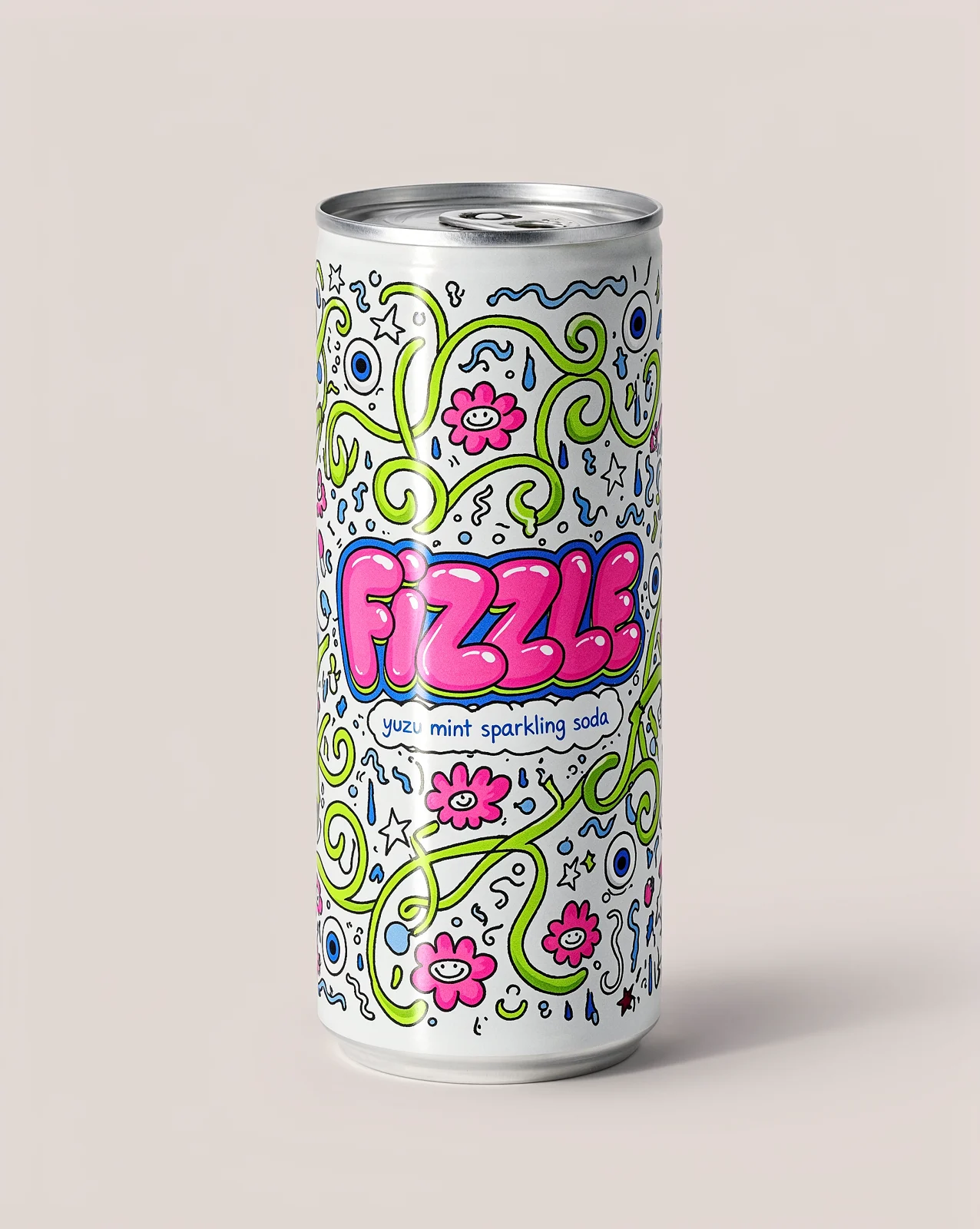
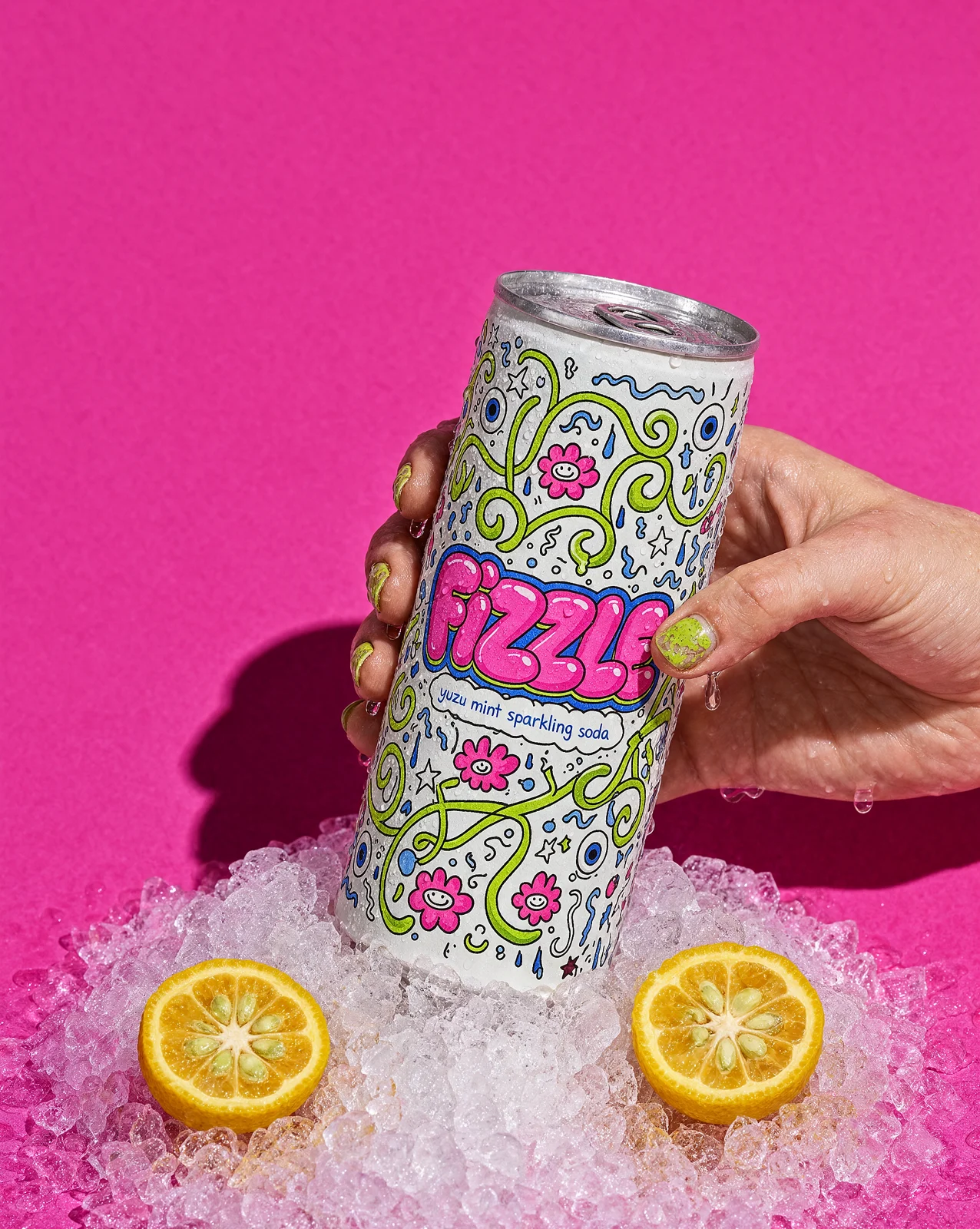
The can moves from a plain product background into a hand-held scene with ice and citrus. FIZZLE, the flavor words and floral label remain recognizable while composition, angle and lighting change. The editing use is concrete: a familiar product enters a different visual presentation rather than being replaced with an unrelated object.
Before using such an image, inspect letters, label layout, edges and hand occlusion at full size. Recognizable product identity and exact packaging fidelity are different checks. These examples can inspire product scenes and personal work, but do not establish revision count, client approval or sales outcomes.
Sources and further reading
- Krea 3 · Original launch and input/output examplesVendor source · October 15, 2026Examples, shortened prompts, the six-reference launch description and platform latency comparisons. No invoice or complete attempt history is supplied for the room example.
What sits behind eight seconds and six cents?
The launch claims most native-2K edits take under eight seconds. Competitor latency comes from earlier Krea jobs, September 24–October 1, including queues, rather than our simultaneous equal-budget test. The current API also distinguishes default fast and slower high modes. Useful iteration time includes waiting, retries and checking.
$0.06 is the 2K base component, not the final cost of every edit. The API documentation adds $0.02 per 1K reference, $0.07 per 2K reference and $0.02 per high-mode generation. The table assumes four references billed at 1K. It is neither the room example’s invoice nor app compute-unit pricing.
| One-generation setup | Calculation | Cost |
|---|---|---|
| 2K · fast · base without references | $0.06 | $0.06 |
| 2K · fast · four 1K references | $0.06 + 4 × $0.02 | $0.14 |
| 2K · high · four 1K references | $0.06 + 4 × $0.02 + $0.02 | $0.16 |
Sources and further reading
- Krea 3 · Original launch and input/output examplesVendor source · October 15, 2026Examples, shortened prompts, the six-reference launch description and platform latency comparisons. No invoice or complete attempt history is supplied for the room example.
- Krea 3 · Current API documentationOfficial API documentation · read October 19API beta, up to eight references, input resizing, fast/high, regional editing and itemized costs. The reading date is not a new release date.
Match the access path to the preservation requirement
The user guide makes the base Krea 3 available to app users through compute units, while the API remains early access for beta workspaces. The launch describes six references; current API parameters allow eight. With five or more, each reference is limited to 1536 pixels on its longest side. These are source and access scopes, not evidence of a model upgrade today.
For an initial design experiment, start with a scene you own and a focused request that names what should remain, then inspect the result. For exact regional changes, the API documents regional_edit and claims pixel preservation outside the edited area. That mode’s claim does not establish that every launch example used it. We have not verified it through calls; preservation must still be checked against the intended standard.
- Read app access and compute-unit guidance
- Check API access, references and itemized costs
- Continue with preservation and omissions in Qwen composition
Sources and further reading
- Krea 3 · Original launch and input/output examplesVendor source · October 15, 2026Examples, shortened prompts, the six-reference launch description and platform latency comparisons. No invoice or complete attempt history is supplied for the room example.
- Krea 3 · Current API documentationOfficial API documentation · read October 19API beta, up to eight references, input resizing, fast/high, regional editing and itemized costs. The reading date is not a new release date.
- Krea 3 · App user guideOfficial product guide · app and API differThe base model uses compute units in the app, with settings priced in the model picker. App availability does not establish API access for every workspace.