Creative process · From generated to playable
Battle Drones: after AI builds a game, what makes it worth playing?
Follow Simon Willison and Opus 5.5 through a 2D prototype, island rules, simulated matches and a real problem with audio multiplayer.
Simon Willison published his Battle Drones retrospective on October 20 and added an audio-multiplayer problem and network alternative. Our October 21 reading connects the work, versions and development records: once features run, how do play and comfort improve?
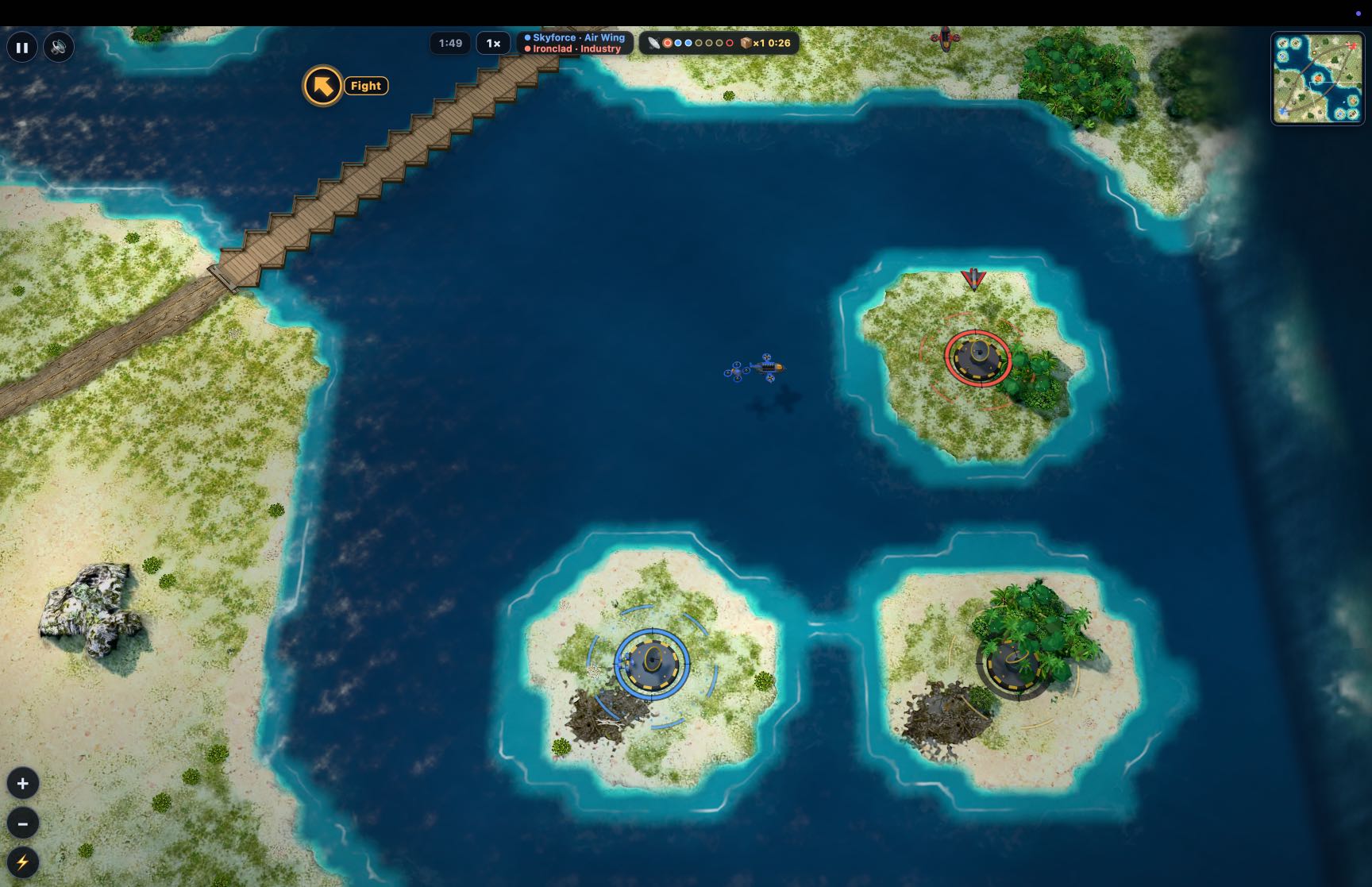
Once it looks like a game, why keep playing?
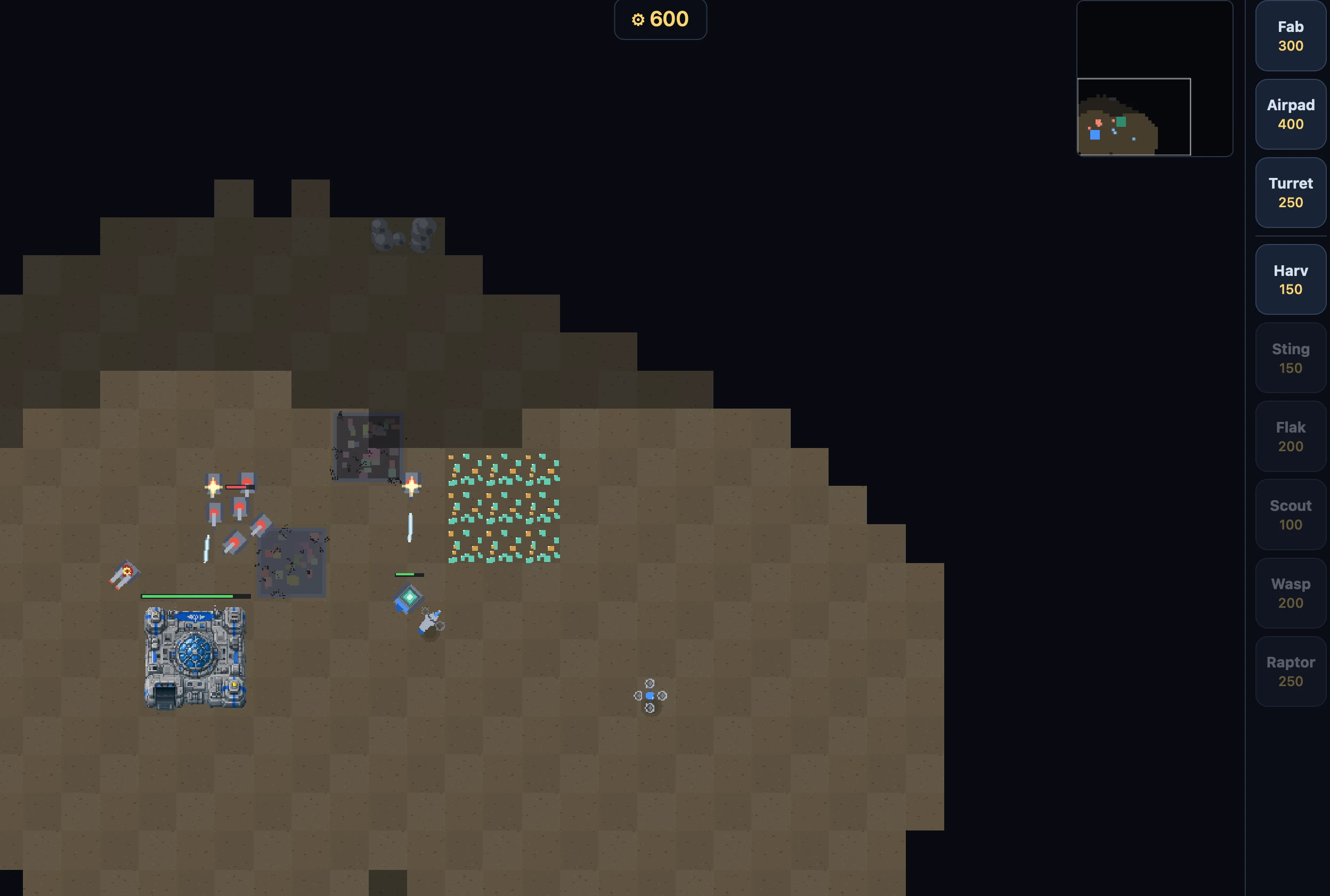
Battle Drones is Simon Willison’s browser RTS experiment: gather resources, build a base and command ground and air units. Playable versions trace its path from a rough 2D prototype to a 3D battlefield. Readers can inspect a work rather than only a promotional image.
The retrospective distinguishes two asset routes: image models generated early 2D sprites, while Claude constructed later 3D buildings and units in TypeScript. The original model browser makes them inspectable. Multiple tools and iterations contributed to the work.
Willison reports that visual upgrades alone left him bored. With Opus 5.5, an open request to improve the experience led to a lengthy revision. He later specified island objectives accessible only to transported infantry. The model added features; observation and rule choices still shaped which ones mattered.
- Start with the original game menuBrowser game; start with AI spectating and choose audio or multiplayer separately.
- Inspect the original 3D units
Sources and further reading
- Simon Willison · Battle Drones development retrospectiveCreator account · October 20, 2026Version history, design input, audio problems and the network alternative; author judgments are separate from our checks.
- Original project, archived versions and match replaysCreator source · current on October 21Archived versions and match records; results are not a controlled general model ranking.
- Open the current browser gameOriginal interactive workWe checked the menu and AI spectator entry, without completing two-device multiplayer, balance or acoustic testing.
What 1,200 simulations can tell us
The project’s update notes compare 1,200 matches between built-in game AIs on Normal before and after revision. Unfinished games after 25 minutes fell from 14% to 0.9%, while decided games’ median length rose from 5:51 to 8:17. Together, these measures address room for combat and fewer stalemates, rather than speed alone.
These are project-reported simulations, not our rerun or evidence of retention, satisfaction or revenue. The notes also examine comebacks, lead changes and central-map combat. Such measures make design hypotheses observable; real players still decide whether the game merits another round.
| Measure | Before | After |
|---|---|---|
| Unfinished after 25 min | 14% | 0.9% |
| Median decided-match length | 5:51 | 8:17 |
Sources and further reading
- Gameplay update notes and simulation scopeProject record · pinned sourceBefore/after figures from 1,200 Normal AI-vs-AI games, not reviews from 1,200 players.
Audio multiplayer reaches beyond the screen
The initial local multiplayer route exchanged synchronization messages through speakers and microphones. Willison later reported that high-pitched modem sounds gave Natalie a headache during play. He added a warning and built an online alternative. Transmitting data successfully does not establish comfortable use.
v13 uses a WebSocket relay to pass messages without retaining game state. The author estimates roughly $2.19 a month if the selected small instance remains running. This is a deployment estimate, not a verified bill or a fixed price at every scale. The alternative keeps multiplayer while introducing a server to maintain.
Sources and further reading
- Simon Willison · Battle Drones development retrospectiveCreator account · October 20, 2026Version history, design input, audio problems and the network alternative; author judgments are separate from our checks.
- v13 relay scope and cost assumptionsOriginal implementation and deployment notesA relay without game state still needs hosting, connections and bandwidth; costs are the author’s estimate.
Watch a replay, then inspect its limits
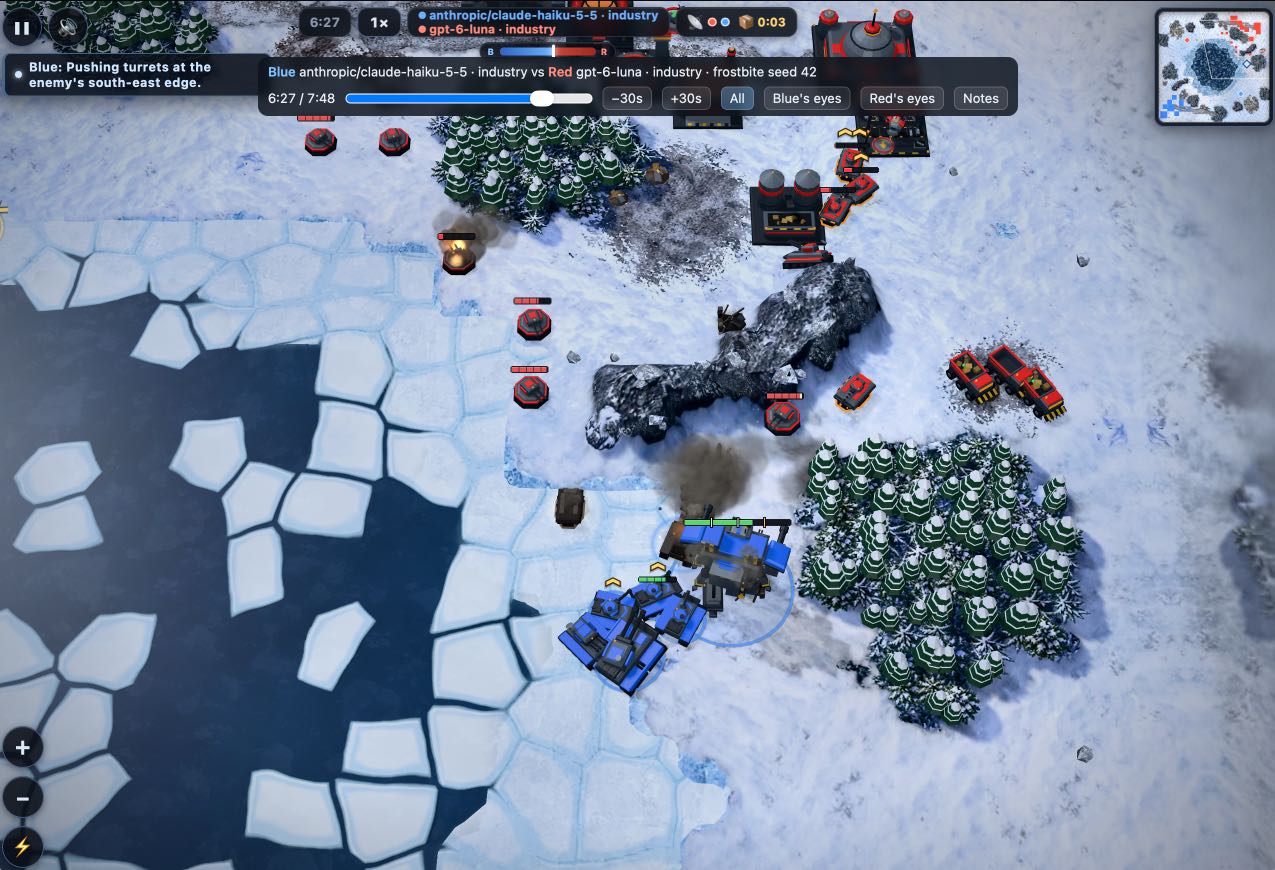
Published replays include Haiku 5.5, GPT-6 Luna and Opus 5.5, with a record viewer for round-by-round prompts and responses. Agents use structured tools for visible state and commands, rather than continuous pixel-based play. These are behavior samples, not grounds for changing a general model ranking.
The useful evidence spans archived builds, design measures and an alternative prompted by a real problem. We checked sources and opened the menu and spectator entry, without completing a match, two-device or acoustic test. Readers can inspect single-player or replays before considering paid models or hosting.
- Watch the pinned Haiku–Luna replay
- Inspect the round-by-round responses
- Continue with Opus capabilities and other works
Sources and further reading
- Simon Willison · Battle Drones development retrospectiveCreator account · October 20, 2026Version history, design input, audio problems and the network alternative; author judgments are separate from our checks.
- Original project, archived versions and match replaysCreator source · current on October 21Archived versions and match records; results are not a controlled general model ranking.
- Open the current browser gameOriginal interactive workWe checked the menu and AI spectator entry, without completing two-device multiplayer, balance or acoustic testing.