A creator's work · Speech and program roles
Atticus: which parts of a spoken request go to the model?
Rules can handle opening apps and arranging windows before Claude sees a request. See how the creator's Mac voice assistant saves shortcuts, waits for final transcription and offers text for review.
The pinned source uses en-US English transcription and requires macOS 26. The author's main route uses a signed-in Claude Pro or Max plan with Claude Code. Examples retain the English requests. This reading examines the creator's account and October 12 source; we have not installed or operated the assistant.
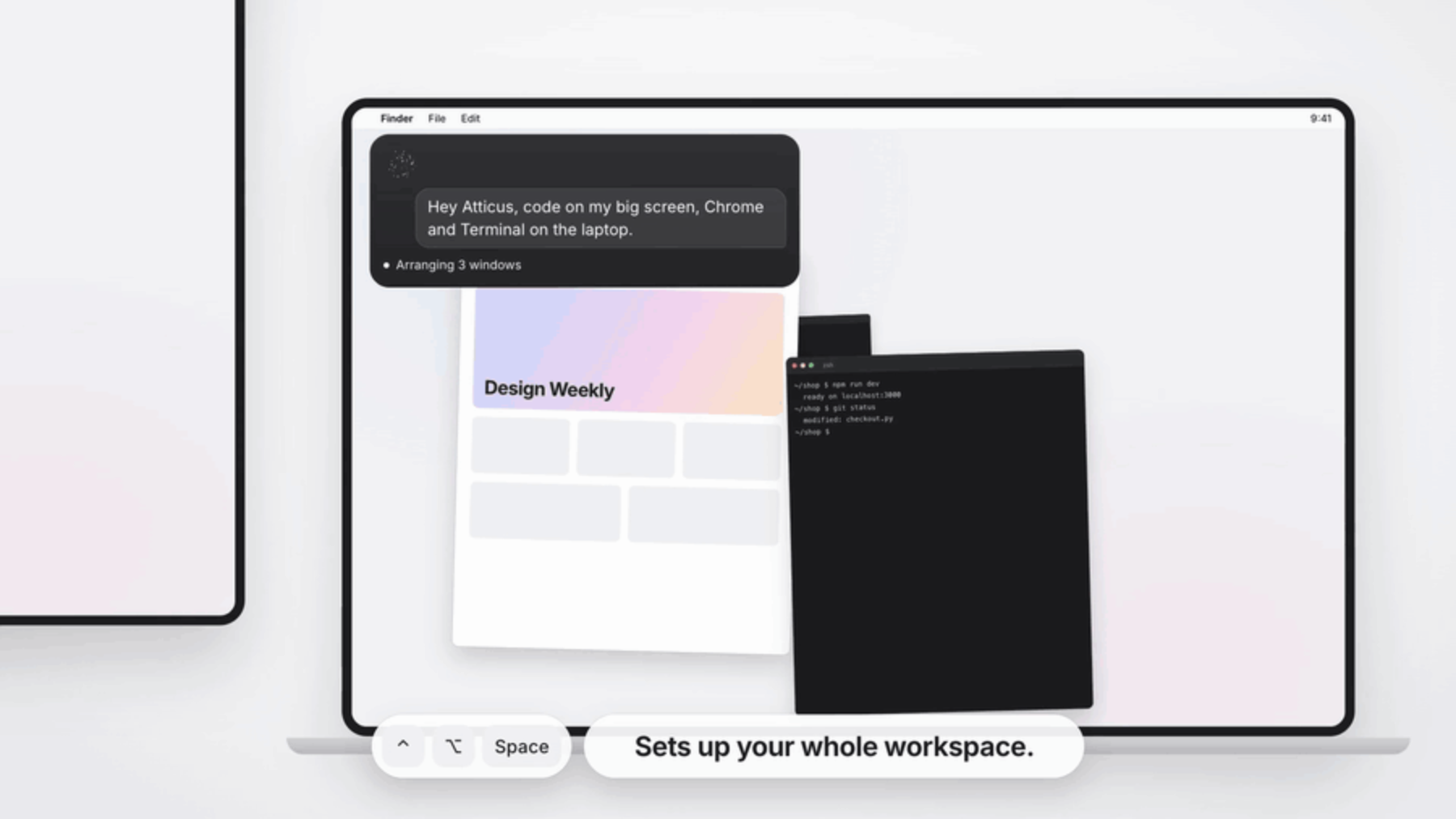
The program first matches an action
The creator gives Open Spotify and Terminal on the left as examples. Atticus normalizes the transcript and tries rules for opening apps, searching or moving windows. A match invokes an existing Mac operation without another model decision. Requests about file contents or the current screen can take the Claude route. An assistant's response combines transcription, rules, a model and system interfaces; a completed action does not by itself establish the model's capability.
Sources and further reading
- SaarthurR · Original Atticus project accountCreator's account · Pinned revisionExamples, requirements and cost claims; the feature animation is not recorded device operation, and the author's records are not BitShovel measurements.
- Atticus · Fast paths and Claude routingCreator's pinned source · atticus.pyRules, saved-action replay, the final-transcript gate, the default Haiku alias with low effort, and subscription/API billing branches.
The same words can replay a saved action
Replayable actions can become shortcuts storing the normalized request, commands and reply. The same request then tries replay first. The source filters what it saves: context-dependent references such as this are excluded, and failed replay returns to the model. Remembering here chiefly means storing program commands, not training new weights. For repeated workspace setup, examine whether commands remain reusable as the situation changes and how failure returns to judgment.
Sources and further reading
- Atticus · Fast paths and Claude routingCreator's pinned source · atticus.pyRules, saved-action replay, the final-transcript gate, the default Haiku alias with low effort, and subscription/API billing branches.
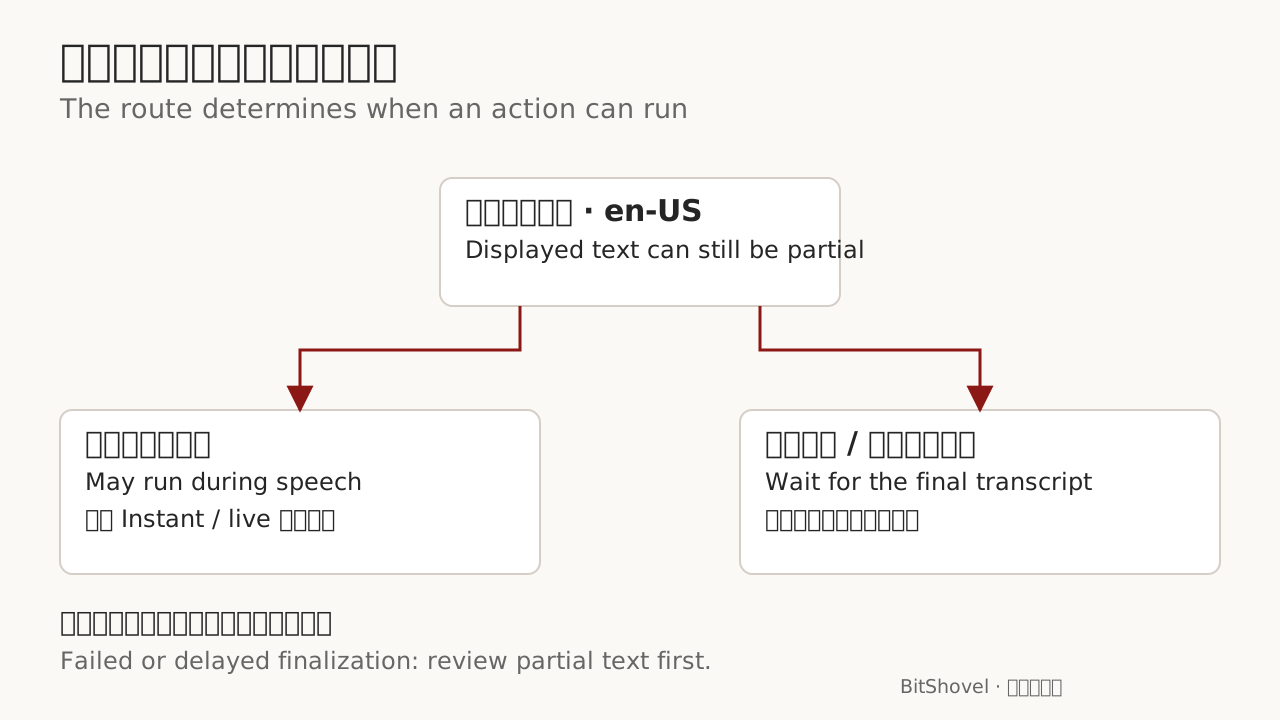
Final transcription and actions during speech are separate paths
Regular model tools and learned shortcuts wait for Apple's final transcript. Reasoning can start during a pause, while tools await the transcription gate. Failed or delayed finalization offers partial text for review. Separate Instant commands and Act while I’m talking settings are enabled by default in this revision: some built-in actions can run mid-sentence, while learned shortcuts still wait. Releasing the hotkey therefore does not start every action, and displayed text is not necessarily final.
Sources and further reading
- SaarthurR · Original Atticus project accountCreator's account · Pinned revisionExamples, requirements and cost claims; the feature animation is not recorded device operation, and the author's records are not BitShovel measurements.
- Atticus · Fast paths and Claude routingCreator's pinned source · atticus.pyRules, saved-action replay, the final-transcript gate, the default Haiku alias with low effort, and subscription/API billing branches.
- Atticus · English transcription and text reviewCreator's pinned source · Atticus.swiften-US, partial review when finalization fails, and separate settings for built-in actions during speech.
The app is free; model calls still have conditions
Complex requests use Claude Code's noninteractive route, defaulting to the Haiku alias with low effort. The open-source app is free, while model requests use the signed-in plan; an API-key branch is billed by usage. Local transcription and model-free fast paths each remove a step without making every feature free or wholly local. Examine one bounded English request by its route, transcript, action and outcome. This en-US revision is not a demonstrated Mandarin voice assistant.
Sources and further reading
- SaarthurR · Original Atticus project accountCreator's account · Pinned revisionExamples, requirements and cost claims; the feature animation is not recorded device operation, and the author's records are not BitShovel measurements.
- Atticus · Fast paths and Claude routingCreator's pinned source · atticus.pyRules, saved-action replay, the final-transcript gate, the default Haiku alias with low effort, and subscription/API billing branches.
- Atticus · English transcription and text reviewCreator's pinned source · Atticus.swiften-US, partial review when finalization fails, and separate settings for built-in actions during speech.