Official Hugging Face blog, written by the Gradio team · Published 2026-08-25
Gradio adds a visual canvas for multi-step AI workflows
gr.Workflow connects processing steps on a canvas, with step-by-step inspection and API access to the same workflow.
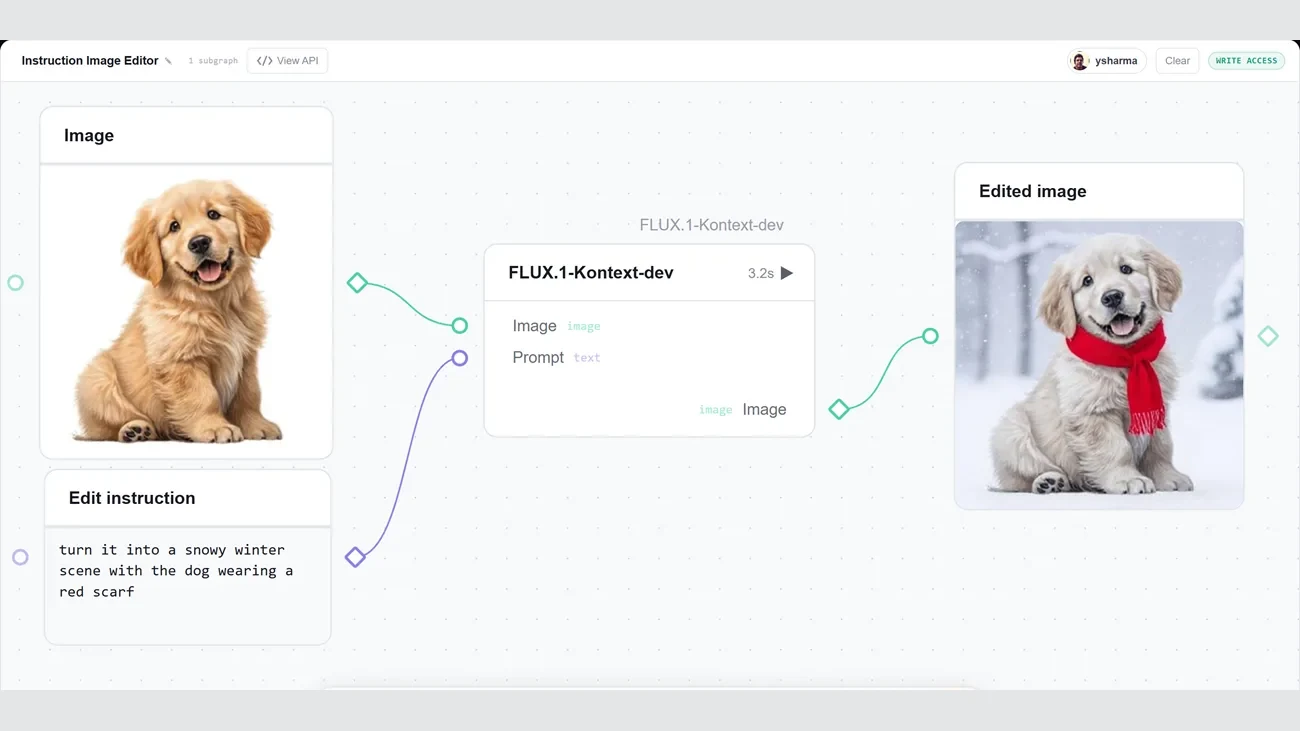
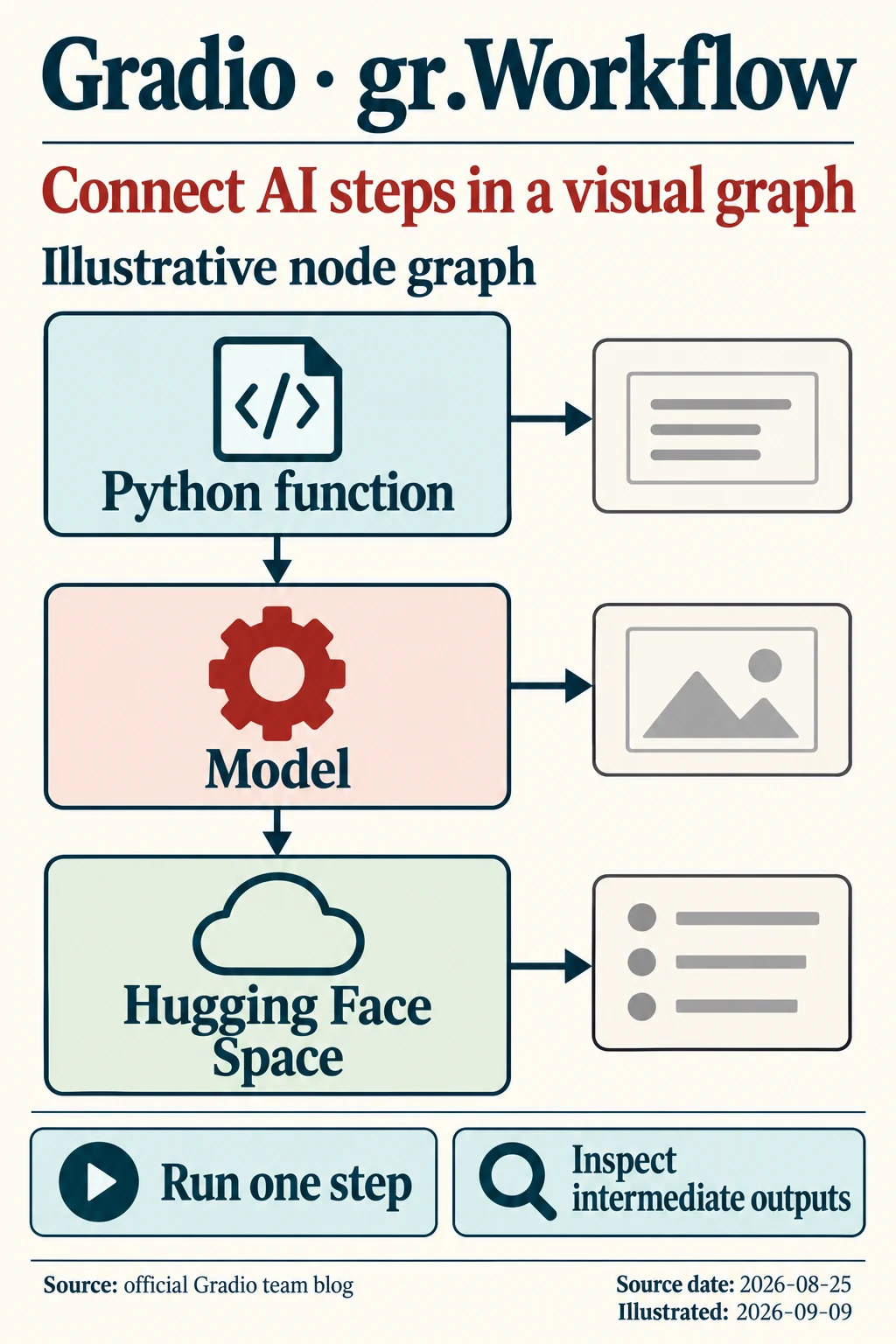
Connect processing steps as a node graph
gr.Workflow connects Python functions, models and Hugging Face Spaces on a visual canvas to organize multi-step AI workflows. Users can run individual steps and inspect intermediate results.
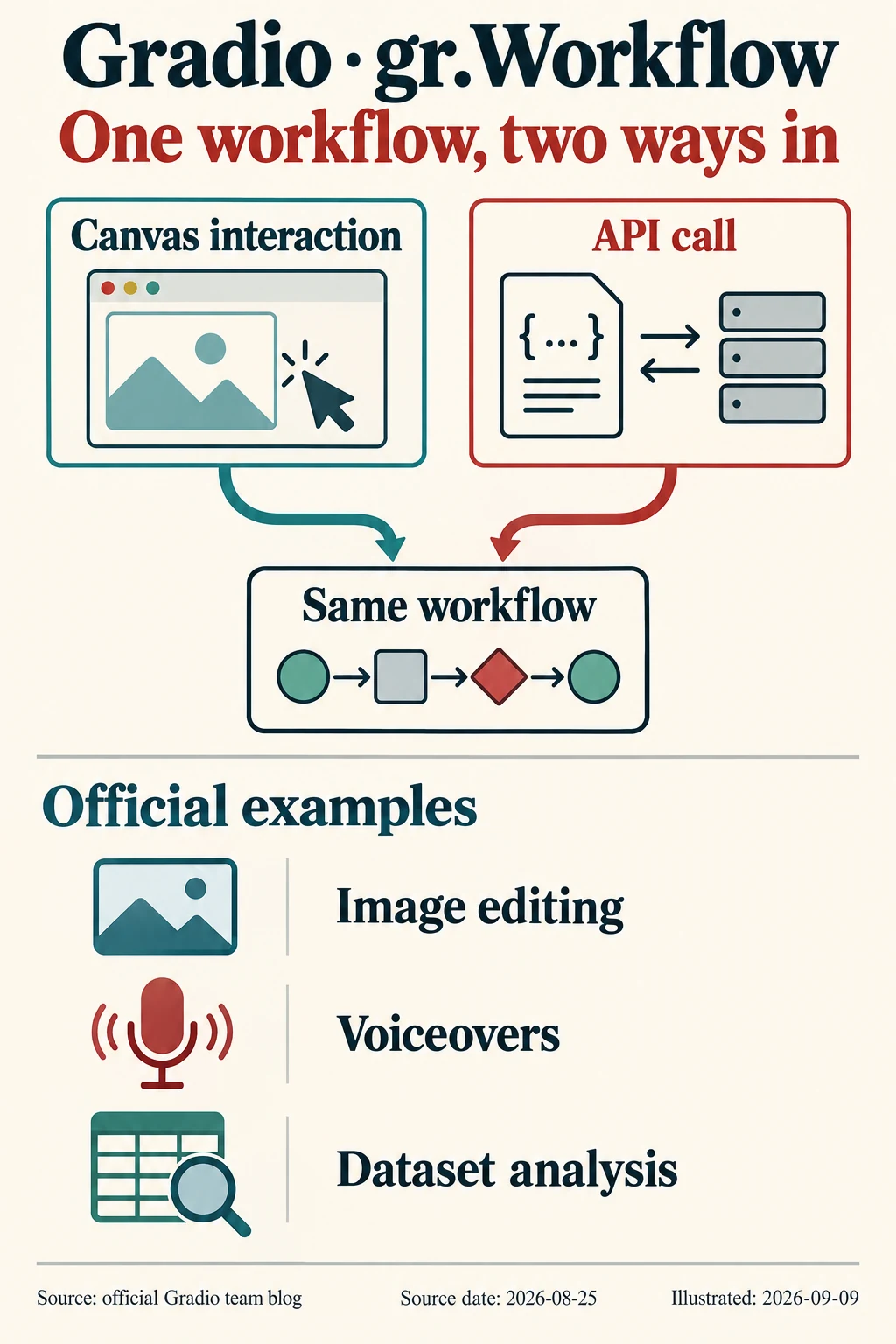
Call the same workflow through an API
The assembled workflow can also be called through an API by other programs. Official examples cover image editing, voiceovers and dataset analysis, connecting the visual steps to processing tasks.
Important additions and corrections
Dates below mark changes to our coverage.
- Addition ·
Added intermediate-result and debugging details for multi-step workflows, including model endpoints, tokens and compute requirements.
Sources and notes
sources中文
Sources and notes
- Read the originalOfficial Hugging Face blog, written by the Gradio team
Retained summary and context
Build a visual graph of an AI workflow, run steps and inspect intermediate results.
These capabilities come from the official tutorial; we have not rerun the examples. Model and Space endpoints may require tokens, paid calls or compute. Deployment and recovery from failed runs still depend on the workflow.
Sources and evidence · 3 links
Each link has a purpose and scope. Link counts do not establish independent confirmation; direct support applies only to the statements specified below.
- Official Hugging Face blog, written by the Gradio teamDirect support
Read the August 25 official gr.Workflow tutorial for graph connections, step execution, intermediate results, API access, examples and token configuration. The Space link identifies the tutorial’s demo.
Limits: The demo was not run, costs and deployment were not tested, and debugging time was not measured.
Source timeline
- · Entered the BitShovel radar: 852 entries visible on Hugging Face blog at collection; recheck found no new or metadata-updated entries.
Collection record
First discovered:
Collection and source publication have distinct dates.
Editorial record
Sources reviewed
· Beijing time (UTC+8)
Reviewed official materials to clarify purpose, changes and usage conditions, distinguishing source descriptions from untested results. Original publication and observation dates are retained; an editorial revision is not a new product release.
Sources and full record
This dates our review of the wording and sources, not a project release or product update.
Full record: before, after and sources (JSON)