Food-image research and TechCrunch reporting · Published 2026-09-04
AI food images: appearance and labels
An odd-looking food image and learning that an image was AI-generated are different questions. Two studies examine appearance and origin labels separately, helping explain why the category “AI image” alone cannot predict appeal or restaurant sales.
Study one: vary visual realism
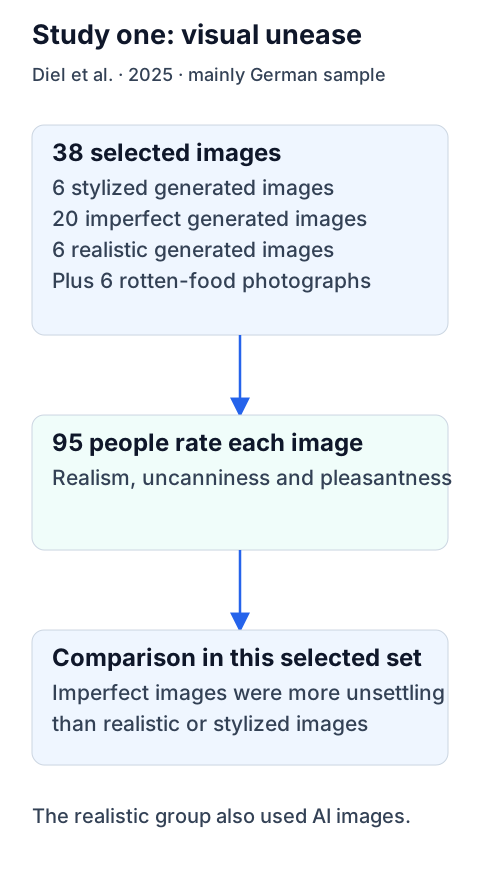
A 2025 Appetite study asked 95 people to rate 38 selected images: 32 generated pictures spanning different levels of realism, plus six rotten-food photos. Imperfect AI food was more unsettling than highly realistic or stylized images. The realistic group also used generated images; this was not simply real dishes versus AI dishes.
A 12-person pilot rated 99 generated images. Researchers selected six low-realism, 20 imperfect and six high-realism images for the main experiment. Participants were mainly German speakers living in Germany. Deliberately selected stimuli help examine the relationship between appearance and unease, but cannot estimate the average effect of all generated pictures.
Study two: change origin labels
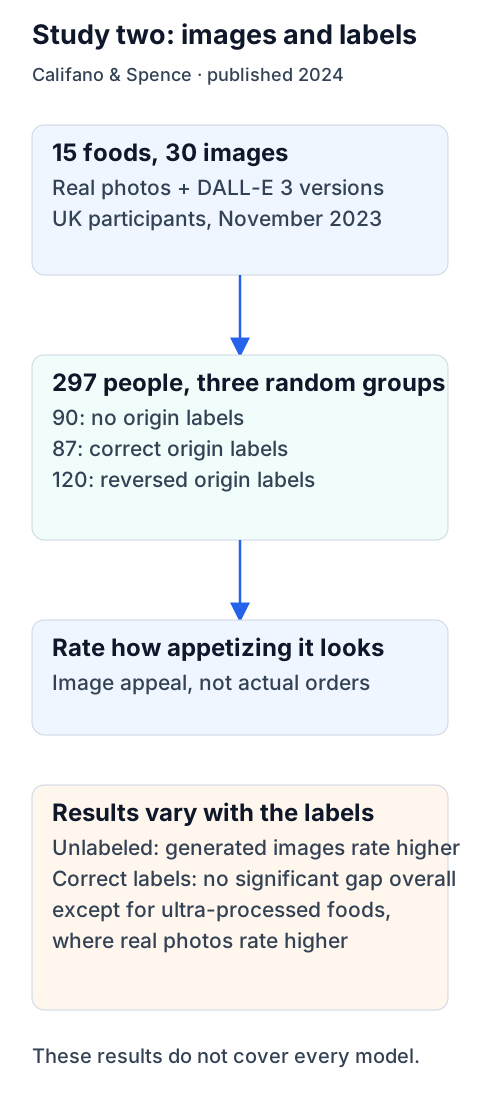
A study published in 2024 asked 297 UK participants to rate real photos and DALL-E 3 reconstructions, with absent, correct or reversed origin labels. AI pictures scored higher without labels; with correct labels, the overall difference was not statistically significant, although real ultra-processed foods scored higher. Data came from November 2023, not current models.
This study used photos of 15 food items and their generated counterparts, totaling 30 images, to measure perceived appeal. Neither study measured restaurant orders or actual dining. Our practical suggestion is to check visual appeal, consistency with real ingredients and portions, and willingness to order separately. An attractive picture does not establish an accurate representation of the dish.
Important additions and corrections
Dates below mark changes to our coverage.
- Addition ·
Expanded image origins, selection, samples and label conditions in two studies; separated image ratings from actual orders.
- Addition ·
Added two original studies: image distortion and AI labels have different effects; these findings do not establish that all AI menus reduce appetite.
Sources and notes
sources中文
Sources and notes
- Read the originalFood-image research and TechCrunch reporting
Retained summary and context
These studies use limited samples and selected images to measure image ratings, not restaurant orders, dining or sales; they do not represent all current models or cultures.
Sources and evidence · 4 links
Each link has a purpose and scope. Link counts do not establish independent confirmation; direct support applies only to the statements specified below.
- Food-image research and TechCrunch reportingDirect support
The reporting behind this topic. Experimental findings come from the papers.
Limits: Reporting, not a restaurant experiment.
- Diel et al. (2025): paper, pp. 3–5, 7Direct support
Supports the relation between realism, distortion and unease in selected images; methods and results were read.
Limits: Mainly German-speaking participants in Germany; pilot-selected stimuli cannot estimate the average effect of all generated images.
- Califano & Spence (2024): paper, pp. 2, 6–8Direct support
Supports image ratings under different origin-label conditions; Study 2 was read.
Limits: UK sample, 2023 imagery and a limited food set; no actual orders or sales data.
Source timeline
- · Found this reading link via TechCrunch AI.
Collection record
First discovered: ; added to the library:
Collection and source publication have distinct dates.
Editorial record
Sources reviewed
· Beijing time (UTC+8)
Expanded image origins, selection, samples and label conditions in two studies; separated image ratings from actual orders. Event, discovery and collection dates remain unchanged.
Sources and full record
This dates our review of the wording and sources, not a project release or product update.
- Reporting and primary research
- Diel et al. (2025): paper, pp. 3–5, 7
- Califano & Spence (2024): paper, pp. 2, 6–8